Why is Netanyahu offering his rival Israel’s top job? Here’s what’s at stake
Corruption trial, wartime legacy and Iran tensions loom over Netanyahu’s survival battle
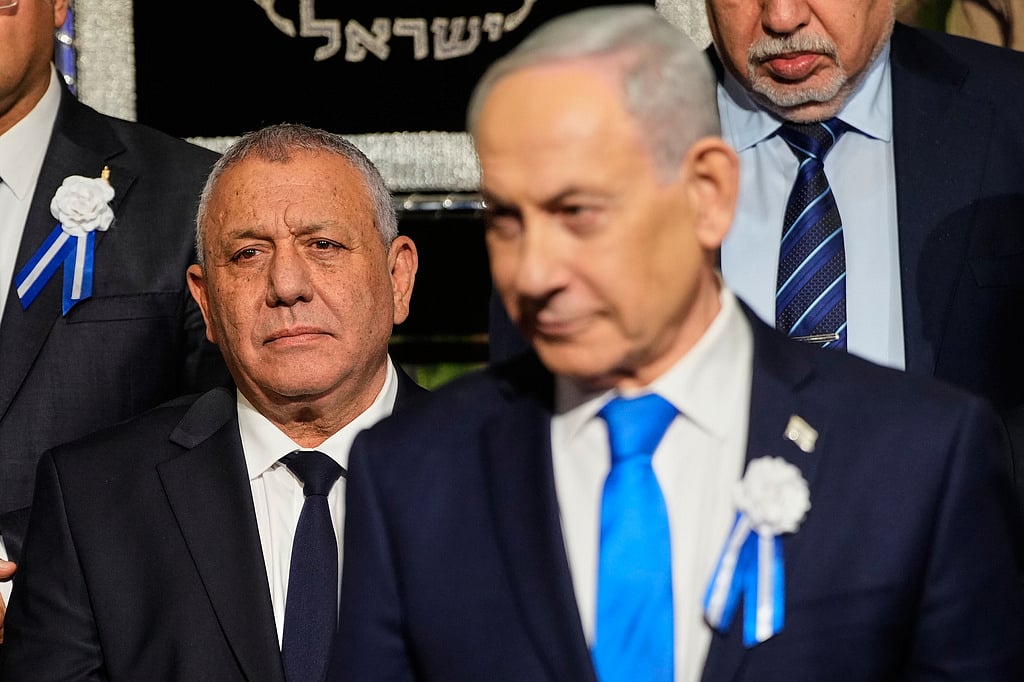
Dubai: For a politician who has dominated Israeli politics for much of the past three decades, Benjamin Netanyahu’s offer to let his principal rival serve first as prime minister marks an extraordinary concession.
Israel’s longest-serving leader, who has repeatedly overcome political crises and electoral setbacks, is offering to temporarily relinquish the premiership rather than risk being excluded from government altogether.
On Saturday, Netanyahu proposed a power-sharing arrangement under which Gadi Eisenkot, a former military chief who campaigned to remove him from office, would serve first as prime minister.
The two leaders began negotiations on Sunday at Israel’s defence headquarters in Tel Aviv, according to the Times of Israel.
Political analysts told The New York Times that Netanyahu’s concession reflected mounting pressure as his opponents advanced efforts to replace him, although Eisenkot still faced the challenge of holding together his politically divided bloc.
But why is Netanyahu so determined to remain in government, even if it means surrendering the top job?
The prospect of losing power
The October 27 elections deprived Netanyahu’s coalition of its majority, leaving his bloc with 53 seats in the 120-member Knesset.
Eisenkot’s bloc secured 48 seats, while Arab parties won a combined 19, giving them potentially decisive influence over government formation.
Reuters reported that Netanyahu’s concession came as Eisenkot made progress towards assembling an alternative government, securing agreements with the left-wing Democrats and right-wing Yisrael Beiteinu.
Eisenkot has until December 6 to form a coalition, although he can request a two-week extension.
His legal battles
Netanyahu has been on trial since 2020 on charges of bribery, fraud and breach of trust in three corruption cases. He denies wrongdoing and maintains that the prosecution is politically motivated.
Leaving office would not automatically change his legal status or the course of the trial, but remaining in government would allow him to retain political influence.
US President Donald Trump has also urged Israeli President Isaac Herzog to pardon Netanyahu, Reuters reported earlier this month.
While there is no direct evidence linking Netanyahu’s latest proposal to his legal troubles, the unresolved proceedings remain an important part of the political backdrop.
The unresolved legacy of October 7
The Hamas-led attacks of October 7, 2023, occurred under Netanyahu’s leadership, triggering a devastating war in Gaza and a wider regional conflict involving Lebanon and Iran.
A government formed by his opponents could pursue investigations into the security failures preceding the attacks and review the government’s subsequent conduct of the war.
Remaining in government would give Netanyahu a continuing role in shaping Israel’s response to these unresolved questions.
The Iran factor
Netanyahu has presented his willingness to compromise as a response to the serious security threats facing Israel, saying his “responsibility as a leader” required him to “put everything aside”, Reuters reported.
However, according to the Times of Israel, Netanyahu is reportedly demanding to remain prime minister for an unspecified period before the rotation agreement takes effect to oversee a potential security incident involving Iran.
Eisenkot has reportedly rejected that condition.
If confirmed, the disagreement would highlight how control over Israel’s security policy has become intertwined with negotiations over the transfer of power.
Keeping Arab parties out of government
Netanyahu has repeatedly argued that an Eisenkot-led government relying on Arab parties would undermine Israel’s security, accusations rejected by his opponents.
His unity proposal offers Eisenkot an alternative route to a parliamentary majority while potentially excluding Arab parties from government formation.
It has also divided Eisenkot’s bloc. Former prime minister Naftali Bennett has encouraged negotiations with Netanyahu, while Yair Lapid dismissed the offer as a “transparent scam by a serial fraudster”, The New York Times reported.
A familiar political strategy?
In 2020, Netanyahu entered a rotation agreement with Benny Gantz, another former military chief. The government collapsed before Gantz could take his turn as prime minister.
That experience continues to fuel distrust among Netanyahu’s opponents.
This time, Netanyahu has offered to serve second, but questions remain over the timing and guarantees of any transfer of power.
Having returned to office after losing power in 2021, Netanyahu’s latest proposal offers another potential route to political continuity: Relinquishing the premiership temporarily while preserving his influence and securing a possible return to the top job.
For Netanyahu, the immediate battle is no longer simply about remaining prime minister, but whether he can remain in government at all.

Sign up for the Daily Briefing
Get the latest news and updates straight to your inbox
Network Links
GN StoreDownload our app
© Al Nisr Publishing LLC 2026. All rights reserved.