Beijing/Khartoum China said Sunday the President of South Sudan — whose country has been locked in fierce border clashes with Sudan — will visit the Asian nation later this month.
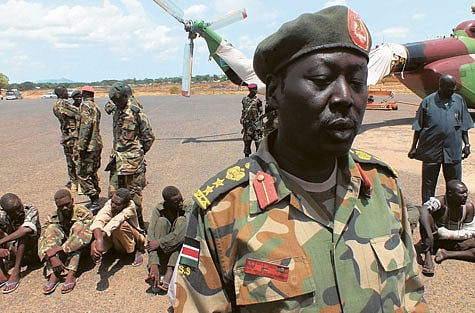
His trip comes at a time of turmoil in the newly formed African state, whose troops last week seized a contested oil field, prompting Sudan to launch air strikes across the border — raising fears of a return to outright war.
Salva Kiir will visit China from April 23 to 28 and hold talks with Chinese President Hu Jintao, foreign ministry spokesman Liu Weimin told reporters.
"During President Kiir's visit, the two sides will discuss how to deepen bilateral political mutual trust and expand practical cooperation across the board," Liu told reporters.
"They will also exchange views on international and regional issues of common interest."
Beijing, which is an ally of the Sudanese government but sources five per cent of its oil from South Sudan, last week called on both sides to enact a ceasefire and return to the diplomacy table.
Fighting between the former civil war foes broke out in March, but escalated last week, in the worst hostilities since South Sudan's independence from Sudan last July. China, which has a vested interest in oil from both nations, is facing a diplomatic conundrum over which country to support as tensions escalate.
So far, Chinese authorities have chosen to play a delicate balancing act by dividing support equally between Sudan and South Sudan while calling for a peaceful resolution to the dispute.
Meanwhile, Sudan denied its warplanes had bombed an oilfield seized by forces from South Sudan and blamed the south for any damage to the facility during fighting that has raged since last week.
South Sudan's Information Minister Barnaba Marial Benjamin told reporters in Juba on Sunday that aerial bombardment of the oil facility in the Heglig region had caused serious damage. "They are bombing the central processing facility and the tanks to rubble," he said.
The Heglig field was vital to Sudan's economy, producing about half of the 115,000 barrel-per-day output that remained in its control after South Sudan seceded in July.
"If any damage has occurred in Heglig it may have been on the part of the army of South Sudan. The Sudanese government charges South Sudan with any damage to the oil wells and facilities," Sudan's Information Minister Abdullah Ali Masar said, according to state news agency Suna.
Sign up for the Daily Briefing
Get the latest news and updates straight to your inbox
Network Links
GN StoreDownload our app
© Al Nisr Publishing LLC 2026. All rights reserved.