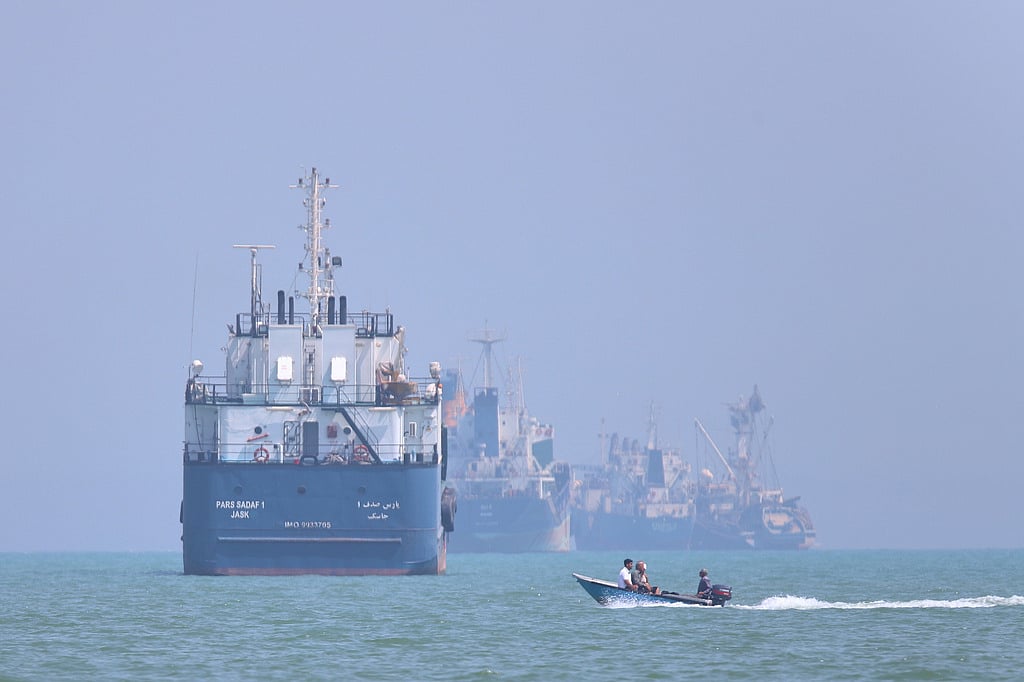
Dubai: Ship traffic through the Strait of Hormuz appeared to slow on Sunday as uncertainty persisted over the status of the vital shipping lane, with Washington and Tehran offering sharply different accounts of whether the waterway remains open.
The Strait of Hormuz has emerged as a key issue in ongoing US-Iran negotiations aimed at preventing a renewed escalation in the region after months of conflict, according to a report by the New York Times.
US President Donald Trump said he had spoken with Iranian officials overnight and warned them against shutting the strait, according to comments reported by Fox News.
“You close it and you won’t have a country,” Trump reportedly told the officials.
The warning followed an announcement by Iran’s military on Saturday that it was closing the Strait of Hormuz, accusing Washington of failing to uphold commitments under the tentative ceasefire arrangement by not restraining Israeli military actions against Hezbollah in Lebanon.
IRGC warning
Iran’s Islamic Revolutionary Guard Corps (IRGC) also warned vessels approaching the strait that their security could be at risk.
However, US Central Command quickly disputed Tehran’s claim.
“Iran does not control the Strait of Hormuz. Traffic continues to flow, and US forces are monitoring the situation to ensure this remains the case,” Captain Tim Hawkins, a CENTCOM spokesman, said.
Despite the competing statements, maritime analysts reported signs that shipowners were becoming more cautious.
Ship-tracking data suggested that vessels had largely stopped using the strait’s northern route following the latest Iranian warnings. Analysts cautioned that the available data is limited because some vessels switch off their tracking transponders while operating in sensitive areas.
Why it matters
Strait of Hormuz is one of the world’s most critical energy chokepoints
About one-fifth of global oil and gas shipments pass through it
Even perceived disruption can push up oil prices and insurance costs
Shipping firms may reroute or delay voyages, slowing global trade flows
Uncertainty risks escalation even without direct attacks on vessels
The strait has become a key pressure point in US-Iran negotiations
“The situation remains fraught,” Daniel Mueller, a senior analyst at maritime intelligence firm Ambrey, told the New York Times. “The Iranians are maintaining the strait is closed again, though there have been no attacks.”
Only 12 ships passed through strait
Another maritime intelligence company, Windward, said it had tracked only 12 transits through the waterway on Sunday, a decline from the previous day.
The figures underscore continuing nervousness among shipping companies despite the absence of confirmed attacks on commercial vessels.
On Saturday, CENTCOM said 55 commercial ships had passed through the strait, the highest daily number recorded since the war began in late February, though still well below the pre-war average of about 130 vessels a day.
US Energy Secretary Chris Wright said on Sunday that 67 ships had crossed the strait during the previous 24 hours, adding that US forces were helping guide vessels through a southern shipping lane after parts of the main channel were heavily mined during the conflict.
According to Windward, some vessels that crossed on Sunday appeared to have switched off their transponders to reduce their visibility.
The Strait of Hormuz remains one of the world's most important energy chokepoints, carrying roughly a fifth of global oil supplies before the outbreak of hostilities. Any disruption — or even uncertainty about access — has the potential to affect energy markets and global trade.
While neither Washington nor Tehran has reported fresh attacks on shipping, the conflicting messages from both sides appear to be enough to make shipowners think twice before entering the corridor, highlighting the fragile nature of efforts to stabilise the region.

Sign up for the Daily Briefing
Get the latest news and updates straight to your inbox
Network Links
GN StoreDownload our app
© Al Nisr Publishing LLC 2026. All rights reserved.