Iran’s mysterious underground complex: What is Tehran building near its nuclear sites?
Satellite images reveal fortified underground facility as Israel signals readiness to hit
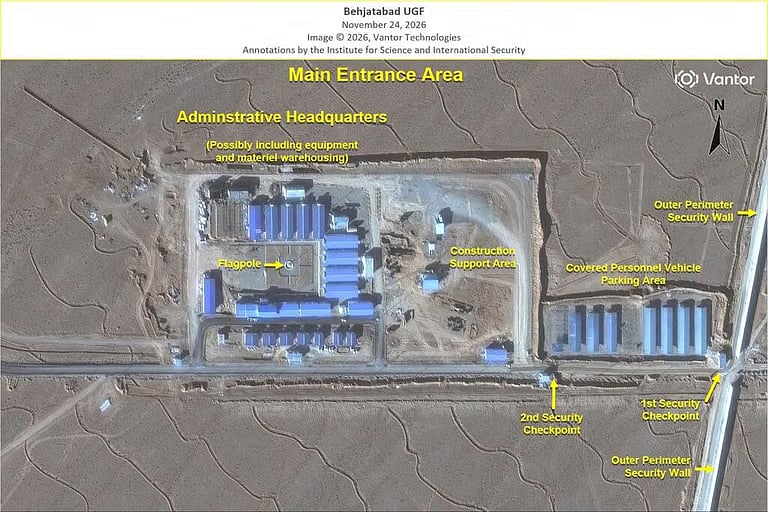
Dubai: Iran is rapidly constructing a vast fortified underground complex between two of its major nuclear sites, raising fresh questions about Tehran’s efforts to rebuild and reinforce its strategic capabilities following US-Israeli strikes.
New satellite imagery examined by the Washington-based Institute for Science and International Security reveals an unusually rapid pace of construction at the Behjatabad underground facility in central Iran.
While researchers say the complex could serve several military purposes, including housing major weapons systems, they have not ruled out a connection to Iran’s nuclear programme.
“The function of the facility is not clear at this time. More information is needed to make an accurate assessment,” the institute said in an assessment posted on X on November 25.
The findings come at a particularly sensitive moment, with Israel declaring on Thursday that it is prepared to strike Iran independently, even without American military support.
What has satellite imagery revealed?
The Behjatabad complex is being built inside a mountain between the Isfahan nuclear site and the Natanz area, home to some of Iran’s most important nuclear infrastructure.
Satellite imagery provided by Vantor Technologies and dated November 24 shows extensive construction activity at the site.
An analysis of earlier satellite images indicates that work began in December 2025, before the latest US-Israeli military campaign against Iran began in February, and expanded considerably throughout 2026.
Although Iran has constructed numerous underground facilities across the country, researchers say the speed of development at Behjatabad distinguishes it from similar projects.
The institute plans to release additional satellite imagery and a more detailed assessment in a forthcoming report.
Is Iran rebuilding its military capabilities?
The construction comes against the backdrop of extensive damage inflicted on Iran’s nuclear and military infrastructure during successive conflicts with Israel and the United States.
Previous assessments by the institute found that the June 2025 strikes on Fordow, Natanz and Isfahan inflicted severe damage on Iran’s nuclear infrastructure.
However, researchers cautioned that the destruction of major facilities did not necessarily mean that all of Tehran’s sensitive nuclear capabilities had been eliminated.
The emergence of another large underground complex raises questions about how Iran intends to restore its strategic capabilities following those attacks.
However, the construction itself does not establish that the facility is connected to nuclear activities or that Iran has restored its enrichment capabilities.
The unresolved nuclear question
One of the major uncertainties surrounding Iran’s nuclear programme remains the status of approximately 440 kilograms of uranium previously reported to have been enriched to 60 per cent.
Restrictions on international nuclear inspections have complicated efforts to establish the whereabouts and condition of that material.
There is no evidence presented in the latest assessment linking the uranium stockpile to the Behjatabad facility.
Satellite imagery can reveal construction activity, but it cannot establish what equipment or materials are being stored underground or what activities are intended to take place there.
Why the timing matters
The latest findings emerge amid renewed warnings from Israel over Iran’s military ambitions.
Israeli military spokesman Effie Defrin told public broadcaster Kan on Thursday that Israel was prepared to strike Iran, if necessary, without American participation.
Meanwhile, Washington continues to exert economic pressure on Tehran, while Qatari and Pakistani mediators are pursuing proposals aimed at ending the prolonged confrontation.
Iranian Foreign Minister Abbas Araghchi said on Thursday that new diplomatic proposals were being reviewed but insisted Tehran’s fundamental demands remained unchanged.
Against this backdrop, the rapid construction at Behjatabad adds another layer of uncertainty to an already fragile regional situation.
The central question is not simply what Iran is building underground, but whether its military and nuclear capabilities are being restored despite months of military and economic pressure.
For now, the satellite images provide evidence of rapid construction — but not a definitive answer about what the facility will ultimately be used for.

Sign up for the Daily Briefing
Get the latest news and updates straight to your inbox
Network Links
GN StoreDownload our app
© Al Nisr Publishing LLC 2026. All rights reserved.