How America’s new ‘precision’ missile appears to have left a deadly trail in Iran
Probe finds civilians killed 50 metres from blast as weapon sprays tungsten pellets
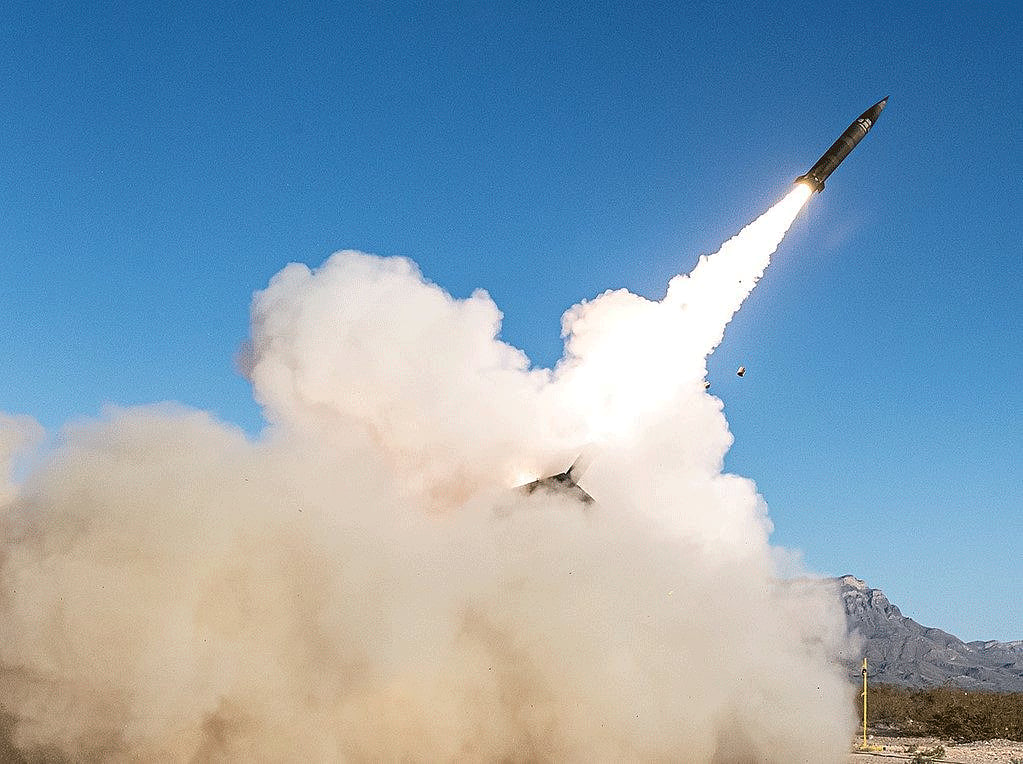
Dubai: It is supposed to represent the future of American warfare: A new ballistic missile capable of travelling hundreds of kilometres and striking its target with extraordinary precision.
But what happened in the southern Iranian city of Lamerd on the first day of the Iran war reveals another side of America’s new Precision Strike Missile.
When three missiles exploded above a sports complex and two residential neighbourhoods on February 28, civilians were killed as far as 50 metres from the explosions and buildings were damaged at least 170 metres away, according to a new investigation by conflict monitor Airwars.
At least 21 civilians, including seven children, were killed in the strikes, according to Iranian officials.
The reason for the wide destruction lies in how the weapon works.
Rather than simply exploding on impact, the Lockheed Martin-built Precision Strike Missile, or PrSM, is designed to detonate above its target and unleash tens of thousands of dense tungsten pellets at enormous speed in every direction.
The result is essentially a rapidly expanding sphere of lethal metal.
Photos, videos and satellite imagery examined by Airwars and independently reviewed by The Associated Press showed buildings, roads and vehicles across Lamerd covered in distinctive impact marks.
Six weapons experts consulted by AP, including two former military officials, said the evidence was consistent with PrSM strikes.
The US military has confirmed using the new missile in Iran for the first time during the war but denies firing PrSMs — or any other weapons — at Lamerd.
THE PrSM: DEADLY REACH
499km+ — Maximum stated range of the Precision Strike Missile
300km — Approximate range of the older ATACMS it is replacing
Tens of thousands — Tungsten pellets dispersed when the PrSM detonates
50 metres — Distance from a Lamerd blast where Airwars says a civilian was killed
170 metres — Distance from one blast where a school was damaged
21 — Civilians killed in the Lamerd strikes, according to Iranian officials
7 — Children among those reported killed
$4bn+ — Pentagon contract to quadruple PrSM production
Why it matters: The missile may strike with precision, but its airburst warhead can spread lethal pellets well beyond the point of detonation.
A child killed 50 metres away
Airwars reconstructed the strikes using security-camera footage, satellite imagery, photographs, social media posts and Iranian news reports.
One of the most striking findings involved two-year-old Avina Barzegar.
She was playing in the yard of her family’s home in the Tal-e Khandagh neighbourhood when she was killed.
By geolocating the house and identifying the estimated point where the missile exploded, Airwars concluded that the pellet that struck the child had travelled about 50 metres.
Another missile detonated above the Shahid Naimi Sports Hall.
Seven civilians were reported killed there, most of them children. Among the dead were three teenage girls who had been playing volleyball.
Damage attributed to that explosion was found at a school around 170 metres away.
Neither Airwars nor AP found reports indicating that military personnel were killed or military infrastructure struck in the three attacks.
An Islamic Revolutionary Guard Corps compound is located nearby, but satellite imagery showed no apparent damage to it.
That leaves a fundamental question unanswered: What were the missiles targeting?
US denies the strike
The Pentagon has openly celebrated the combat debut of the PrSM.
On March 4, US Central Command described its use during the Iran operation as a “historic first”, although it did not disclose where the missiles had been fired.
CENTCOM later denied responsibility for Lamerd, saying US forces had not launched PrSMs or any other weapons into the city on February 28.
It suggested that footage from one of the strikes could show an Iranian Hoveyzeh cruise missile.
Weapons experts who examined the footage disagreed, saying the missile visible in the video did not match the Iranian weapon.
Israel also told AP that its military did not strike anywhere in Iran as far south as Lamerd that day.
The six weapons experts consulted by AP said they believed PrSMs had struck the city and considered Israeli or Iranian weapons unlikely explanations.
Why the missile is different
The PrSM is being developed to replace the US Army’s ageing ATACMS missile.
Its predecessor can travel about 300 kilometres. The PrSM has a range exceeding 499 kilometres, giving American forces the ability to strike targets much farther behind enemy lines.
But its warhead is also distinctive.
Instead of relying principally on conventional blast fragmentation, the missile disperses tens of thousands of tungsten pellets when it detonates in the air.
Tungsten is extremely dense and retains its shape under intense heat, allowing the pellets to travel at high velocity and penetrate lightly protected targets.
That makes the weapon potentially devastating against concentrations of troops and military equipment.
Near civilians, experts warn, the same characteristic creates a different danger.
Michael Meier, a former US Army adviser on the laws of war, told AP it would be difficult to justify using such a weapon in a densely populated area.
Billions more being spent
Despite the questions raised by Lamerd, the PrSM is rapidly becoming an important part of Western arsenals.
Since the February strikes, the Pentagon has signed a multibillion-dollar contract with Lockheed Martin to dramatically increase production.
Britain has also earmarked £130 million to procure the missile, while Australia has bought PrSMs and invested billions of dollars in the programme.
Weapons experts do not dispute the missile’s military usefulness. Their concern is where it is fired.
For the residents of Lamerd, that distinction may already have proved deadly.
A weapon designed to hit its target with extraordinary precision appears capable, once it arrives, of sending lethal metal far beyond it.
-- With additonal inputs from AP

Sign up for the Daily Briefing
Get the latest news and updates straight to your inbox
Network Links
GN StoreDownload our app
© Al Nisr Publishing LLC 2026. All rights reserved.