Hormuz traffic falls after vessel strike; Iran and Oman discuss strait management
Commercial vessel strike, looming dispute over transit fees cloud fragile maritime deal
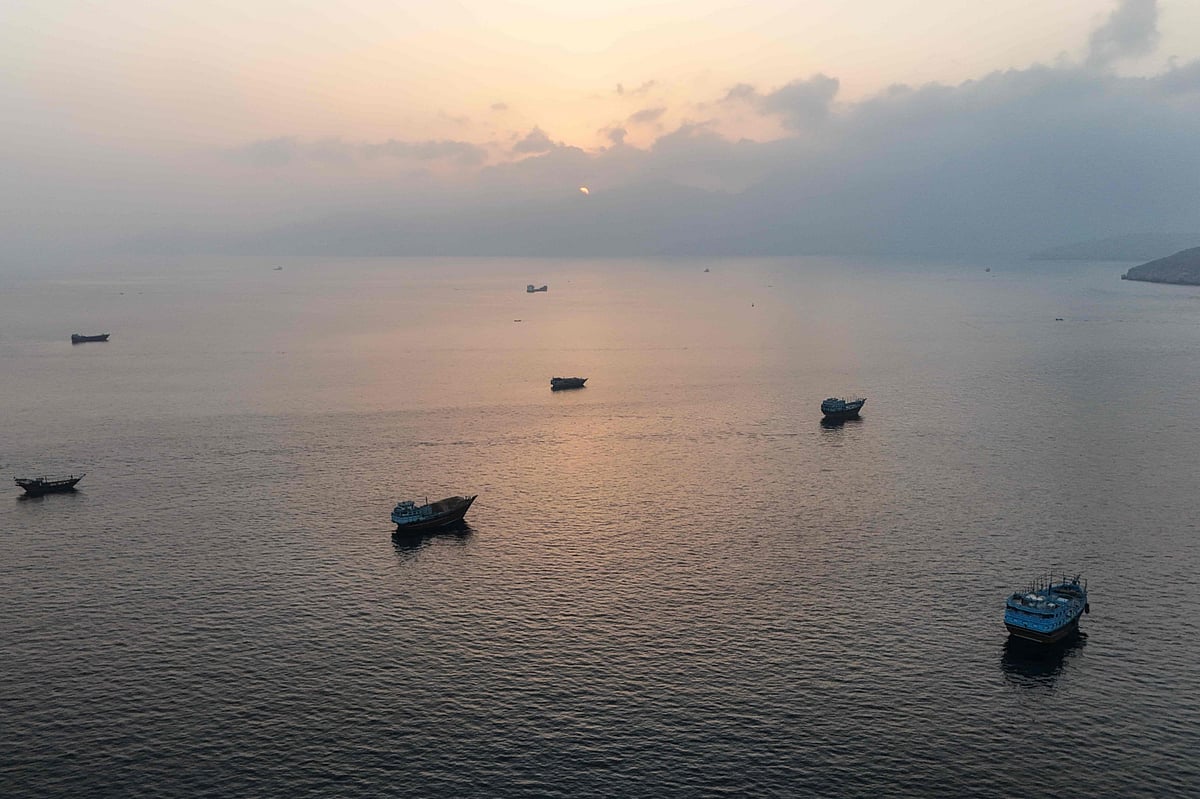
Dubai: Traffic through the Strait of Hormuz slowed sharply over the weekend after a commercial vessel was struck while transiting the strategic waterway and fresh exchanges of strikes between the United States and Iran strained their preliminary agreement to end the Middle East conflict.
According to maritime tracking firm Kpler, 29 commodity vessels crossed the strait on Saturday and only 12 on Sunday.
The figures marked a sharp decline from last week, when a memorandum of understanding signed by Tehran and Washington on June 15 boosted traffic to its highest level since the start of the war, with 70 crossings recorded on Wednesday.
Despite Iran’s warning against using unapproved shipping lanes, vessels continued to use multiple routes through the waterway over the weekend.
After a vessel was struck while transiting the strait on Saturday morning, ships continued for several hours to use a southern corridor through Omani waters before traffic began slowing, according to Kpler-owned MarineTraffic.
What’s happening now?
29 commodity vessels crossed on Saturday.
12 crossed on Sunday.
Traffic had peaked at 70 crossings on Wednesday after the US-Iran memorandum.
Iran and Oman have held their first Joint Hormuz Committee meeting.
Tehran is considering service fees after the 60-day toll-free period.
The US says it will not accept transit charges.
Oman says no passage fees are currently planned.
The future rules after the 60-day period remain unclear.
The website tracks only vessels with active transponders, meaning additional ships may have crossed with their tracking systems switched off.
More vessels entered the Gulf over the weekend than departed, reversing the trend seen over the previous week when efforts focused on evacuating thousands of seafarers stranded inside the Gulf.
A United Nations-led operation to evacuate 11,000 seafarers was suspended on Thursday after another vessel was struck in the Gulf of Oman.
According to HFI Research, four tankers and a container ship entered the Gulf through the southern Omani corridor on Sunday under escort from US Navy vessels. No ships used the same corridor to leave the Gulf that day, according to Kpler.
Sticking point
The final traffic figures may rise further as additional crossings are identified retrospectively through satellite imagery.
Meanwhile, Iran said on Monday it had held its first meeting with Oman on the future management of the Strait of Hormuz since Tehran and Washington signed their preliminary agreement aimed at ending the conflict.
“During a trip to Muscat, the first meeting of the Joint Hormuz Committee was held,” Iranian Deputy Foreign Minister Kazem Gharibabadi said on X.
“While reviewing the current issues related to the strait, we exchanged views on the future management,” he added, without specifying when the meeting took place.
Iran and Oman both claim sovereignty over parts of the strategic waterway, which is only about 30 kilometres (18 miles) wide at its narrowest point and serves as the main export route for Gulf oil and gas.
The future administration of the strait has emerged as one of the key sticking points in negotiations between Tehran and Washington.
Iran is considering introducing “service fees” for vessels using the waterway — charges that did not exist before the war — while the United States insists Hormuz is an international waterway and has warned it will not accept any transit fees.
Oman’s position has appeared to shift in recent days.
Last week, after talks with Iranian officials, Muscat and Tehran announced they were jointly examining the future costs of managing the strait.
Days later, however, Oman said no passage fees were planned and announced the opening of a temporary maritime corridor close to its coastline, saying the route had been coordinated with the United Nations.
Iran rejected that approach, insisting that the only authorised shipping corridor was the one running close to its own coastline.
Iranian Foreign Minister Abbas Araghchi warned on Sunday that any attempt to use alternative routes risked “escalating tensions” in the region.
His comments came after Iran struck a commercial vessel in the strait and the United States responded with strikes on Iranian coastal targets.
Under the June 15 memorandum of understanding, Iran agreed to begin discussions with Oman on the future administration and maritime services in the Strait of Hormuz in consultation with other Gulf littoral states and in accordance with international law.
The agreement also stipulates that passage through the strait will remain toll-free for 60 days after the signing of the deal. It remains unclear what arrangements will apply once that period expires.
-- With AFP inputs

Sign up for the Daily Briefing
Get the latest news and updates straight to your inbox
Network Links
GN StoreDownload our app
© Al Nisr Publishing LLC 2026. All rights reserved.