Cairo: Almost four months after the outbreak of World War I, Britain, which had occupied Egypt in 1882, declared the war on the Ottoman Empire under whose nominal sovereignty Egypt had fallen.
The move drew Egypt into the war that took a toll on its economy and security despite Britain’s pledge to undertake the war burden alone.
In 1914, Britain declared Egypt a British protectorate and replaced the independent-minded Khedive Abbas II with his pro-British uncle Hussein Kamel.
“The British occupiers exploited the Egyptian army in defeating the Ottomans during World War I, which marked one of the most turbulent in Egypt’s history,” says historian Latifa Salem in her book ‘Egypt in World War I’. “But at the same time, the era marked the emergence of a national movement that was able to organise Egyptians and push for their rights.”
During the war, Egypt turned into a training camp for foreign troops. Britain, the de-facto ruler of Egypt, coaxed Egyptians into taking its side during the war with the promise of gaining independence later.
During the course of war, compulsory military conscription was introduced in Egypt, prompting authorities to round up tens of thousands of peasants and labourers from around the country. The Egyptian army at the time swelled to around 1.25 million soldiers.
As a result, agricultural and industrial activities fell into decline, driving up prices of basic goods.
The Britons prodded Egyptian authorities to keep a steady supply of soldiers and food for the war. Moreover, Egypt had to restrict the cultivation of cotton, one of the country’s most lucrative crops at the time, in order to make more room for food crops needed for the troops. Lawless acts, including robberies, became rife in Egypt as security forces were distracted by the progress of war, according to historians.
As the war dragged on, Cairo became crowded with refugees, some from Syria and others from Europe, according to historian Samir Sobhy. “As their numbers increased, sanitation deteriorated, and the city was hit by cholera, typhoid and other epidemics,” he says.
With more British soldiers joining the war, more and more of them started to spend their leave around the Azbakiya Gardens in Cairo, where bars and houses of ill repute sprang up almost overnight to cater to the young servicemen, adds Sobhy, a writer in semi-official newspaper Al Ahram.
The war, meanwhile, brought Egypt closer to the West, triggering debate in the country about increasing adoption of Western patterns of life and thinking.
“Some writers argued that Egyptian women should shed their veils and wear European attire, while others defended the old way,” says Sobhy.
Several voices were raised at the time calling for social justice and the representation of workers, farmers and self-employed professionals in parliament.
“As Egypt moved further away from its Ottoman past, the judiciary started to rely less on Sharia and more on European-style legislation,” adds Sobhy.
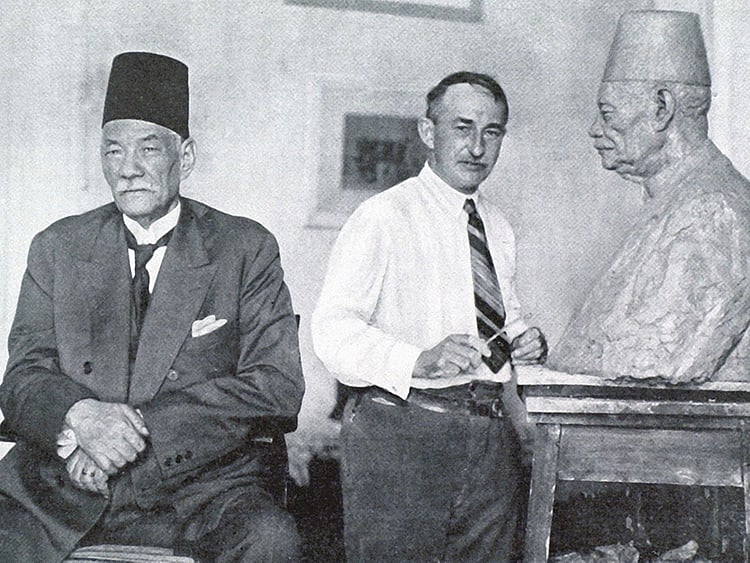
By the end of war, Egyptians demanded their independence. A delegation led by prominent politician Saad Zaghloul asked British High Commissioner Reginald Wingate to end Britain’s protectorate and allow them to represent Egypt at the Peace Conference in Paris to argue the case for the country’s independence. The demands were turned down.
The British arrested Zaghloul and three colleagues and banished them to Malta in March 1919, triggering a popular revolt across Egypt. Britain used violence to crush the uprising in which Egyptians — men and women — from different classes participated. An estimated 800 Egyptians were killed and several villages were burnt down, acts that fuelled popular fury and brought life to a standstill in the country.
A month later, Britain released Zaghloul and his colleagues from exile and allowed them to return to Egypt. The developments strengthened Egyptians’ struggle for independence that Britain recognised in 1922.
Sign up for the Daily Briefing
Get the latest news and updates straight to your inbox
Network Links
GN StoreDownload our app
© Al Nisr Publishing LLC 2026. All rights reserved.