After months of war, multiple ceasefires, threats of renewed bombing and repeated claims that an agreement was imminent, the United States and Iran appear closer than ever to a formal deal.
Or at least that is the message coming from Washington.
US President Donald Trump has declared that a settlement to end the conflict is effectively complete, cancelled planned military strikes and suggested a signing ceremony could take place within days.
Iran, however, is sending a more cautious message. While officials acknowledge that negotiations have advanced and that draft texts are being discussed, they insist that key disputes remain unresolved and that no final agreement has yet been reached.
The result is a familiar question that has accompanied almost every stage of this conflict: Is a deal really at hand?
What has Trump announced?
Trump dramatically raised expectations this week when he claimed a “great settlement” had been reached to end the war that began with US-Israeli strikes on Iran in February.
The US president said he had cancelled planned military action against Iran because negotiators had made major progress and suggested a signing ceremony could take place shortly.
According to CNN, preparations are under way for a possible signing event, with Geneva emerging as the most likely venue. Sources familiar with the discussions said the ceremony could be held as early as this weekend, although no final arrangements have been confirmed.
The proposed memorandum of understanding is reportedly being referred to as the “Islamabad Declaration”, reflecting Pakistan’s role in facilitating contacts between the two sides.
Trump has also claimed that the agreement has already been approved at the highest levels of Iranian leadership.
“I understand the answer is yes,” he told reporters when asked whether Iran’s leadership had signed off on the deal.
Why is Iran being more cautious?
Iranian officials have publicly stopped short of confirming Trump’s claims.
Foreign Ministry spokesman Esmail Baghaei said negotiations were active and that the text of an agreement was “mostly finalised”, but stressed that no final decision had been reached.
Another Iranian official quoted by CNN suggested that multiple issues remain unresolved, while state media reports indicate Tehran is still pushing for substantial concessions before any agreement can be signed.
The gap between the two sides appears to be less about whether a framework exists and more about what that framework actually contains.
That disagreement became public on Friday when Trump accused Iran of misrepresenting the proposed agreement.
“The terms that Iran leaked out to the Fake News have NOTHING to do with the terms that were agreed to, in writing,” Trump wrote on social media.
“They better get their act together, and FAST.”
What are the sticking points?
Nuclear enrichment
The biggest dispute remains Iran’s nuclear programme.
Israel says Trump has assured Prime Minister Benjamin Netanyahu that any final agreement would require Iran to surrender its stockpile of enriched uranium and dismantle key elements of its missile infrastructure.
Iranian state media strongly dispute that claim.
Reports carried by official news agencies insist Tehran will retain the right to enrich uranium and keep enriched nuclear material under any final agreement. Iranian negotiators reportedly view this as a non-negotiable issue.
That difference goes to the heart of the conflict. The United States and Israel argue Iran’s nuclear programme could eventually produce a nuclear weapon, while Tehran insists it is entirely peaceful.
Strait of Hormuz
A second major obstacle is control of the Strait of Hormuz.
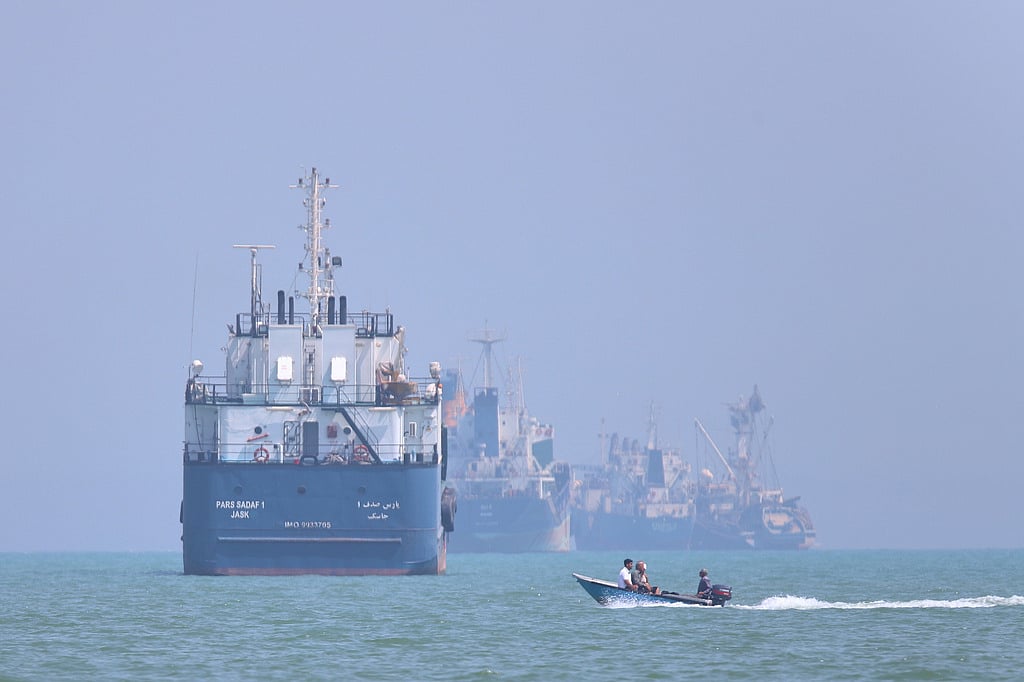
Since the outbreak of war, Iran has severely restricted shipping through the strategic waterway, through which a significant share of the world’s oil and gas exports pass.
Iranian media reports suggest Tehran wants to maintain authority over shipping management in the strait even after a deal is signed.
The Trump administration has strongly opposed any arrangement that allows Iran to continue using the waterway as leverage.
Trump recently described attacks on shipping in the strait as “totally unacceptable”.
Sanctions and frozen assets
Iran is also seeking extensive economic concessions.
According to reports in Iranian media, Tehran wants the release of billions of dollars in frozen Iranian funds, the suspension of sanctions targeting oil exports and an end to the US naval blockade imposed earlier this year.
Some reports have also suggested Iran is seeking compensation for damage caused during the war and reconstruction assistance worth hundreds of billions of dollars.
None of these demands have been publicly endorsed by Washington.
What role are mediators playing?
Several countries have emerged as key intermediaries.
Pakistan is reported to have played an important role in facilitating contacts between Washington and Tehran, leading to the reported name “Islamabad Declaration” for the proposed agreement.
Qatar has also been involved in back-channel diplomacy, continuing a role it has played throughout the conflict.
Diplomatic activity has intensified as negotiators attempt to convert a fragile ceasefire into a more permanent arrangement.
According to CNN, officials view the signing of a memorandum of understanding not as the end of the process but as the beginning of a second phase of negotiations focused on implementation.
So, is there a deal?
The short answer is: not yet.
There appears to be broad agreement that negotiations have advanced significantly and that both sides are working from some form of draft text.
There is also evidence that military escalation has been paused to give diplomacy a chance.
But the public positions of Washington and Tehran remain far apart on several of the issues that triggered the conflict in the first place.
Trump is presenting the agreement as essentially complete. Iran is presenting it as a work in progress.
Until both sides publicly endorse the same document, uncertainty will remain.
For now, the most accurate assessment may be that there is a framework for a deal, but not yet a final deal itself.
Sources: CNN, AFP, AP
Sign up for the Daily Briefing
Get the latest news and updates straight to your inbox
Network Links
GN StoreDownload our app
© Al Nisr Publishing LLC 2026. All rights reserved.