Beirut: When government censors in Lebanon reviewed a new film, Beirut Hotel, there was one scene that particularly caught their attention - a reference to a USB memory stick with documents on it about the 2005 assassination of Lebanese Prime Minister Rafik Hariri.
The censors tipped off their colleagues in another department of the General Directorate of General Security, the country’s internal intelligence agency, which then demanded that the film’s producer turn over the USB stick.
Of course, the film was fictional and the stick nonexistent. And although it contained risque sex scenes compared with other Lebanese films, the censors banned it instead on grounds of national security for having simply mentioned the Hariri assassination — the defining event in recent Lebanese history.
The filmmaker, Danielle Arbid, said she moved to France in disgust. Beirut Hotel, released late last year, was her third feature film in a row to be banned in Lebanon.
She joins a parade of artists to leave the country, following in the wake of businesses and investors whose frustration with Beirut was more practical and probably even more consequential. With a new government dominated by allies of Hezbollah, long a proxy of Syria, censorship has been on the rise. Four new films have been banned this year — a record for the Media and Theatre Department, as the censorship bureau is formally called.
In Beirut, the censors have banned The DaVinci Code as anti-Christian and the TV series The West Wing as anti-Arab. The General Security directorate has broad powers in other areas too, refusing permission, for instance, for director Francis Ford Coppola to land his private jet in Beirut in 2009 because the engine included parts made in Israel; he had to land in Damascus instead and travel overland.
After the civil war, says Sarkis Naoum, a columnist for the newspaper An Nahar, “at first business did come back but we did not regain our old position. In reality, the civil war did not end, just the military actions of the civil war ended.”
Sectarian squabbling between ministries adversely affected Lebanon in ways important to both the business and cultural communities. Internet speed is among the slowest in the world, 172nd among countries, according to Speedtest.net.
“It takes me two days to download a short movie,” said Nadim Lahoud, a film producer. Mobile and landline telephones are equally bad and famously expensive.” Nothing works in this country except the censorship bureau,” Arbid said in a telephone interview.
Mhanna said infrastructure problems like that were cultural concerns as well, particularly internet speed — which he feels the government keeps slow out of a misguided view by censors that it makes it easier to keep tabs on troublemakers.” Slow internet service is one of the fundamental impediments to freedom of expression,” he said.
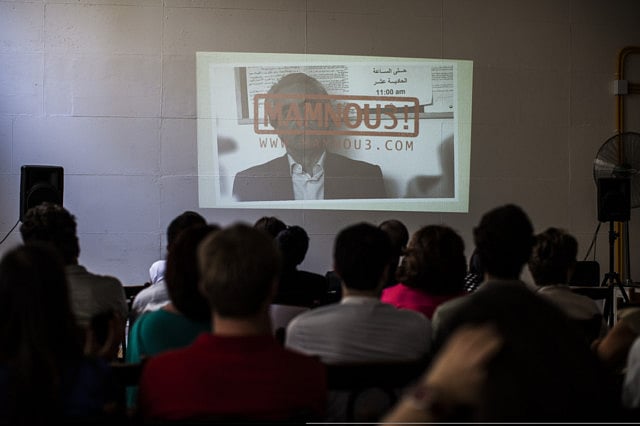
Lahoud decided to take on the censorship bureau directly, with a weekly dramatic series called Mamnou3!, a “mockumentary” set in a re-creation of the 70s-styled office space of the censorship bureau, full of steel filing cabinets where the only computer is the size of a small refrigerator. (Mamnou means forbidden in Arabic.)
Financed by European Union grant money through the Samir Kassim Foundation, the series premiered last Monday — not on television, which would require approval of the bureau that it mocks, but online, promoted by social networking sites.” We’re guessing they won’t do anything about it,” Lahoud said, “not because they don’t want to, but because they don’t have the capacity.”
— New York Times News Service
Sign up for the Daily Briefing
Get the latest news and updates straight to your inbox
Network Links
GN StoreDownload our app
© Al Nisr Publishing LLC 2026. All rights reserved.