Yemeni civilians celebrate while riding in the back of a pickup truck in the Bani Matar district, Yemen, Saturday, Sept. 12, 2026, following the Houthi takeover of the southern Red Sea port city.
100 US advisers, no air cover: How Houthis seized Mocha and Perim Island in 36 hours
US advisers provided intelligence, but promised air cover never came as militants advance
Last updated:
4 MIN READ
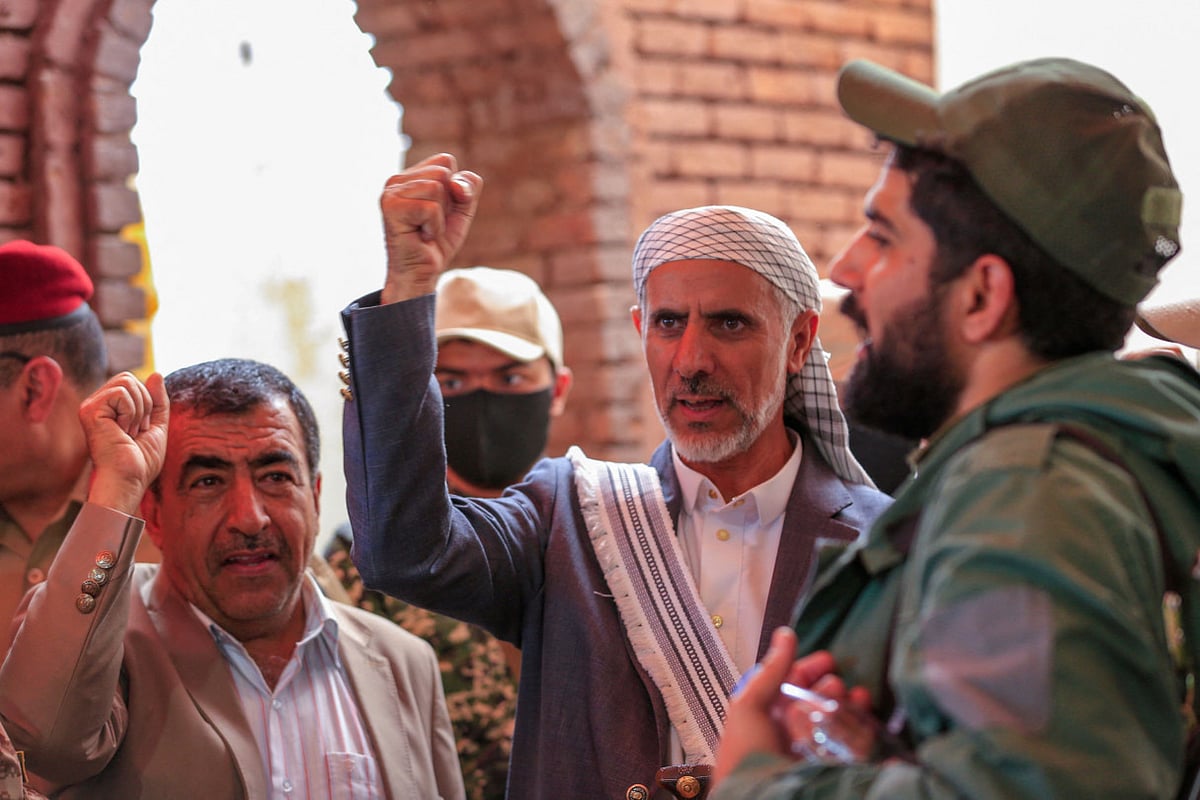
Houthi caretaker prime minister Mohammed Ahmed Miftah arrives for a press conference on September 12 in Sanaa after 210 prisoners were released following the Houthis’ Red Sea coast offensive.
AFP
Dubai: More than 100 US military advisers were helping Saudi Arabia with intelligence and targeting. Senior commanders with Yemen’s UN-backed government repeatedly warned that a major Houthi assault was coming.
Yet when Iran-backed Houthi militants surged down Yemen’s Red Sea coast, the air cover defenders desperately sought never arrived.
Within an extraordinary 36 hours, the Houthis captured the strategic port of Mocha and then Perim Island — also known as Mayun — at the entrance to the Bab Al Mandeb Strait.
The rapid collapse has triggered a blame game over how two strategically important positions could fall despite months of warning and growing US support for Saudi Arabia’s campaign against the Houthis, according to a CNN report.
It has also given Iran and its Houthi allies potentially greater leverage over a second vital shipping chokepoint at a time when Tehran is already restricting traffic through the Strait of Hormuz.
‘The air support never came’
The decisive Houthi push towards Mocha began on Thursday morning.
A senior Yemeni military source told CNN that the Houthis threw waves of fighters into the offensive, backed by ballistic missiles and other weapons.
As the situation deteriorated, the source contacted US Central Command and was assured Washington was monitoring events closely and that Saudi air support was coming.
It never did.
By the end of the battle, Mocha had fallen.
The following day, Houthi forces captured Perim, a small but strategically important island sitting at the southern entrance to the Red Sea.
The island divides the Bab Al Mandeb Strait into two channels and provides a potential platform close to one of the world’s most important shipping corridors.
Trump reportedly refused Saudi request
The lack of air support is particularly significant because Saudi Arabia had reportedly sought direct US military intervention.
Saudi Crown Prince Mohammed bin Salman spoke twice with US President Donald Trump on Thursday and urged him to order strikes against the Houthis, a source familiar with the discussions told CNN.
Trump declined, according to the report.
The White House told CNN that Washington was focused on protecting core US national security interests, including freedom of navigation in the Red Sea, while enabling regional partners to take the lead in addressing security challenges.
The US position therefore appears to draw an important line: Washington is providing intelligence and targeting assistance but has stopped short of directly entering the battle on behalf of Yemeni and Saudi forces.
More than 100 US advisers
That distinction makes the collapse of the coastal defences even more striking.
CNN had earlier reported that more than 100 US military advisers had been sent to Saudi Arabia to provide intelligence and targeting support for its campaign against the Houthis.
The Americans are working as part of a newly established joint forces command created amid indications that Iran was increasing assistance to its Yemeni ally.
One US official estimated the overall American military presence connected to the effort in Saudi Arabia at roughly 200 personnel.
CENTCOM commander Admiral Brad Cooper was also in Saudi Arabia on Thursday for coordination meetings, according to CNN.
But intelligence and advisers could not substitute for aircraft when the Houthi assault began.
‘Ghost’ troops weaken defences
The failure was not solely about missing air strikes.
CNN’s reporting points to serious weaknesses inside the anti-Houthi forces themselves.
Houthi militants entering Mocha reportedly encountered Yemeni military units that were dramatically weaker than their official numbers suggested.
A Western source with knowledge of the operations told CNN that the battalion rosters contained “ghost names” — personnel who existed on payrolls but were not actually available to fight.
The real strength of the forces was estimated at only around 20 per cent of what appeared on paper.
There was another problem: Fragmentation.
Mohammed Al Basha, an analyst who has advised the US government and private sector on Arabian Peninsula risks, told CNN there was no political cohesion among the forces opposing the Houthis and no unified command-and-control structure.
What happens next?
The consequences extend far beyond Yemen.
Perim sits at the mouth of Bab Al Mandeb, the narrow passage connecting the Red Sea with the Gulf of Aden and, beyond it, the Arabian Sea.
The route has become even more important during the Iran war as some oil exports have been redirected towards the Red Sea to reduce dependence on the Strait of Hormuz.
Control of additional coastal territory also gives the Houthis more locations from which they could potentially launch boats or attacks against shipping.
And the advance may not be over.
Al Basha told CNN that satellite imagery and open-source intelligence indicated Houthi forces were mobilising and could now move east.
That leaves Washington and its regional partners facing an uncomfortable question: After intelligence support, military advisers and weeks of warnings failed to prevent the loss of Mocha and Perim, what will stop the Houthis from taking their next target?

A Senior Associate Editor with more than 30 years in the media, Stephen N.R. curates, edits and publishes impactful stories for Gulf News — both in print and online — focusing on Middle East politics, student issues and explainers on global topics. Stephen has spent most of his career in journalism, working behind the scenes — shaping headlines, editing copy and putting together newspaper pages with precision. For the past many years, he has brought that same dedication to the Gulf News digital team, where he curates stories, crafts explainers and helps keep both the web and print editions sharp and engaging.
Sign up for the Daily Briefing
Get the latest news and updates straight to your inbox
Network Links
GN StoreAbout Gulf NewsTerms & ConditionsReach by GNSitemapContact usPrivacy PolicyGN FocusHave your sayWork with usAdvertise with usGulf News epaperPrinting Services
Download our app
© Al Nisr Publishing LLC 2026. All rights reserved.