The challenges awaiting Britain’s new prime minister Andy Burnham
Expectations are soaring, but Britain’s fiscal and political limits remain
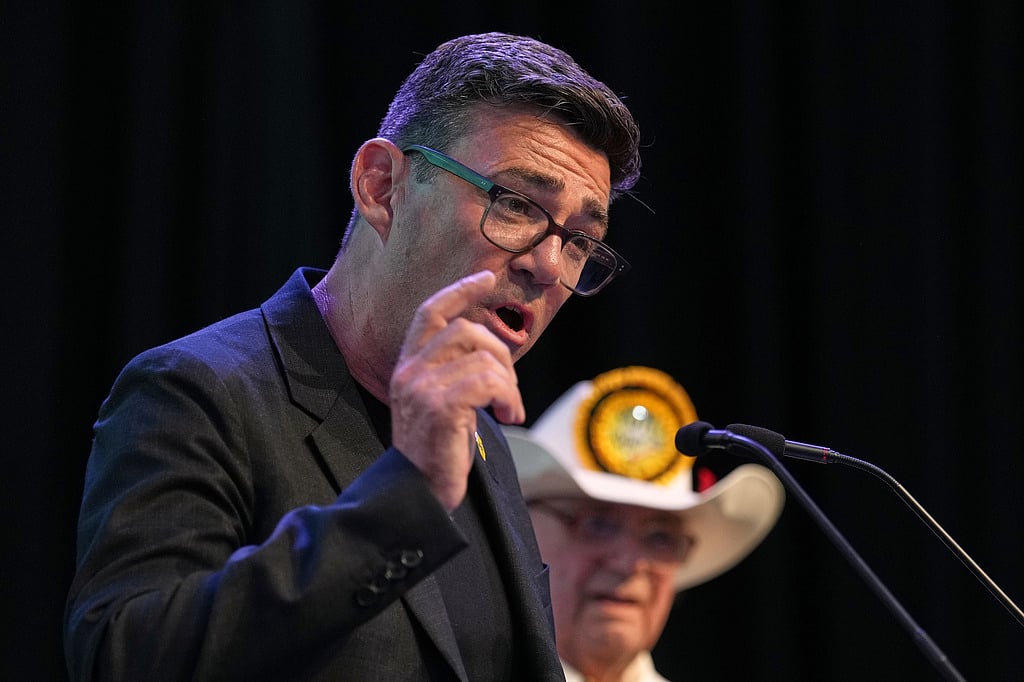
Andy Burnham arrives in Downing Street with something few incoming British prime ministers enjoy - political momentum and public goodwill. After years away from Westminster, the former Greater Manchester mayor has returned to national politics promising to revive the economy, spread opportunity beyond London and reconnect voters with a government they increasingly distrust.
But the optimism surrounding his victory is matched by the scale of the task before him.
Burnham inherits a slowing economy squeezed by the fallout from the Iran conflict, strained public finances, mounting pressure on public services and an increasingly volatile international environment. At home, he must confront rising support for Reform UK and persistent concerns over immigration, while overseas he will have to navigate relations with US President Donald Trump, maintain Britain’s backing for Ukraine and define a more distinct approach to the war in Gaza.
The contrast with the job he leaves behind is stark. For most of the past decade Burnham led Greater Manchester, overseeing a region of around three million people and developing a governing model that combined public investment with private sector partnerships. Running a nation of almost 70 million people, however, presents challenges on an entirely different scale.
His success will ultimately depend not on the popularity that carried him into office, but on whether he can turn ambitious promises into tangible results.
Reviving an economy with limited options
The economy will dominate Burnham’s early months.
He has pledged to make Britain “more affordable” and ensure “all people and places are lifted from where they are now”, while arguing that the country needs a fresh model of growth that spreads investment beyond London.
His political identity has been shaped by what supporters call “Manchesterism” - combining business investment, public funding and devolved decision-making to regenerate local economies through transport, housing and infrastructure.
Whether that formula can be replicated nationally is far less certain.
Britain’s economic outlook has deteriorated after the Iran conflict disrupted global forecasts, with slower growth and higher inflation expected to squeeze both households and government finances. That leaves Burnham facing difficult choices over spending while operating within Labour’s existing commitments not to raise its main tax rates.
He has refused to rule out a wealth tax, saying the country “might be having to ask for a little more.”
Even supporters acknowledge the constraints.
Joshi Herrmann, founder of Manchester news outlet The Mill, believes Burnham could help ease pressures on struggling families but questioned whether he could engineer the deeper transformation Britain’s economy requires.
“If the essay question is who can get economic growth and who can remodel the economy in the post-Brexit, post-financial crash era, I’d be very surprised if the answer to that question is Andy Burnham,” Herrmann said.
From local leader to global statesman
Burnham’s experience has largely been domestic, but international crises will immediately demand his attention.
He has promised continuity on Britain’s core security commitments, pledging unwavering support for NATO, the UK’s nuclear deterrent and Ukraine.
“British support for Ukraine will not falter,” he wrote earlier this month, adding that Britain’s commitment to NATO “will remain absolute”.
Yet the most unpredictable diplomatic challenge may come from Washington.
Former prime minister Keir Starmer initially developed a productive relationship with President Donald Trump before ties deteriorated over Britain’s stance on Iran and defence spending. Burnham now inherits that delicate relationship.
Trump has admitted he knows little about Britain’s new leader, describing him simply as “very liberal”.
Burnham has signalled that he intends to engage respectfully while remaining willing to disagree.
“I’ll deal with him very upfront,” he said. “Where you disagree, do it... in a way that is kind of meeting him where he’s at.”
Maintaining Britain’s close alliance with Washington while preserving room for independent positions could prove one of the defining diplomatic balancing acts of his premiership.
Gaza could expose divisions at home
Perhaps no foreign policy issue presents greater political sensitivity than Gaza.
Burnham has repeatedly argued that Britain was too slow to call for a ceasefire following Hamas’s October 7, 2023 attack on Israel, while insisting that stronger pressure should now be applied on the Israeli government.
“The UK was too slow to call for a ceasefire,” he said recently. “We must now do more to strengthen our approach.”
He has suggested further sanctions should be considered and has proposed examining measures “to ban trade in goods with illegal settlements”.
The issue remains politically fraught for Labour.
The party continues to face scrutiny over its handling of antisemitism under previous leadership, while many Muslim voters believe the government has not gone far enough in criticising Israel’s military campaign in Gaza. Burnham has therefore drawn criticism from both Jewish organisations and pro-Palestinian campaigners — illustrating the difficulty of finding a position capable of satisfying either side.
Immigration remains a political flashpoint
Migration is another issue Burnham cannot afford to ignore.
Although it featured little in his Labour leadership acceptance speech, immigration has become one of Britain’s defining political debates and a major driver behind Reform UK’s recent electoral gains.
Like the outgoing government, Burnham supports reducing net migration while expanding safe and legal routes for refugees. He has also backed legislation intended to reduce dangerous English Channel crossings.
The challenge, however, extends beyond policy.
Public confidence in Britain’s immigration system remains fragile, and opponents are likely to judge Burnham less on long-term reforms than on whether arrivals across the Channel continue to fall during his time in office.
Europe without reversing Brexit
Another area where Burnham is expected to shift emphasis is Britain’s relationship with Europe.
A long-time critic of Brexit, he has made clear he wants closer cooperation with the European Union on trade, security, illegal migration, counter-terrorism and emerging threats such as AI-driven disinformation.
At the same time, he has ruled out rejoining the bloc during his premiership, seeking instead to deepen practical cooperation without reopening Britain’s most divisive political argument.
Expectations will be difficult to match
Burnham enters office with high expectations and considerable political capital.
But he also inherits a country where many of the biggest problems — sluggish growth, overstretched public services, geopolitical instability and polarised politics — have frustrated successive governments regardless of party.
His years as mayor established a reputation as an energetic local reformer capable of building consensus and attracting investment. The question now is whether those qualities can translate to national government, where fiscal constraints are tighter, political divisions run deeper and every decision carries international consequences.
With inputs from AP and AFP
Sign up for the Daily Briefing
Get the latest news and updates straight to your inbox
Network Links
GN StoreDownload our app
© Al Nisr Publishing LLC 2026. All rights reserved.