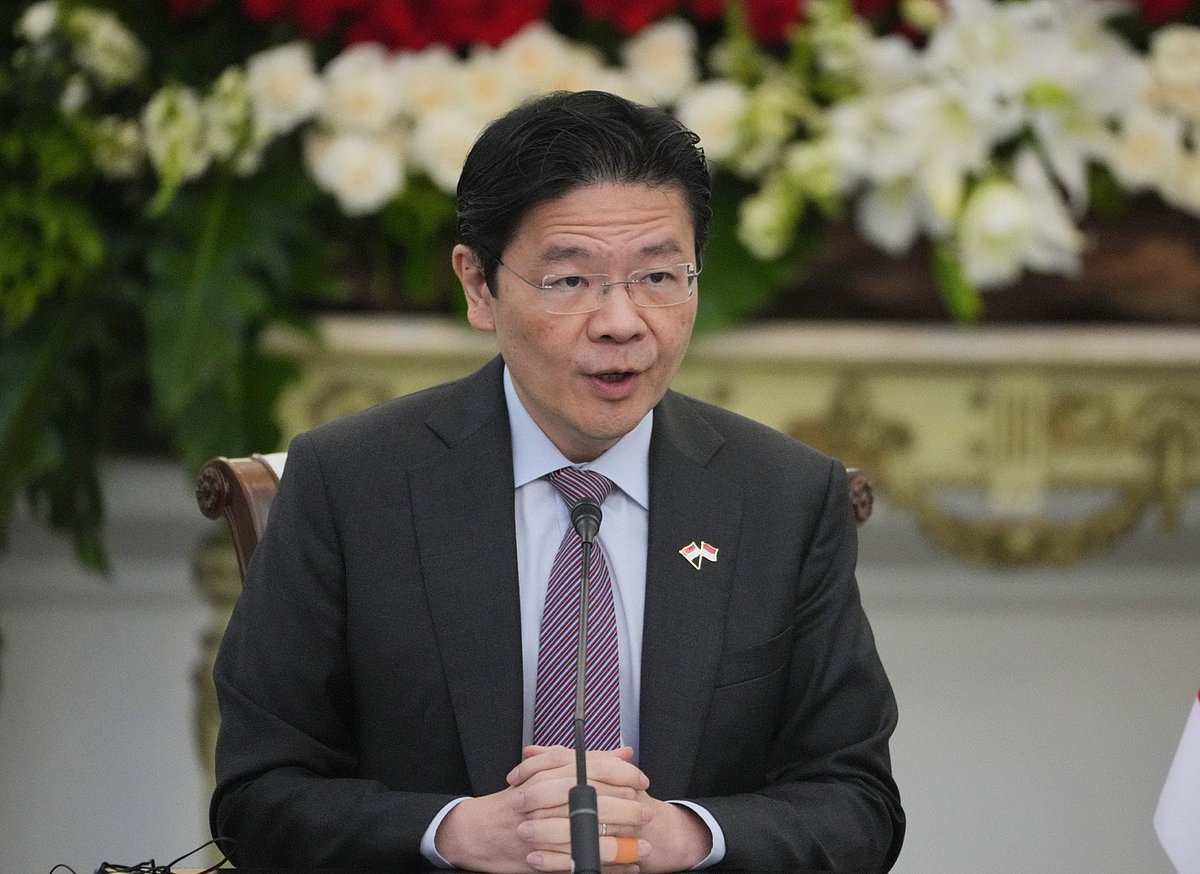
Dubai: The world’s highest-paid political leader is about to become even better paid.
Singapore Prime Minister Lawrence Wong’s benchmark annual salary will rise by S$1.4 million ($1.1 million) to S$3.6 million ($2.8 million) under a major overhaul of political salaries announced on Tuesday.
Wong is already the highest-paid political leader in the world, according to the BBC, with his pay far exceeding that of leaders of the United States and other G7 nations.
The scale of the pay package is striking by international standards. The US president receives an annual salary of $400,000, meaning Wong’s new $2.8 million benchmark is about seven times as much. Other highly paid political leaders include those of Switzerland, Australia and Germany, whose annual remuneration runs into several hundred thousand dollars.
But Wong said he would donate his entire salary increase to charity over the next five years.
How Wong’s pay compares
Singapore PM: $2.8m new benchmark
Hong Kong chief executive: about $568,000
Swiss Federal Council president: about $507,000
US president: $400,000
Australian PM: around $390,000+
German chancellor: around $370,000+
New Zealand PM: around $325,000
Italy PM: roughly $120,000–$130,000
India PM: about $23,000
Nepal PM: about $6,500
Salary structures, allowances and official benefits vary widely between countries.
The revision, Singapore’s first adjustment to ministerial salaries in 15 years, will also substantially raise the benchmarks for cabinet ministers and other political officeholders.
The benchmark salary for a minister at the lowest grade will rise from S$1.1 million ($868,330) to S$1.8 million ($1.42 million), while the deputy prime minister’s benchmark will increase from S$1.87 million to S$3.06 million.
Ministers will have salary benchmarks ranging from S$1.8 million to S$2.88 million, depending on seniority and the weight of their portfolios.
Ministers won’t get full increase immediately
Despite the large increases in the benchmarks, existing ministers will not immediately receive the full amounts.
Instead, political officeholders will receive a one-time adjustment of up to 9 per cent from October 15, depending on performance and responsibilities.
Wong said most ministers at the lowest grade were expected to earn about S$1.35 million ($1.06 million) by the end of the current term. Subsequent increases will depend on individual performance and responsibilities.
A 9 per cent adjustment to Wong’s existing benchmark would take it to about S$2.4 million ($1.89 million).
“Political salaries are a difficult and emotive issue,” Wong told Parliament, acknowledging that ministers earn far more than most Singaporeans.
But he argued that competitive salaries were necessary to persuade highly capable people to enter politics rather than remain in the private sector or public service.
“Our starting point is this: good government depends on good leadership,” he said.
Why Singapore pays politicians so much
Singapore has long defended its unusually high political salaries as a way of attracting top talent and maintaining high standards of government.
Its salary formula uses the median income of the country’s top 1,000 citizen earners as a reference and applies a 40 per cent discount to reflect the nature of political service.
Wong said the country had chosen to deal with political remuneration openly, without hidden salary components or perks outside the published framework.
“Good government did not come naturally to Singapore. It was built deliberately over many years,” he said.
The current framework followed a 2011 review that resulted in ministerial salaries being cut by about 36 per cent amid public concern over political pay.
A subsequent review in 2017 recommended adjustments, but they were not implemented, while a review due in 2023 was deferred.
Under the new system, political salaries will be reviewed every five years.
Wong said the changes would give future prime ministers a better chance of persuading capable Singaporeans to enter politics and help build “the strongest possible team for Singapore.”
-- With inputs from AP & AFP

Sign up for the Daily Briefing
Get the latest news and updates straight to your inbox
Network Links
GN StoreDownload our app
© Al Nisr Publishing LLC 2026. All rights reserved.