Bangkok: On any given Monday, Thai Airways flight 518 from Dubai disgorges some 260 passengers seeking sun, sand and fun in this tourist haven.
This morning, fewer than 100 passengers wound their weary way to the international terminal, a stark testament to the months of political turmoil that has brought this troubled kingdom to breaking point.
Tourism is a key component to Thailand's economy. If Flight 518 is any indicator of the effect months of protest have, it is this: This nation is suffering, Shades of political protest, either Red Shirt or Yellow Shirt, are hitting this nation's bottom line. Few are coming.
But there are those willing to ignore the headlines and news reports of deaths, destruction and mayhem.
"Thailand is a beautiful country," says Scott Whittle, a 36-year-old worker in construction from Cannock, a hard-scrabble town in the British Midlands. He normally visits Thailand twice a year.
"The political troubles are based in central Bangkok. Every where else it is normal."
Whittle and his buddy, Ivan Molineaux, are heading to Phraya, a golfing and tourist destination not from Bangkok. There, the two will thank friends and relatives for looking after Whittle's dad, who passed away there recently.
They won't be spending any time in the Thai capital: They have a reliable taxi driver ready to pick them up at the airport to whisk them away from the capital's troubles.
"Thais are beautiful people," Whittle says, "Yes, we have heard the reports of violence and killing but the reality is that the protests are largely focused on one area of Bangkok. The rest of the country is peaceful and normal."
For the passengers on this Airbus 340-600, any feelings of peace and tranquility are shattered by a huge smoky photograph adorning the front of the Bangkok Post with a banner headline declaring "Bangkok Burning".
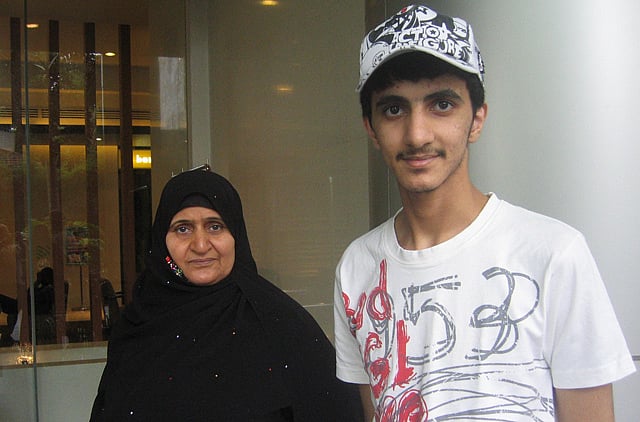
Ahmad, an Emirati, is bringing his sick mother to Bangkok for medical treatment. Fatma, 72, is suffering from stomach and colon cancer, and the family regularly makes the six-hour trip to Bangkok for chemotherapy and radiation treatments.
According to Ahmad, this is the eighth time they have made the trip so far. Because the plane is more than 50 per cent empty, Fatma curls up on 34 H and K, his arthritic fingers pulling a thin purple Thai Airways blanket over her abaya, savouring the extra space this flight now has to offer while trying to catch some rest.
On the ground, there is little chance for rest. A blanket of violence and unrest shrouds the city. And the Sky Train, the fast and efficient means of getting to the international airport, is closed because of the unrest.
"Yes, there is trouble," Ahmed says, neatly folding a paper serviette over his half-eaten economy-class chicken and rice. But he's not deterred from visiting the city. For his family, it's a medical necessity.
"I have many reports from the doctors and, Inshallah, my mother will get better," he says.
What isn't getting better is the situation on the ground.
On Monday the Thai government backed off threats to impose a curfew on the capital. So far, more than 37 people have been killed and 230 wounded in several days of clashes with security forces and troops. The Bangkok government has rejected UN intervention in ending the crisis.
According to Thai government figures, at least 60 people have been killed and more than 1600 wounded since March when anti-government protesters – Red Shirts – began their campaign for fresh elections and calling for the resignation of Prime Minister Abhisit Vejjajiva.
The crisis has been simmering for the past five years but has come to head since March.
The red shirts accuse the fragile Thai coalition government, mostly urban based and royalist, of colluding to bring down the governments of Thaksin Shinawatra, a populist telecoms tycoon ousted in a 2006 coup and forced into exile.
The recent violence and deaths has hardened positions on both sides of the divide. In a recent attempt to resolve the impasse, Abhisit offered parliamentary elections on November 14. That offer was rescinded last week as the largely rural-based red shirts refused to leave central Bangkok, resulting in the bloody escalation of violence.
Sign up for the Daily Briefing
Get the latest news and updates straight to your inbox
Network Links
GN StoreDownload our app
© Al Nisr Publishing LLC 2026. All rights reserved.