Economist Lawrence Wong Shyun Tsai, 52, is the current and the fourth Prime Minister of Singapore since 2024 and Minister for Finance since 2021.
Singapore: $600 for every household unveiled
Voucher scheme, outlined in a recent budget, aims to ease cost-of-living pressures
Last updated:
3 MIN READ
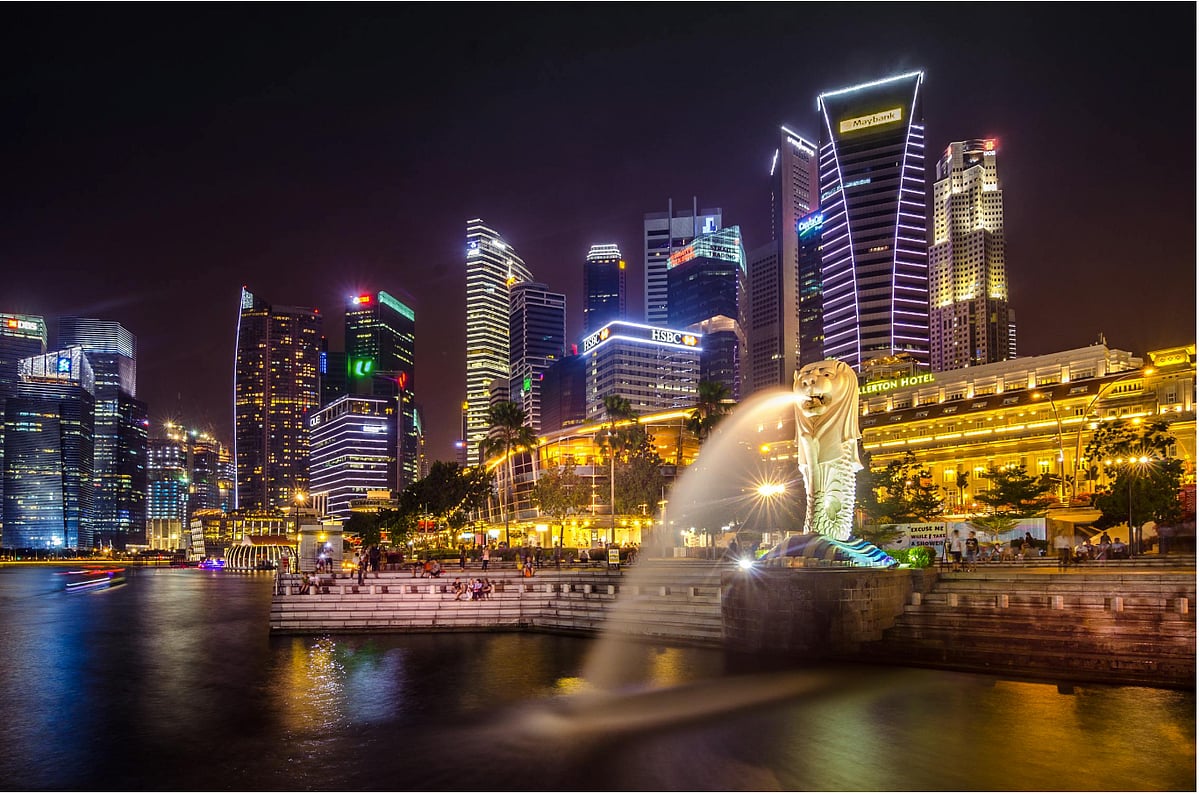
Singapore's skyline glows at night, with the iconic Merlion in the spotlight symbolising the city-state's impressive wealth — one of the highest GDP per capita figures in the world.
Pexels | Kin Pastor
In a bold move to shield its citizens from soaring living costs, Singapore is set to unleash a dramatic new financial lifeline.
Prime Minister Lawrence Wong, in his maiden budget speech as the nation gears up for a general election, unveiled a sweeping voucher scheme that promises to inject renewed hope into every household.
Help for households
Each household will be handed S$800 (about US$600) in vouchers over two installments – S$500 arriving in May and the balance next January – to be spent at local businesses, from bustling hawker centres to modern supermarkets.
“This is S$200 higher than the amount announced in last year’s budget,” declared Wong, emphasisng the government’s commitment to easing the cost-of-living crunch in these challenging times.
Voucher scheme
The voucher initiative, known as the Community Development Council (CDC) vouchers, originally emerged during the Covid-19 pandemic as a vital support mechanism for lower-income families and struggling merchants.
Amid forecasts of 1 to 3 per cent economic growth and inflation hovering between 1.5 to 2.5 per cent, this measure has been amplified to ensure no household is left behind.
But that isn’t all.
In a tribute to Singapore’s storied independence, Wong announced the SG60 package – to mark 60 years of its nationhood.
“Share the benefits of our nation’s progress,” he proclaimed, as SG60 vouchers will be issued: S$600 ($447) for citizens aged 21 to 59 and S$800 ($597) for those aged 60 and above, with the process kicking off in July starting with the elderly.
High per-capital GDP
Singapore has one of the highest GDP per capita figures in the world. According to recent data, Singapore’s nominal GDP per capita is around $65,000, with its purchasing power parity (PPP) measure soaring even higher — often exceeding $100,000.
This remarkable figure eclipses the economic output of its regional peers: Malaysia’s GDP per capita is roughly $12,000, Thailand’s is around $7,000, Indonesia’s hovers near $4,000, and the Philippines is close to $3,000.
The US posts a nominal GDP per capita of about $70,000, while Germany and the United Kingdom typically range between $45,000 and US$55,000.
Tax rebates, special gift for babies
The budget doesn’t stop at cash vouchers.
Wong revealed a slew of additional measures: personal income tax rebates of 60 per cent, capped at S$200 for middle-income workers, and a special SG60 gift for babies born this year, details of which remain tantalizingly under wraps.
For families, extra S$500 credits will support children aged 12 and below, while education funds for teenagers will get a S$500 top-up.
On the corporate front, a 50 per cent corporate income tax rebate for 2025 awaits companies that hire local talent, with benefits starting at S$2,000 ($1,493) and capped at S$40,000 ($29,868).
To secure Singapore’s competitive edge, Wong also pledged massive investments: S$1 billion for biotech and semiconductor facilities, a new national R&D fabrication facility for semiconductors, and a S$150 million initiative to integrate AI solutions in business.
Changi Airport expansion
Notably, for Changi Airport’s impending Terminal 5 expansion – expected to boost capacity by over 50 per cent – an extra S$5 billion ($3.7 billion) is being funneled into the development fund.
Sign up for the Daily Briefing
Get the latest news and updates straight to your inbox
Network Links
GN StoreAbout Gulf NewsTerms & ConditionsReach by GNSitemapContact usPrivacy PolicyGN FocusHave your sayWork with usAdvertise with usGulf News epaperPrinting Services
Download our app
© Al Nisr Publishing LLC 2026. All rights reserved.