Philippines: Working solo parents may get full PhilHealth subsidy
Proposal for taxpayers to cover PhilHealth premiums for employed solo parents approved
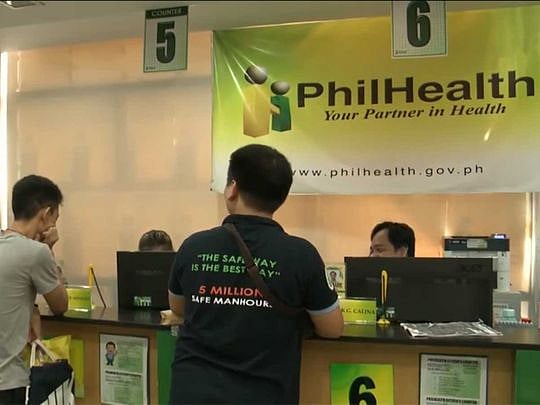
MANILA: The national government is set to shoulder the PhilHealth premium contributions of working solo parents, according to Bagong Henerasyon (BH) party-list Rep. Bernadette Herrera, who announced the development during the House’s 2027 budget deliberations on Thursday.
In a Facebook post, Herrera said the issue was discussed during budget deliberations with the Department of Health (DOH) and state insurer PhilHealth.
“Good news para sa ating mga working solo parents! Sa budget deliberations kanina with DOH and PhilHealth, sagot na ng National Government ang premium contribution para sa ating mga solo parents (Good news for our working solo parents! During the budget deliberations earlier (Sept. 24, 2026, with the Department of Health (DOH) and PhilHealth, the National Government will now cover the premium contributions for our solo parents),” Herrera said.
Herreea said she had long pushed for the measure to ensure that PhilHealth contributions would not become an additional financial burden for solo parents.
The announcement concerns an existing provision of the Expanded Solo Parents Welfare Act, or Republic Act 11861.
The law provides automatic PhilHealth coverage for solo parents and says their premium contributions are to be paid by the national government.
For solo parents in the formal economy, however, the law specifies that the premium is to be shared equally by the employer and the national government.
That distinction is important because PhilHealth's 2024 guidance said that, until Congress provides the necessary appropriations in the General Appropriations Act (GAA), employed solo parents would continue paying their personal share.
Estimates indicate there are approximately 14 to 15 million solo parents in the Philippines, with roughly 95% being women. However, official government records from the Department of Social Welfare and Development (DSWD) show a much smaller baseline of around 260,000 to 346,000 formally registered households due to strict legal definitions and registration hurdles.
If the budget measure is approved and implemented as described by Herrera, working solo parents would no longer have to shoulder their employee share of PhilHealth premiums, with the national government providing the funding.
PhilHealth currently requires employers to deduct an employee's share of the monthly premium from salary and remit it together with the employer's share.
The proposed government funding would therefore directly reduce the payroll deduction faced by qualified employed solo parents.
The announcement comes as the House is scrutinising the proposed 2027 national budget.
House records show lawmakers were conducting plenary deliberations on House Bill 10858, the proposed FY 2027 General Appropriations Bill, this week.
The government has separately proposed ₱74.45 billion for PhilHealth in 2027, including funding for national-government premium subsidies for qualified beneficiaries.
The Department of Budget and Management said about 11.09 million beneficiaries are targeted for premium subsidies next year, up from about 10.65 million in 2026.
The proposed PhilHealth allocation also includes ₱19 billion for improved benefit packages and other priority health interventions, according to the government.
Herrera: 'Para sa inyo ito'
Herrera urged Filipinos to share the announcement with employed solo parents.
“Matagal na itong ipinaglalaban para matiyak na hindi na dagdag na pasanin ang PhilHealth contribution sa ating mga solo parents. Sa ating mga solo parents, para sa inyo ito!” (This is something we have been fighting for for a long time to ensure that the PhilHealth contribution is no longer an added burden to our solo parents. To our solo parents, this is for you!)
The development could be significant for families raising children without a spouse or partner. RA 11861 already recognises solo parents as a group entitled to automatic PhilHealth coverage.
By the numbers: Expanded Solo Parents Welfare Act
260,934 — registered solo parents nationwide, according to the DSWD Protective Services Bureau.
291 — local government units (LGUs) currently providing monthly subsidies to registered solo parents.
1 year — validity period of the Solo Parent Identification Card (SPIC), which must be renewed annually.
4th degree — degree of consanguinity covering relatives who may qualify as solo parents if they assume parental responsibility, including grandparents, siblings, aunts, uncles and cousins.
2022 — year Republic Act No. 11861, the Expanded Solo Parents Welfare Act, was enacted.
1 key requirement — a solo parent must exclusively exercise sole parental care and support for the child, without cohabitation or co-parenting arrangements.
3 additional categories — legal guardians, adoptive parents and foster parents may qualify as solo parents.
OFW spouses — individuals married to a low-income overseas Filipino worker may also qualify under the law.
However, the precise implementation date, funding mechanism and whether the provision will be reflected in the final 2027 General Appropriations Act still need to be established.
Herrera's announcement is the latest development amid the ongoing budget proces, not an evidence that the new payment arrangement is already operational.
Network Links
GN StoreDownload our app
© Al Nisr Publishing LLC 2026. All rights reserved.