US files extradition bid vs Quiboloy, 2 others over human, sex trafficking, cash-smuggling charges
US pushes for extradition of detained Pastor Quiboloy over trafficking allegations
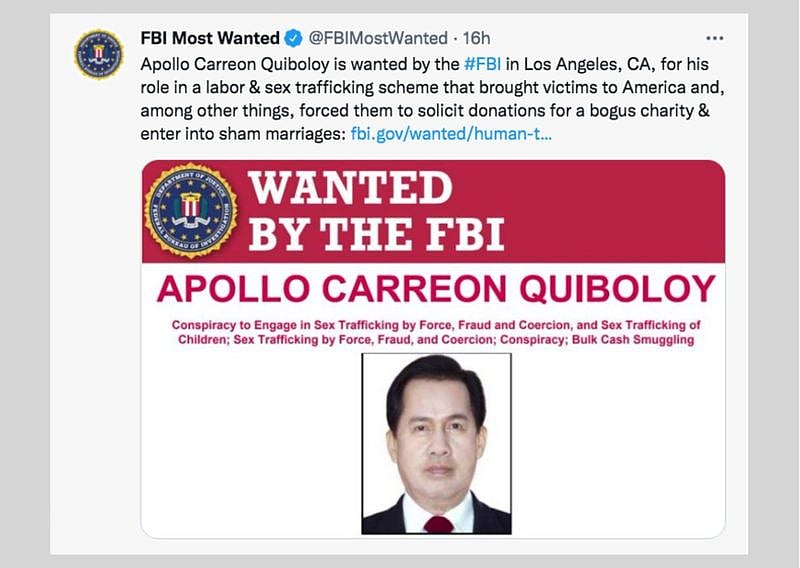
MANILA — The United States has formally asked the Philippines to extradite detained pastor Apollo Quiboloy and two other individuals to face criminal prosecution over alleged international human trafficking, sex trafficking and related offences.
The Philippines' Department of Justice (DOJ) confirmed that the extradition request was filed on November 9 before a Makati court.
It marks a significant procedural development in Washington's efforts to bring the Kingdom of Jesus Christ (KOJC) founder and his co-respondents under US jurisdiction.
Makati is one of 16 the component cities of the National Capital Region (NCR), which also includes the City of Manila.
The two other individuals named in the request are Teresita Tolibas Dandan and Helen Panilag, local media reported.
The case was assigned to Makati Regional Trial Court Branch 145, presided over by Judge Karen Matti Sy, according to the DOJ.
The US-Philippines Extradition Treaty, signed in 1994, allows either nation to request the surrender of individuals accused or convicted of extraditable crimes. It covers offenses punishable in both countries by over a year of imprisonment, significantly strengthening bilateral cooperation against transnational crime, terrorism, and fugitives evading justice.
The US government is seeking their surrender to face prosecution over allegations involving international human trafficking, sex trafficking, conspiracy and bulk cash smuggling.
The requests are supported by US arrest warrants, the department said.
Quiboloy, who leads the religious organisation KOJC, has been at the centre of criminal investigations involving allegations of sexual abuse, exploitation and trafficking. He has denied wrongdoing.
The extradition filing, however, does not mean the three respondents will automatically be transferred to the United States. Nor does it establish their guilt.
Under Philippine law, extradition proceedings require judicial consideration of the requesting country's application, the supporting documents and any legal objections raised by the respondents.
The Makati court must determine whether the requirements for extradition under applicable Philippine law and the country's treaty obligations have been satisfied.
The proceedings are separate from any criminal cases being pursued against the respondents in the Philippines.
An extradition ruling would determine whether they can be surrendered to US authorities, not whether they are guilty of the underlying allegations.
The filing opens another legal front in a case with significant implications for Philippine-US law enforcement cooperation, judicial independence and the pursuit of alleged trafficking offences across international borders.
No extradition approval or transfer date has been established by the filing alone.
The case tests how effectively the Philippines cooperates with US authorities in pursuing alleged transnational crimes.
It also puts the country's extradition procedures, judicial independence and treatment of high-profile respondents under scrutiny.
The Makati court is expected to take up the application, examine supporting evidence and consider the respondents' legal objections.
Any extradition decision must follow judicial proceedings, not automatic executive approval.
Network Links
GN StoreDownload our app
© Al Nisr Publishing LLC 2026. All rights reserved.