Philippines: MRT-7 targets June 2027 opening — Bulacan station still included in 14-station line
All 14 MRT-7 stations retained as government targets phased launch starting 2027
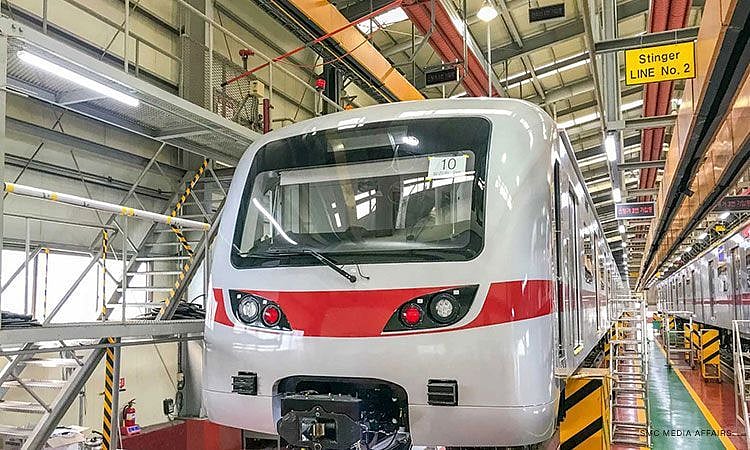
Manila: The Department of Transportation (DOTr) on Sunday moved to dispel reports that a key Bulacan station had been removed from the long-delayed Metro Rail Transit Line 7 (MRT-7) project, saying all 14 stations remain part of the approved alignment and that partial operations are still targeted for 2027.
In a statement, the DOTr clarified that the San Jose del Monte (SJDM) station in Bulacan remains included in the project despite reports suggesting the railway would operate with only 13 stations.
Get updated faster and for FREE: Download the Gulf News app now - simply click here.
“The San Jose del Monte (SJDM) Station remains part of the MRT-7 project and has not been removed from the approved alignment,” the agency said.
Government planners estimate MRT-7 could serve up to 850,000 passengers daily once rolled out
The DOTr said it remains on track to begin operations on the project's initial 12 stations — from Sacred Heart in Bulacan to North Avenue in Quezon City — by the second quarter of 2027.
The remaining two stations, Tala and San Jose del Monte, are expected to be completed and opened to passengers in 2028.
Once fully operational, MRT-7 will connect northern Metro Manila to Bulacan through a 22-km railway corridor designed to ease chronic traffic congestion along Commonwealth Avenue, one of the country's busiest highways.
The line will include 14 stations:
North EDSA
Quezon Memorial Circle
University Avenue
Tandang Sora
Don Antonio
Batasan
Manggahan
Doña Carmen
Regalado
Mindanao Avenue
Quirino
Sacred Heart
Tala and
San Jose del Monte.
The project is expected to reduce travel time between Quezon City and San Jose del Monte from as much as three hours by road to approximately 35 minutes by rail.
Government planners estimate MRT-7 could serve up to 850,000 passengers daily once fully operational, making it one of the country's most significant urban transport projects.
The clarification comes weeks after the Economy and Development Council (ED Council), chaired by President Ferdinand Marcos Jr., approved refinements to the project's implementation to address construction and operational challenges that have delayed its completion.
The council's approval included technical adjustments intended to accelerate construction and resolve outstanding issues affecting the project.
Refinements to route
Department of Economy, Planning and Development Secretary Arsenio Balisacan said the refinements represent a critical step toward delivering a project that commuters have awaited for years.
“The approval of the refinements for MRT-7 implementation marks a critical step forward in finally delivering this long-overdue project,” Balisacan said.
Construction of MRT-7 began more than a decade ago but has faced repeated delays due to right-of-way issues, design revisions, financing concerns and the COVID-19 pandemic.
The railway forms part of the government's broader strategy to expand mass transit capacity in Metro Manila and neighbouring provinces amid worsening traffic congestion and growing commuter demand.
Network Links
GN StoreDownload our app
© Al Nisr Publishing LLC 2026. All rights reserved.