Philippine senators, acting judges of the impeachment court, speak with each other as they have a break during the impeachment trial of Philippine Vice President Sara Duterte at the Senate of the Philippines in Pasay, Metro Manila on July 7, 2026.
Day 2: Why Sara Duterte's 'kill video' has become a flashpoint in her impeachment trial
Senate clash over ‘kill video’ raises new questions on evidence and due process
Last updated:
5 MIN READ
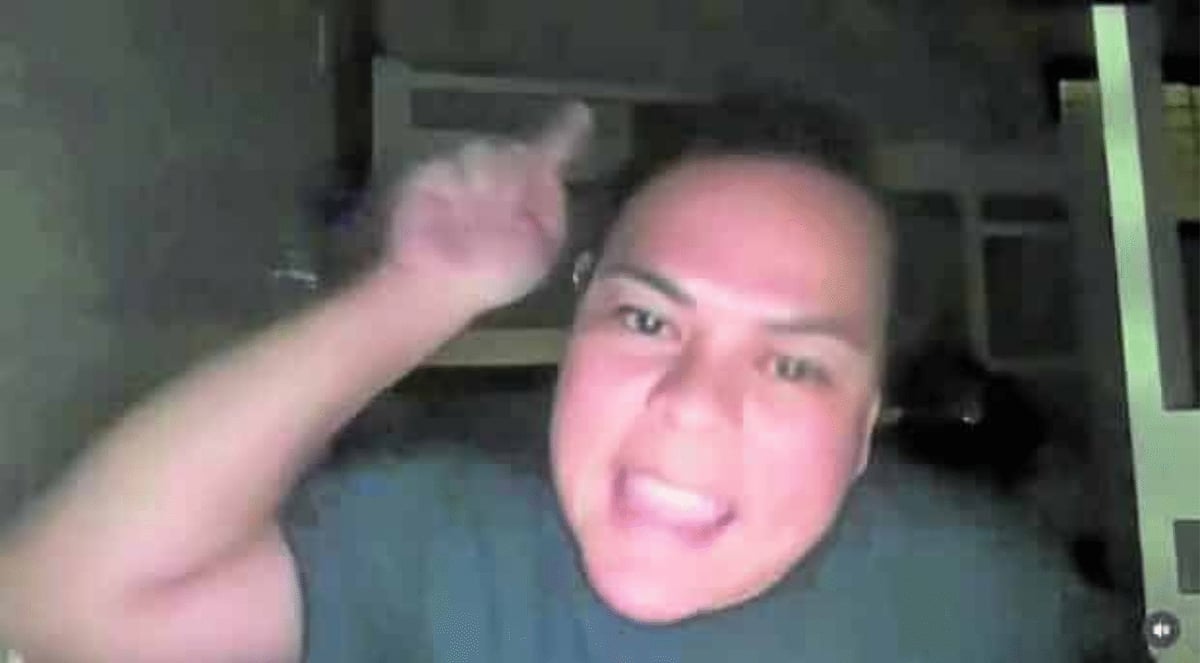
A screengrab from Vice President Sara Duterte's online media briefing in November 2024 captures the moment she made remarks that prosecutors say threatened President Ferdinand R. Marcos Jr., First Lady Liza Araneta-Marcos and then-House Speaker Martin Romualdez — statements that have become one of the most hotly contested pieces of evidence in her Senate impeachment trial.
Screengrab
Manila: On Day 2 of the impeachment trial, a two-minute video in which Vice President Sara Duterte says she had instructed someone to kill President Ferdinand Marcos Jr., First Lady Liza Araneta-Marcos and former House Speaker Martin Romualdez if she herself were killed has emerged as one of the most fiercely contested pieces of evidence in her Senate impeachment trial.
On the second day of proceedings on Tuesday (July 7, 2026), prosecutors and defence lawyers clashed over whether the video should be played at all, raising broader questions about evidence, due process and the Constitutional scope of impeachment.
Vice President Sara Duterte struck a defiant tone as she faced reporters during a brief news conference at the Senate on Tuesday, declaring she would not be intimidated by the impeachment proceedings.
“In this bloodbath and bludgeoning, I will be bloodied but unbowed,” Sara Duterte said, quoting a famous line from William Ernest Henley’s 1875 poem "Invictus" ("unconquerable"), to highlight immense resilience despite suffering.
[The same poem was cited by Timothy McVeigh, as his final written statement before his lethal injection execution on June 11, 2001, for the massacre of 168 people in the 1995 Oklahoma City bombing.]
The vice president was at the Senate to confer with her defence team but did not attend the day's impeachment trial proceedings, leaving her lawyers to represent her before the impeachment court.
Get updated faster and for FREE: Download the Gulf News app now - simply click here
Here's what to know:
What is the "kill video"?
The disputed footage comes from a November 23, 2024 video from a livestreamed press conference conducted by VP Sara Duterte lasting more than two hours. The video was authenticated by digital forensics experts from the National Bureau of Investigation (NBI).
Responding to a question about her own security, Duterte said in Filipino that she had already instructed someone that if she were killed, that person should kill President Ferdinand Marcos Jr., First Lady Liza Araneta-Marcos and former House Speaker Martin Romualdez.
She added that the instruction was "no joke."
The prosecution played only a 2-minute, 18-second excerpt, arguing it was the portion directly relevant to the impeachment charge.
Why is the video important?
The video forms a key part of Article IV of the Articles of Impeachment, which accuses Duterte of making grave threats against the president and other senior officials.
House prosecutors argue the remarks demonstrate conduct incompatible with public office and constitute an impeachable offence because they allegedly show an intent to incite or threaten violence against the country's highest officials.
The prosecution has identified Article IV as the first article it intends to prove before proceeding to allegations involving confidential funds, bribery and unexplained wealth.
Why did the defence object?
Defense lawyer Carlo Joaquin Narvasa argued that prosecutors should not be allowed to play only selected excerpts.
Instead, the defence requested that the entire two-hour, 26-minute video be presented, arguing that isolated clips remove important context.
House private prosecutor Amando Virgil Ligutan countered that prosecutors have the discretion to determine what evidence is relevant during their presentation and that the defence will have an opportunity to play the remainder of the recording during its own case.
Philippine Senate President Win Gatchalian (L) and Presiding Officer Francis Escudero (R) speak during the impeachment trial of Philippine Vice President Sara Duterte at the Senate of the Philippines in Pasay, Metro Manila on July 7, 2026.
What did the Senate impeachment court decide?
Presiding Officer Sen. Francis "Chiz" Escudero allowed prosecutors to play the shortened clip over the defense's objection.
He also permitted prosecutors to present another video from Oct. 18, 2024, in which Duterte spoke about imagining cutting off President Marcos' head.
Earlier, Sen. Pia Cayetano moved to strike from the record portions of the prosecution's arguments regarding whether the alleged assassination threat itself constituted an impeachable offense.
Escudero deferred ruling on that motion, saying it would be resolved later in the proceedings.
Is making such a statement a crime?
That question is separate from whether it constitutes an impeachable offense.
Under Philippine law, prosecutors have pointed to several provisions that may be relevant:
Article 282 of the Revised Penal Code ("Grave Threats") penalises threats to commit a crime intended to cause fear or alarm.
Article 142 (Inciting to Sedition) covers public statements that encourage violence or public disorder against government authorities.
Other criminal statutes may also apply depending on the circumstances, although no criminal conviction is required for impeachment.
Unlike a criminal trial, impeachment is a constitutional process that determines whether a public official should be removed from office for culpable violations of the Constitution, betrayal of public trust, graft, corruption or other impeachable offences.
Does the prosecution have to prove an actual assassination plot?
No.
Legal experts note that impeachment differs from criminal prosecution.
The Senate is not determining whether an assassination conspiracy existed but whether Duterte's conduct, statements and actions amount to impeachable offences under the Constitution.
The prosecution argues the statements themselves constitute grave threats and demonstrate conduct unbecoming of the country's second-highest official.
The defence is expected to argue that the remarks were taken out of context and do not establish criminal intent or impeachable misconduct.
Why is Escudero's authority also under challenge?
Separate from the evidentiary dispute, lawyers allied with Duterte have asked the Supreme Court to halt the impeachment trial.
In a petition filed by lawyer Israelito Torreon and others, the group argues that Escudero lacks constitutional authority to preside over the proceedings because of amendments adopted by the Senate on June 3, 2026.
The petition contends:
only the Senate President — not another senator elected by the chamber — may preside over impeachment trials, except when the President is being tried, in which case the Chief Justice presides;
the rule changes were adopted without complying with procedural requirements; and
if the amendment is unconstitutional, every ruling issued by the presiding officer could also be invalid.
As of Tuesday, the Supreme Court had not publicly ruled on the petition.
What happened on the first two days?
The Senate ruled that 16 votes are required to convict Duterte.
Both prosecution and defense delivered opening statements.
The impeachment court denied the prosecution's request to immediately read the Articles of Impeachment and arraign Duterte.
Subpoenas were issued to two National Bureau of Investigation officials expected to testify.
Day 2
Prosecutors began presenting evidence under Article IV.
The disputed "kill video" and another video from 2024 were admitted for presentation over defense objections.
Senators debated procedural motions on evidence and relevance.
The defense renewed objections regarding selective presentation of the video.
What happens next?
The prosecution is expected to continue presenting witnesses and documentary evidence supporting Article IV before moving to allegations involving:
confidential funds,
bribery,
unexplained wealth, and
other charges contained in the Articles of Impeachment.
The defense will have an opportunity to cross-examine witnesses, present its own evidence — including the full livestream if it chooses — and argue that the prosecution has failed to prove impeachable offenses.
With procedural disputes already emerging alongside constitutional challenges pending before the Supreme Court, legal observers expect the trial to hinge not only on the substance of the allegations but also on questions over evidence, Senate procedure and constitutional interpretation.
Network Links
GN StoreAbout Gulf NewsTerms & ConditionsReach by GNSitemapContact usPrivacy PolicyGN FocusHave your sayWork with usAdvertise with usGulf News epaperPrinting Services
Download our app
© Al Nisr Publishing LLC 2026. All rights reserved.