60 dead from monsoon rains in Philippines
Rescuers braved strong currents in deep waters in total darkness to rescue people trapped in homes
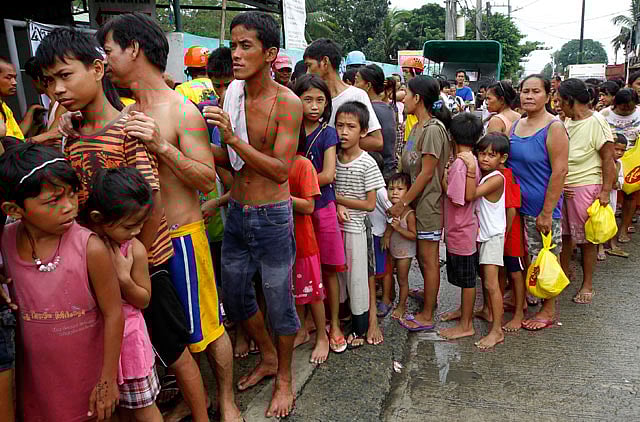
Manila” Sixty people were killed in the wake of monsoon rains that inundated large areas of Metro Manila and other parts of Luzon as aid workers rush aid to affected residents.
Benito Ramos, executive director of the National Disaster Risk Reduction and Management Council (NDRRMC) said 60 people were confirmed dead from the effects of the latest weather disturbance to hit the country with five people injured, while seven others are still missing.
Gulf News witnessed several people being rescued by the Philippine Coast Guard in Catmon village in Malabon City, Metro Manila on the night of August 7, 2012 amid rushing floodwaters that rendered roads unpassable.
A team of rescuers braved strong currents in waters nearly two metres deep to rescue several trapped residents from their houses in almost total darkness.
Elsewhere, rescue workers had worked overtime to save people and bring people to safety.
The untimely release of waters from several dams servicing Metro Manila and Central Luzon provinces had been blamed for the unexpected flooding that worsened the impact of the calamity brought about by several days of record-breaking rainfall.
The heavy rains had brought more precipitation compared to typhoon Ketsana (Philippine codename, “Ondoy”) that struck the country in late September 2009.
The dams that released water as a result of heavy rainfall included La Mesa, Ipo, Ambuklao, Binga, San Roque and Magat.
In Metro Manila, the disaster affected 2,442,135 people in 1,849 villages and 17 cities and municipalities. Worst hit were the Western suburbs of Quezon City, Caloocan, Malabon, Navotas and Valenzuela as well as Marikina, Pasig, Pateros and Taguig in the East. At least 7,000 people remain in evacuation centres in the capital region as of Friday.
Residents in the provinces of Bulacan, Cavite, Ilocos Sur, Bataan, Nueva Ecija, Pampanga, Tarlac, Zambales, Batangas, and Rizal were also affected by the heavy downpour that caused flooding and landslides.
The monsoon rains coupled with the effects of typhoon Haikui in China had worsened the effect of the weather system that had been hovering over the Philippines for two weeks since the last week of July.
The NDRRMC, according to Ramos, is working fast to restore lifelines to the affected areas. It said that a total of of 24 roads and three bridges are not passable to
all types of vehicles in seven regions including Metro Manila.
Meanwhile the lack of latrines and clean water in cramped evacuation centres in Metro Manila and neighbouring provinces has drawn concern for the non-government Save the Children.
The group said thousands of children at the evacuation centres are at risk of diseases.
“We have seen multiple cases of diarrhoea, flu and skin rash in evacuation centres, all of which can spread very quickly if people do not have good hygiene practices, especially among children,” said Anna Lindenfors, country director for Save the Children in the Philippines.
“Nearly 300,000 people are packed into less than 500 centres, living under precarious conditions. Poor sanitation, lack of access to clean water and health services are all aggravating factors,” she said.
To improve the hygiene in evacuation centres, group said they had has begun relief distributions in the National Capital Region and Laguna that will reach 1,500 families with initial aid packages.
The packages include cooking utensils and cleaning items.
Earlier on Tuesday, the Department of Health issued a warning on the potential outbreak of leptospirosis in and near the affected areas.
Leptospirosis is a bacterial disease caused by contact with the faeces or urine of rats.
Sign up for the Daily Briefing
Get the latest news and updates straight to your inbox
Network Links
GN StoreDownload our app
© Al Nisr Publishing LLC 2026. All rights reserved.