An artist's view of part of the Unified Grand Central Station in Manila. In May, Ayala Land announced a 40,000-sqm expansion of TriNoma in Quezon City, adding a new wing, called The Exchange at TriNoma, directly connected to the transport hub, positioning the mall for increased commuter traffic as Metro Manila’s rail network expands.
4 rail lines, 1 transfer: Manila finally clears mega transit hub that could transform commuting in the Philippine capital
Common station seen as missing link in Metro Manila’s rail modernisation
Last updated:
4 MIN READ
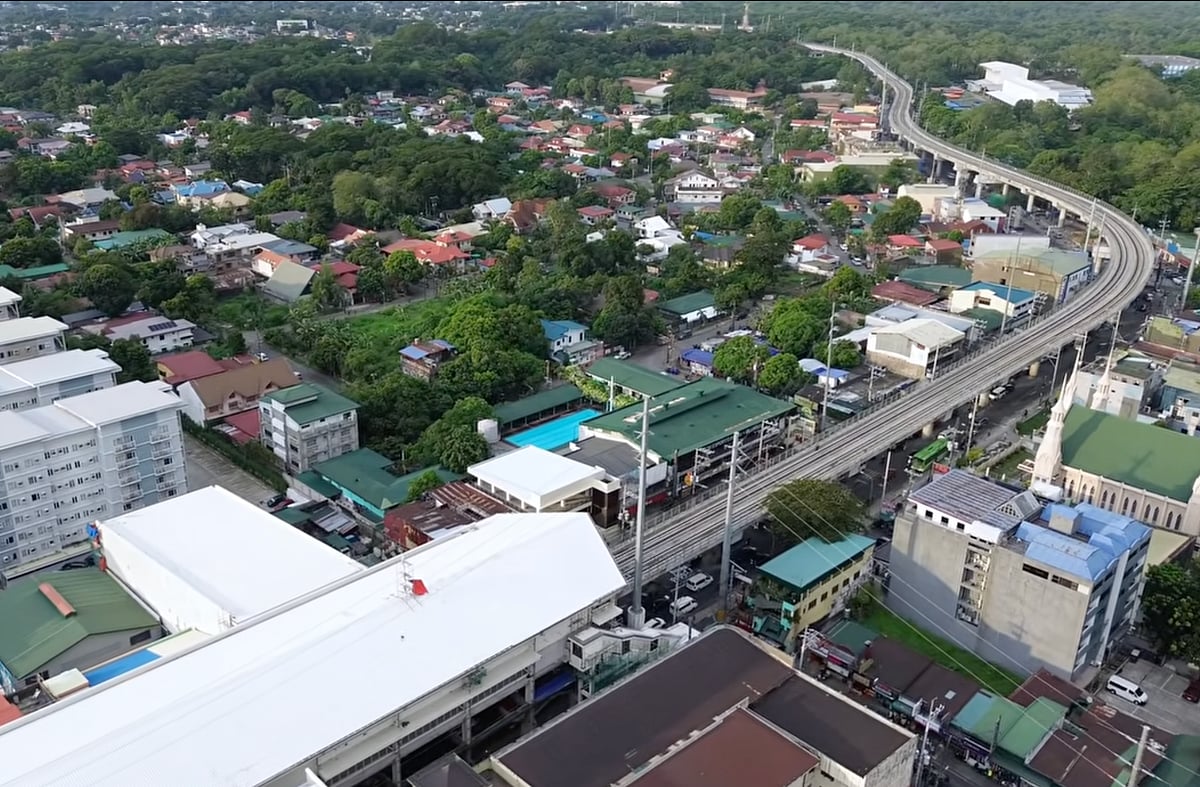
The under-construction Line 7 (MRT-7) in Manila, which connects San Jose Del Monte in Bulacan to the Unified Station in Quezon City where it meets three other rail lines. Government approval of the Unified Grand Central Station that will include LRT-1, MRT3 and the under-construction Manila Subway clears the way for a mega transit hub that could transform commuting in Philippine capital.
Manila: Filipinos in the capital could soon go from San Jose Del Monte in Bulacan to Cavite — all by rail.
That's the hope kicked up by Manila government approval of
the long-delayed Light Rail Transit Line 1 (LRT-1) Common Station project, removing a key hurdle to the construction of the Unified Grand Central Station in Quezon City,a multimodal transit hub designed to connect four of Metro Manila's largest urban rail systems under one roof.
The approval, granted by the Investment Coordination Committee–Cabinet Committee (ICC-CC), allows the project to move forward toward implementation after years of planning, revisions, and coordination among multiple government agencies and private concessionaires.
Once completed, the Common Station will physically integrate the LRT-1, Metro Rail Transit Line 3 (MRT-3), the under-construction MRT-7, and the Metro Manila Subway, enabling commuters to transfer between rail systems without exiting stations or navigating congested streets.
MRT-7 is due to roll out initially with 12 out of 14 planned stations by mid-2027.
Finance Secretary Frederick Go, who chairs the ICC-CC, said the project represents more than just transport infrastructure.
The train depo of Metro Rail Transit Line 7 (MRT-7), the biggest such facility in Manila. San Miguel Corp (SMC), the concessionaire for MRT-7, handles the financing, design, construction, and operation of the 23-km rail system through their wholly-owned subsidiary, SMC MRT-7 Corp. (formerly Universal LRT Corp.). It is being built by San Miguel Infrastructure in Quezon City.
"Rail projects give people back their time. A seamless connection between LRT-1, MRT-3, MRT-7, and the Subway means shorter commutes, more hours with family, and workers who can reach more opportunities across the city. The ICC process exists to make sure every project we endorse delivers real outcomes for Filipinos," Go said.
The approval marks one of the most significant milestones for Metro Manila's rail modernization program, as the Common Station has long been considered the missing link preventing seamless travel across the capital's expanding railway network.
Part of the under-construction Unified Grand Central Station in "Trinoma", Quezon City, where 4 rail lines (LRT-1, MRT3, MRT-7 and the Manila Subway) are set to intersect. Transport planners have long described the Unified Grand Central Station as the future centerpiece of Metro Manila's mass transit system because it will connect rail lines serving northern Metro Manila, Quezon City, Caloocan, Bulacan, Cavite, and eventually the Ninoy Aquino International Airport through the Metro Manila Subway.
Years of delays
The common station was first proposed more than a decade ago to integrate Metro Manila's growing rail network.
However, disagreements over station location, commercial development rights, right-of-way issues, and coordination among various stakeholders delayed the project for years.
With the government's latest approval, the project now gains the formal investment clearance needed before advancing to the succeeding stages of implementation, procurement, and construction.
Why ICC approval matters
The ICC-CC serves as the national government's highest-level body for evaluating major public investment projects before they proceed to implementation.
Created under the National Economic and Development Authority's investment coordination framework and strengthened through the government's Public Investment Program process, the committee evaluates whether large infrastructure projects are economically viable, financially sustainable, legally compliant, and aligned with national development priorities.
A view of the Unified Grand Central Station in Quezon City, Metro Manila.
Projects requiring substantial government funding or official development assistance generally undergo ICC review before they can receive final approval and budgetary support.
The committee's approval signals that the project has passed technical, financial, economic, and policy evaluations, providing confidence that public resources will be invested in projects expected to deliver measurable socioeconomic benefits.
Practical impact for commuters
For millions of daily passengers, the Common Station is expected to dramatically simplify travel across Metro Manila.
Instead of exiting one rail station, crossing busy roads, and entering another terminal, commuters will eventually be able to transfer between four railway systems within a single integrated station complex.
The project is expected to:
Reduce transfer times between rail lines.
Encourage more commuters to shift from private vehicles to mass transit.
Ease congestion around North Avenue and EDSA.
Improve accessibility to business districts, government offices, schools, and commercial centers.
Support future transit-oriented developments surrounding the station.
Transportation experts say the integration could also improve operational efficiency by creating a unified passenger interchange comparable to major rail hubs in cities such as Tokyo, Singapore, Hong Kong, and Seoul.
A train undergoes a trial run on the under-construction Metro Rail Transit Line 7 (MRT-7). The $1.27-billion project is expected to boost connectivity between Manila and the province of Bulacan, running along Commonwealth Avenue in Quezon City.
Part of a broader rail expansion
The Common Station complements the government's broader strategy of expanding Metro Manila's rail capacity through ongoing projects, including the LRT-1 Cavite Extension, MRT-7, the Metro Manila Subway, and additional railway developments connecting neighboring provinces.
Officials view the station as a critical interchange that will allow these independent rail systems to function as a more integrated metropolitan network, helping ramp electrification and reduce dependence on fossil fuel-driven road transport and improving mobility across one of Southeast Asia's most congested urban regions.
Sign up for the Daily Briefing
Get the latest news and updates straight to your inbox
Network Links
GN StoreAbout Gulf NewsTerms & ConditionsReach by GNSitemapContact usPrivacy PolicyGN FocusHave your sayWork with usAdvertise with usGulf News epaperPrinting Services
Download our app
© Al Nisr Publishing LLC 2026. All rights reserved.