Pakistan: Governance reform essential for security, says DG ISPR
Military says security gains depend on reforms and restoring state authority
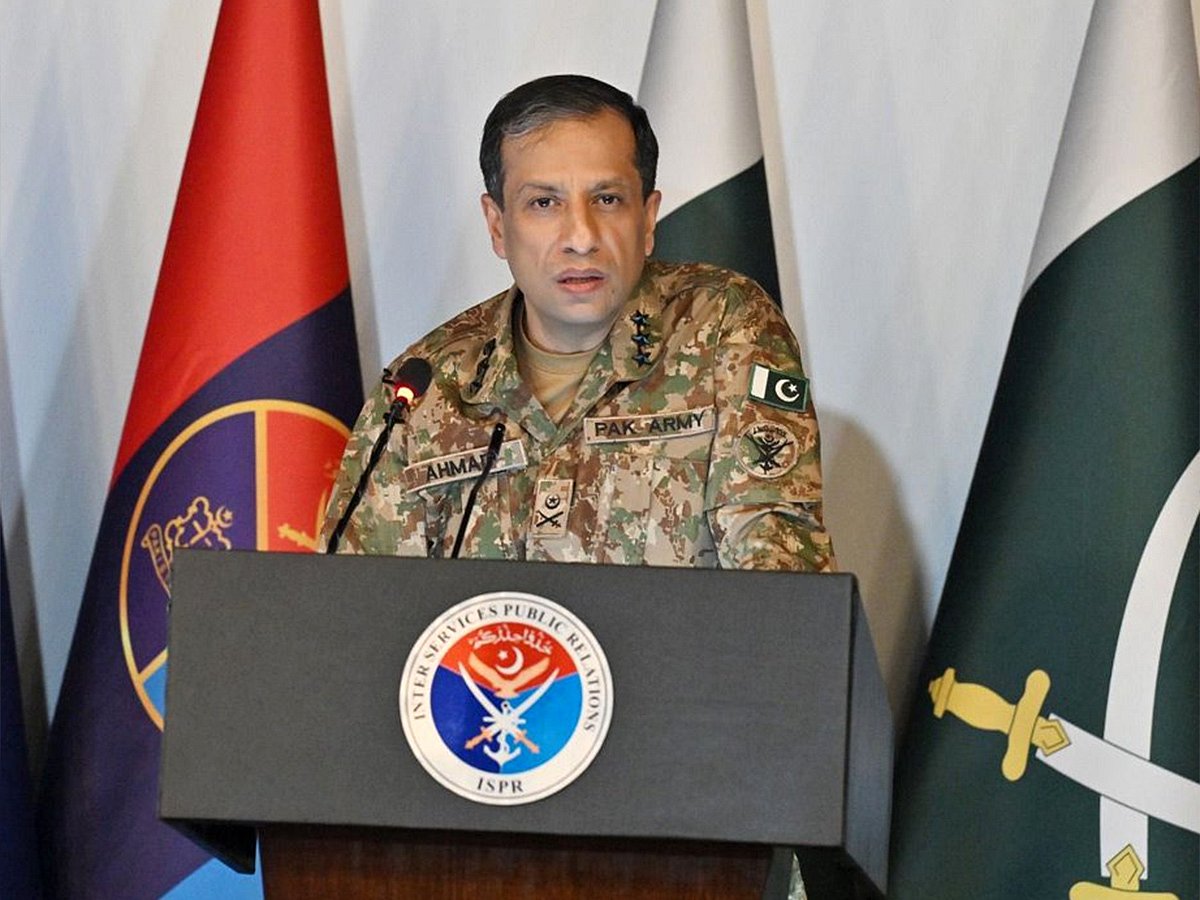
Pakistan’s battle against terrorism cannot be won through security operations alone, with the country’s military leadership warning that weak governance remains a central challenge threatening national stability and security, said military spokesperson.
Director General Inter-Services Public Relations (ISPR) Lieutenant General Ahmed Sharif Chaudhry has placed governance reform at the centre of Pakistan’s counterterrorism strategy, arguing that effective administration, rule of law and stronger civilian institutions are essential to defeating militancy and addressing long-standing grievances.
Speaking during a detailed press briefing on Pakistan’s security situation on Friday, particularly in Balochistan, the military spokesperson said that while security forces were conducting extensive operations against terrorist groups, sustainable peace required a broader governance response.
Good governance
“Good governance is quintessential for Pakistan,” he said, stressing that without effective governance, “none of Pakistan’s issues could be resolved.”
His remarks came amid a renewed debate in Pakistan over administrative reforms, including proposals for creating new provinces or restructuring governance systems to improve service delivery and political representation, Pakistani media reported.
The DG ISPR commented on Interior Minister Mohsin Naqvi’s remarks about the need for new administrative units in Pakistan: “We have been saying this earlier also as a primary stakeholder in security that good governance is essential for the security and stability of Pakistan,” he said.
The DG ISPR said any administrative reset must be based on constitutional procedures and decided through political processes. “The will of the people of Pakistan is superior. If good governance requires an administrative reset, then it has to be done through constitutional methods, legal procedures and political representatives,” he said.
Terrorism fight enters intense phase
The security briefing highlighted the scale of Pakistan’s ongoing counterterrorism campaign.
According to the DG ISPR, security forces conducted 40,348 intelligence-based operations during 2026, involving the army, police, civil armed forces and intelligence agencies. More than 31,000 of these operations were carried out in Balochistan.
During the same period, Pakistan recorded 3,145 terrorism incidents, with Khyber Pakhtunkhwa and Balochistan accounting for the overwhelming majority. Security forces killed 2,084 terrorists, averaging around 10 militants eliminated every day, according to the military spokesperson.
Human loss
However, the human cost remained significant. The DG ISPR said 819 Pakistanis had been killed in terrorism-related incidents, including army personnel, law enforcement officials and civilians.
He said Pakistan’s security approach had shifted from a reactive posture to a more proactive strategy, with nearly 200 intelligence-based operations being conducted daily.
National action plan
The military leadership connected the success of Pakistan’s National Action Plan (NAP) against terrorism with governance reforms.
The DG ISPR said NAP, which was developed through political consensus, contained 14 points, but most of its elements including countering extremist narratives, choking terror financing, controlling illegal activities, improving law enforcement capacity and managing refugee issues, depended on effective governance.
“Good governance is key to security and stability,” he said, adding that political parties needed to hold serious discussions on improving the country’s administrative structure.
Population
He questioned whether Pakistan’s existing governance model was sufficient for a population that has expanded dramatically over decades.
“Today we are around 250 million. If your population has increased almost fivefold, we have to see whether this is serving good governance,” he said, arguing that elected representatives must lead the debate on reforms.
Balochistan issue
Much of the briefing focused on Balochistan, where militant attacks, separatist violence and development challenges have remained persistent issues.
The DG ISPR argued that the province’s problems were linked not only to terrorism but also to governance gaps, economic disparities and resistance to social change.
He identified what he described as “elitism and sardarism” and attempts to preserve old power structures as among the factors contributing to instability in the province.
He said the state’s response must combine security operations with direct engagement with ordinary citizens, development initiatives and strengthening public institutions.
The military spokesperson said the government was working on improving security capacity, including strengthening police forces, establishing additional Frontier Corps structures and investing in socio-economic projects in Balochistan.
Hard state
Addressing questions about state authority, the DG ISPR clarified that a “hard state” did not mean military dominance but rather a system where law applies equally to all citizens.
“Hard state does not mean a military-run state; it does not mean an armed forces-dominated state,” he said, explaining that it meant a country where constitutional authority, equality before law and justice prevailed.
He argued that strengthening institutions and restoring public trust were essential to preventing grievances from being exploited by militant groups.
Dual challenge
The briefing underscored Pakistan’s dual challenge: defeating armed groups on the battlefield while addressing governance weaknesses that allow insecurity, mistrust and instability to persist.
The military leadership’s message was clear that counterterrorism requires more than weapons and operations. It requires functioning institutions, political consensus and a governance system capable of delivering security, justice and development to citizens.
Network Links
GN StoreDownload our app
© Al Nisr Publishing LLC 2026. All rights reserved.