Nepal-China floods death toll reaches 752 as more than 3,000 remain missing
Nepal says there are 2,426 people who are out of contact in the country
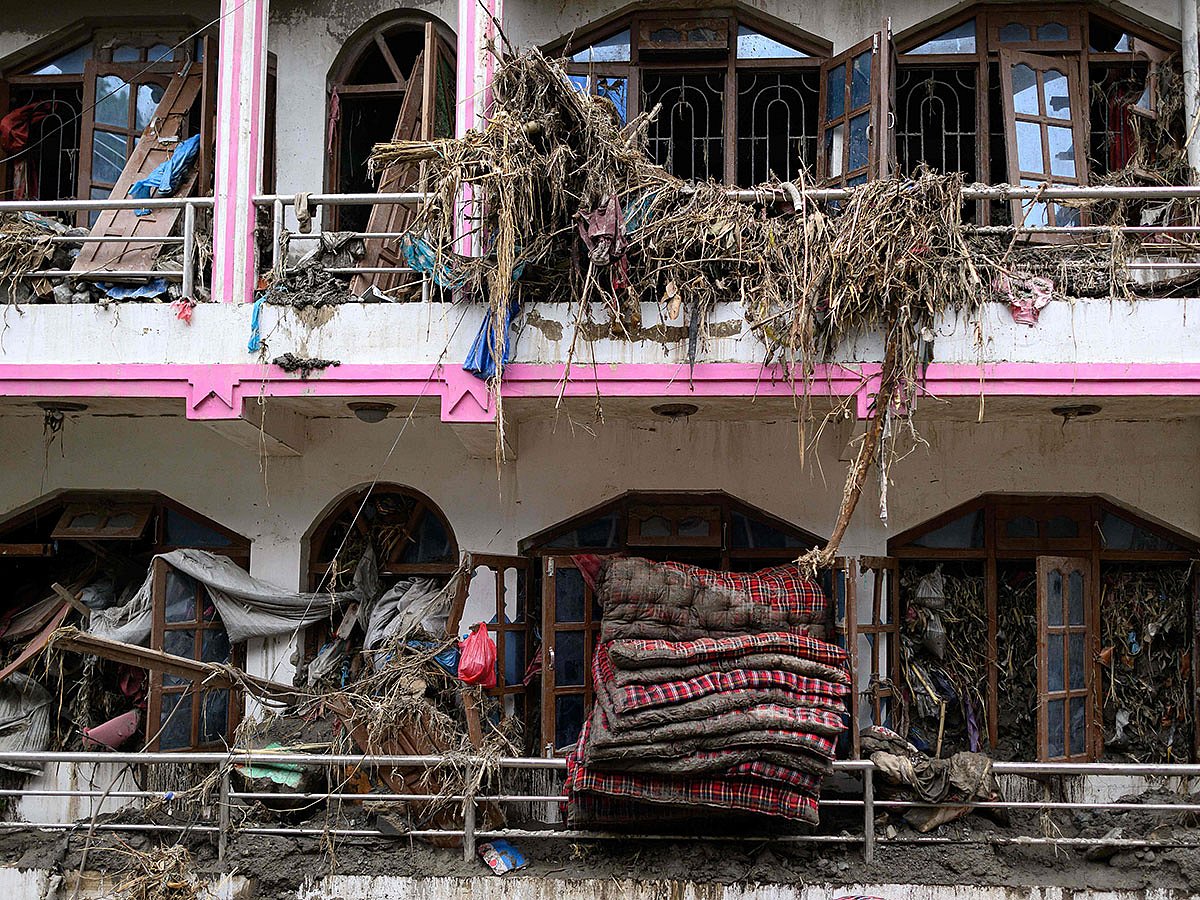
Kathmandu, Nepal: Nepal said Sunday it had begun burying some of the hundreds of bodies recovered after devastating floods, after taking DNA samples and marking them so families can later retrieve them.
The dead are traditionally cremated on funeral pyres in Hindu-majority Nepal, so the burials are viewed as long-term storage until families can retrieve them.
Get updated faster and for FREE: Download the Gulf News app now - simply click here.
Foreign Secretary Amrit Bahadur Rai told reporters that all those buried were carefully recorded, but also appealed for international support, saying Nepal needed "more than a thousand" freezer units to store bodies.
The announcement of the burials came as Nepal's disaster ministry increased its toll again on Sunday to 752 bodies recovered and 2,502 people missing.
That list includes 589 foreigners unaccounted for.
Chinese state media earlier confirmed 16 dead in Tibet and 546 people missing following Wednesday's disaster, taking the overall toll to 768 dead and 3,048 unaccounted for.
"Following standard and accepted protocols, such as those of ICRC (Red Cross), the mortal remains of the dead, especially those not recognisable... have been temporarily buried," Rai told reporters.
"Medical teams took DNA samples from every victim prior to the burial so that families can match-reference later, and would be allowed to exhume for necessary rituals."
Nepal has called for freezer storage units and DNA testing kits, as it is overwhelmed with the number of bodies to store safely.
"We have requested different countries for freezers; we will need more than a thousand," Rai added.
"Many dead bodies have been collected, and they have started decomposing. To preserve public health, we had to bury the decomposing bodies," he added.
Here are the latest developments after the tsunami-like disaster that struck the Himalayan region on Wednesday:
100 trapped in tunnels
More than 100 workers are believed to be trapped inside multiple hydropower tunnels.
The Nepali army inserted a pipe into one of the tunnels at the Trishuli 3A hydroelectric site late on Saturday and started sending air through it, Minister Sudan Gurung said.
But overnight rain and rising river waters hampered rescue efforts at that site, and Nepal's disaster authorities urged rescue teams on Sunday to exercise caution.
Those trapped were among 933 missing workers from hydropower projects on the rivers where the torrent of icy debris swept down.
India, which has extensive experience in such rescues, has sent an 11-person specialised team. China has also sent a nine-person tunnel team to help.
New lake
Hampering rescue operations on Sunday was the formation of a new lake near the Tibet border following a landslide 2.8 kilometres (1.74 miles) from a drained lake that in previous days had threatened rescue work.
After the landslide on Saturday evening "a new barrier lake is now forming", state broadcaster CCTV reported.
Rescue personnel near the Gyirong border port had been moved to safer areas while the Ministry of Emergency Management convened experts to assess and analyse the situation, CCTV said.
Reconstruction could cost 'billions'
Nepal's reconstruction bill could run into "billions of dollars", Foreign Minister Shisir Khanal said.
"We will do loss and damage research and then we plan, but I am reaching out to our international community for support."
Relatives crowd rescue hub
At an army base in the Nepali town of Bidur, a key rescue hub, relatives crowded around lists of rescued people pasted on a wall.
"I have come here looking for my son," said Kalka Sharda, scanning the list in desperation. "He was a labourer at the hydropower plant, but I can't find his name, and the authorities are not saying anything."
Australian family 'elated' daughter found
The Australian parents of a woman reported missing in devastating floods that struck Nepal said Sunday they were "elated" and relieved after their daughter was found safe and sound.
Cara Severino, 24, was found "safe and well" on Friday, her parents said.
Among those not accounted for are 42 Australians, many of whom were pilgrims visiting holy sites.
Climate change
While the exact cause of the collapse is unclear, Nepal's foreign minister warned on Saturday of the growing threat from climate change in the Himalayas.
The US Geological Survey said the disaster on Wednesday near the high-altitude China-Nepal border was caused by a glacial collapse that sent a torrent of debris downstream.
China's state news agency Xinhua reported on Sunday that experts had said "a glacier on the southern slope of Lirung Peak in Nepal" fractured, triggering an ice-rock avalanche.
"The sudden glacial collapse and flash flood is a devastating reminder of how fragile these mountain environments can be," UN climate chief Simon Steill said in a statement.
Aid offers
As many as 93,000 people in Nepal are potentially affected by the disaster, according to the Red Cross.
Nepal appealed on Saturday for international financial assistance, as well as specialised rescue support, including heavy-lift drones, DNA testing kits, and body freezer storage units.
The United States and Canada said they would each provide around $3.6 million in humanitarian assistance.
The UK has offered $6.8 million in aid, while the UN released $2.5 million in emergency funding.
The European Union on Friday promised $2.3 million and the International Federation of Red Cross and Red Crescent Societies (IFRC) allocated more than $1 million and launched an emergency appeal for $31 million.
Chinese President Xi Jinping offered Beijing's help on Friday.
Malaysia will send the Malaysian Special Search and Rescue Team (SMART) to assist and will also contribute $1 million to Nepal to help the recovery efforts and victims.
Network Links
GN StoreDownload our app
© Al Nisr Publishing LLC 2026. All rights reserved.