Birthday medical checks: Indonesia’s bold $183-million free health check plan rolled out
Most populous Asean country launches new programme to catch diseases before they strike
“Happy birthday! Here’s the gift of health.”
That’s the message Indonesia is sending to its citizens as it launches a groundbreaking nationwide health screening initiative — a promise turned reality under President Prabowo Subianto’s administration.
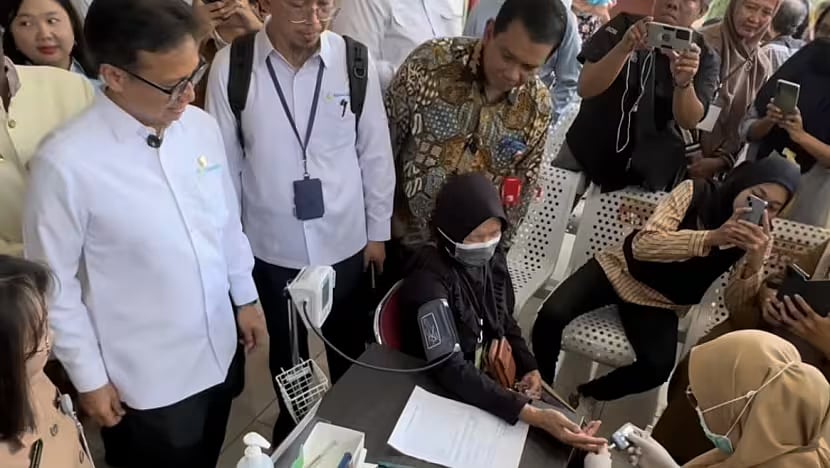
On its very first day, Monday (February 10), at least 17,000 Indonesians streamed into community health centres, taking advantage of the newly introduced Cek Kesehatan Gratis (CKG) programme.
The scheme is a trillion-rupiah ($183.2 million) effort aimed at catching diseases before they strike.
Indonesia, with a population of 284.86 million, is the world's fourth-most populous nation (as per Worldometers).
For the first time, annual check-ups may become as routine as celebrating a birthday in the largest Asean country.
Birthday gift
And, in fact, birthdays are the key.
Every Indonesian will receive a health voucher for a free medical screening, claimable during or up to a month after their birthday.
The initiative, designed to detect life-threatening conditions like heart disease and stroke before they become fatal, is a bold first step toward reshaping Indonesia’s approach to healthcare.
A promise kept
Prabowo, who took office as Indonesia’s 8th president on October 20, 2024, vowed to improve the well-being of citizens across the archipelago.
The CKG initiative is the first major health programme under his leadership — one that echoes his campaign pledge to prioritise early detection over last-minute intervention.
Healthcare shift
Health Minister Budi Gunadi Sadikin sees it as a major shift.
Preventive care must become part of ordinary Indonesian life, Sadikin declared, urging citizens to seize this opportunity.
The programme’s first phase prioritises babies, toddlers, adults aged 18 to 59, and the elderly, with school-age children expected to join in July.
Screenings include blood pressure tests, heart and stroke risk assessments, and eye exams—simple yet vital steps toward saving lives.
'I walked in and walked out with peace of mind'
Among the thousands of Indonesians who took part on launch day was 31-year-old Linda, who visited Pasar Minggu Health Centre in South Jakarta.
“After I received my queue number, I was directed to the screening room on the third floor. The whole process took about an hour — and I didn’t have to wait long," she told local media.
For many, like Linda, the programme is a welcome relief in a healthcare system where late-stage diagnoses are far too common.
Growing pains
Despite its promising start, challenges remain. Reports from health centres in Palembang and Makassar suggest many Indonesians are still unaware of the programme — or don’t know how to register via the Satu Sehat mobile app, the government’s digital health platform.
Aji Muhawarman, head of the Health Ministry’s Communications Bureau, acknowledged the issue.
“For those who have difficulty accessing the internet, they can visit the community health centre directly (and register) with their KTP (identity card),” Aji told BBC Indonesia.
A daily quota of 30 to 50 people has been set at every health centre, according to Kompas.
Expansion
The programme is set to expand in future phases to include private clinics that collaborate with Indonesia’s national insurance scheme, ensuring broader access.
With millions yet to claim their birthday gift, the success of Prabowo’s ambitious healthcare vision hinges on awareness and accessibility.
But one thing is clear — Indonesia has made its first move toward a healthier future.
A staff member of President Subianto’s presidential communication office had said it is the “right” of every Indonesian to utilise and make use of the health programme, despite it not being mandatory
Sign up for the Daily Briefing
Get the latest news and updates straight to your inbox
Network Links
GN StoreDownload our app
© Al Nisr Publishing LLC 2026. All rights reserved.