Why do baby snakes all coil the same way inside their eggs? Scientists finally have an answer
Scientists studied more than 900 embryos, found surprising reason for the right-hand twist
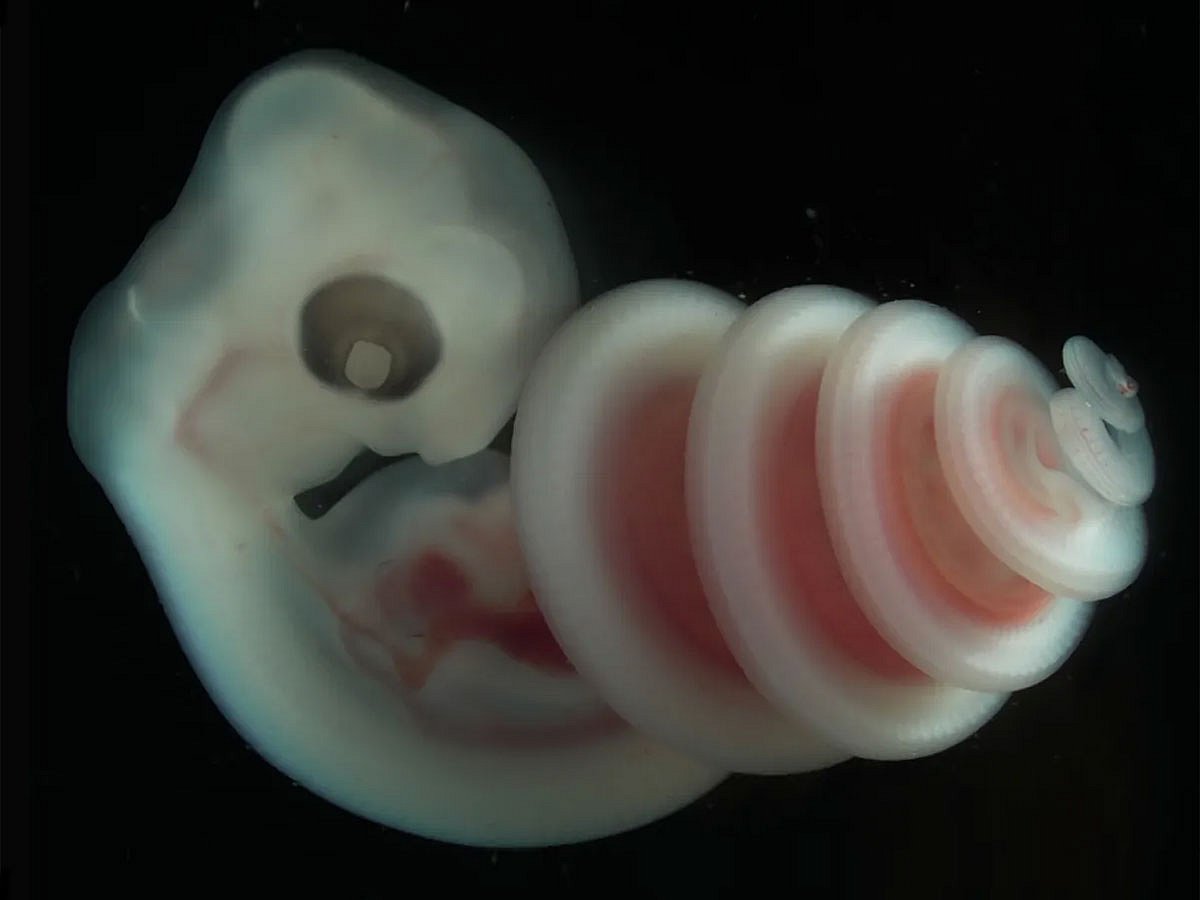
Before a baby snake ever slithers across the ground, it performs an unusual manoeuvre inside its egg.
Its rapidly growing body winds into a tight spiral. More intriguingly, during early development, that spiral almost always turns in the same direction: clockwise, or right-handed.
Get updated faster and for FREE: Download the Gulf News app now - simply click here.
Scientists have now discovered why.
After examining more than 900 embryos and using CT scans to peer inside developing snakes, an international research team found that the answer comes down largely to how different parts of a snake's body grow — and where its yolk sits.
The research, published in Current Biology, suggests that a snake's body grows much faster than its digestive system. The mismatch causes the developing body to buckle and wrap around the shorter gut, forming its distinctive coil.
More than 900 embryos reveal a pattern
Researchers examined 913 embryos from 39 species of snakes and other limbless reptiles, according to reports on the study.
The pattern among snakes was striking.
Among 146 early African house snake embryos, every one coiled clockwise. Of more than 200 early corn snake embryos examined, only nine twisted in the opposite direction.
What made the pattern particularly intriguing was that the embryos were still too young to curl into that position deliberately.
Their muscles had not developed sufficiently. Something about the snakes' anatomy itself appeared to be producing the spiral.
CT scans reveal a hidden 'pillar'
A major clue came when researchers used CT scans to examine what was happening inside the embryos.
They discovered that the digestive tract effectively formed a central structure around which the snake's rapidly lengthening body curled. Researchers dubbed it the "visceral pillar."
The gut develops more slowly than the rest of the body and is anchored at its ends. As the snake lengthens, the shorter digestive tract effectively acts as a tether.
The growing body consequently buckles and twists around it.
In one embryo scanned six to seven days after its egg was laid, the digestive tract extended for less than 20 per cent of the snake's total body length.
But that explained the coil — not why it almost always turned right.
Why baby snakes turn right
For that, researchers looked at another feature inside the egg: the yolk.
The yolk sits on the embryo's left side. As the snake's rapidly growing body buckles, it tends to extend away from the yolk.
That pushes it towards a right-handed spiral.
"The body buckles and twists into coiling," study leader Tetsuto Miyashita, an evolutionary biologist at the Canadian Museum of Nature, explained in the museum's account of the research.
The University of British Columbia said the mechanism may help explain how snakes manage another extraordinary feat: fitting such long bodies inside relatively small eggs.
The snakes eventually change direction
The clockwise arrangement doesn't necessarily last until hatching.
As development continues, the snake's gut catches up with the rest of its body. Its muscles also develop, allowing the embryo to move, while the yolk shrinks, creating additional space.
Older embryos can therefore rearrange themselves.
Among later-stage embryos studied by the researchers, 200 were clockwise and 160 counterclockwise — close enough for scientists to consider the orientation effectively random.
The strong rightward bias therefore appears to occur mainly during an early developmental window when the snake is growing rapidly but cannot yet reposition itself.
How to fit a snake inside an egg
The discovery could help scientists understand how snakes evolved their unusually elongated bodies.
A developing snake can produce more than 300 body segments, yet all of them must initially fit within the confines of an egg.
The spiral provides a biological packing solution.
As Popular Science noted in its coverage of the research, the newly identified relationship between the gut and growing body provides scientists with a physical mechanism for a developmental behaviour that had previously been difficult to explain.
The project began during the COVID-19 lockdown in 2020, when researchers examined existing photographs of snake embryos and contacted colleagues with image collections.
Those observations eventually led to CT scans and the discovery of the visceral pillar.
What began as a simple question about which way snakes curl has therefore revealed something more fundamental about how one of nature's most unusual body shapes begins.
Long before a snake is capable of slithering, its characteristic form is already taking shape — one clockwise turn at a time.
Network Links
GN StoreDownload our app
© Al Nisr Publishing LLC 2026. All rights reserved.