Michigan Democratic Senate primary winner Abdul Al Sayed speaks during a press conference in front of the Spirit of Detroit statue on August 05, 2026 in Detroit, Michigan.
Who is Abdul Al Sayed, the public health reformer who could become America's first Muslim senator?
Son of Egyptian immigrants stuns Michigan's Democratic establishment with grassroots win
Last updated:
3 MIN READ
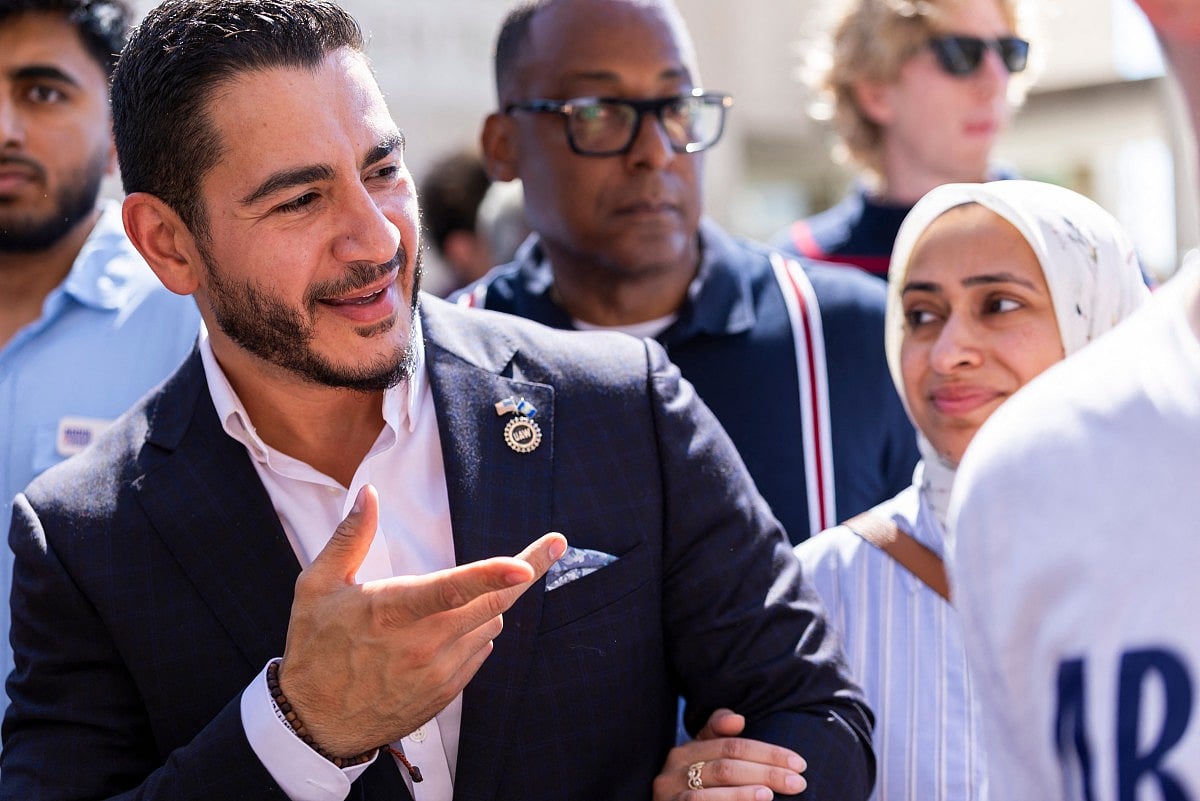
Michigan Democratic Senate primary winner Abdul El Sayed leaves after holding a press conference in front of the Spirit of Detroit statue on August 05, 2026 in Detroit, Michigan.
AFP
Dubai: Abdul Al Sayed has spent much of his career fighting public health crises, from lead poisoning and medical debt to the COVID-19 pandemic.
Now the 41-year-old public health leader is preparing for the biggest battle of his political career after winning Michigan’s Democratic Senate primary — a victory that puts him within touching distance of becoming the first Muslim elected to the US Senate.
Al Sayed narrowly defeated four-term Congresswoman Haley Stevens in one of the most expensive Democratic primaries in recent US history. More than $60 million in outside spending — much of it from pro-Israel groups backing Stevens — poured into the race, but Al Sayed prevailed with a grassroots campaign centred on healthcare, economic justice and a call for a tougher US stance on Israel’s war in Gaza.
He will now face Republican former Congressman Mike Rogers in November in a race expected to help determine which party controls the Senate.
Why Al Sayed's bid is historic
No Muslim has ever served in the US Senate.
Keith Ellison became the first Muslim elected to Congress in 2006.
Ilhan Omar and Rashida Tlaib became the first Muslim women elected to Congress in 2018.
Abdul Al Sayed could become the first Muslim US senator if he wins Michigan in November.
From Detroit to Oxford
Born in Detroit to Egyptian immigrant parents, Al Sayed grew up in Michigan before graduating with highest distinction from the University of Michigan. He later earned a medical degree from Columbia University and completed a doctorate in public health at the University of Oxford as a Rhodes Scholar.
Rather than pursue a career in clinical medicine, Al Sayed devoted himself to public health, arguing that preventing illness is as important as treating it.
His rise began in 2015 when he was appointed executive director of Detroit’s Health Department, becoming one of the youngest health commissioners in a major US city. He later served as Director and Health Officer of Wayne County’s Department of Health, Human and Veterans Services, overseeing programmes serving nearly two million residents.
His initiatives included expanding access to overdose-reversal medication, tackling lead exposure in schools and helping launch programmes aimed at eliminating up to $700 million in medical debt for hundreds of thousands of Michigan residents.
A progressive voice
Al Sayed first entered statewide politics in 2018 with an unsuccessful campaign for Michigan governor, but his progressive message won him a loyal following.
He has championed Medicare for All, stricter limits on corporate money in politics, affordable housing and expanded public healthcare. His Senate campaign also drew national attention for its outspoken criticism of US policy towards Israel.
Al Sayed has described Israel’s actions in Gaza as genocide and argues that billions of dollars spent on overseas conflicts should instead be invested in healthcare, housing and infrastructure at home. The message resonated with many Arab American and Muslim voters in Michigan, home to one of the largest Arab American communities in the United States.
Backed by the Democratic left
His campaign was endorsed by some of the Democratic Party’s most prominent progressive figures, including Senator Bernie Sanders and Congresswoman Alexandria Ocasio-Cortez.
Together they portrayed Al Sayed as part of a new generation seeking to pull the Democratic Party further to the left on healthcare, economic inequality and foreign policy.
His victory was widely seen as a setback for the party establishment. Stevens had the backing of Michigan Governor Gretchen Whitmer, Senate Minority Leader Chuck Schumer and well-funded outside groups, yet Al Sayed overcame the financial disadvantage through grassroots organising.
A historic opportunity
If elected in November, Al Sayed would become the first Muslim senator in American history.
Beyond that milestone, his campaign is being watched as a test of the Democratic Party’s future direction — particularly on healthcare reform and the increasingly divisive issue of US support for Israel.
His victory also highlights the growing political influence of Arab American and Muslim voters in Michigan, one of the country’s most fiercely contested battleground states.
Whether he ultimately reaches the Senate or not, El-Sayed has already established himself as one of the Democratic Party’s fastest-rising progressive leaders — and one whose success could reshape debates over healthcare, foreign policy and the party’s relationship with one of its most important voter blocs.

A Senior Associate Editor with more than 30 years in the media, Stephen N.R. curates, edits and publishes impactful stories for Gulf News — both in print and online — focusing on Middle East politics, student issues and explainers on global topics. Stephen has spent most of his career in journalism, working behind the scenes — shaping headlines, editing copy and putting together newspaper pages with precision. For the past many years, he has brought that same dedication to the Gulf News digital team, where he curates stories, crafts explainers and helps keep both the web and print editions sharp and engaging.
Sign up for the Daily Briefing
Get the latest news and updates straight to your inbox
Network Links
GN StoreAbout Gulf NewsTerms & ConditionsReach by GNSitemapContact usPrivacy PolicyGN FocusHave your sayWork with usAdvertise with usGulf News epaperPrinting Services
Download our app
© Al Nisr Publishing LLC 2026. All rights reserved.