Canada to require self-isolation for travelers from Ebola-affected countries
Canada tightens border rules, halts some immigration from Congo, South Sudan, Uganda
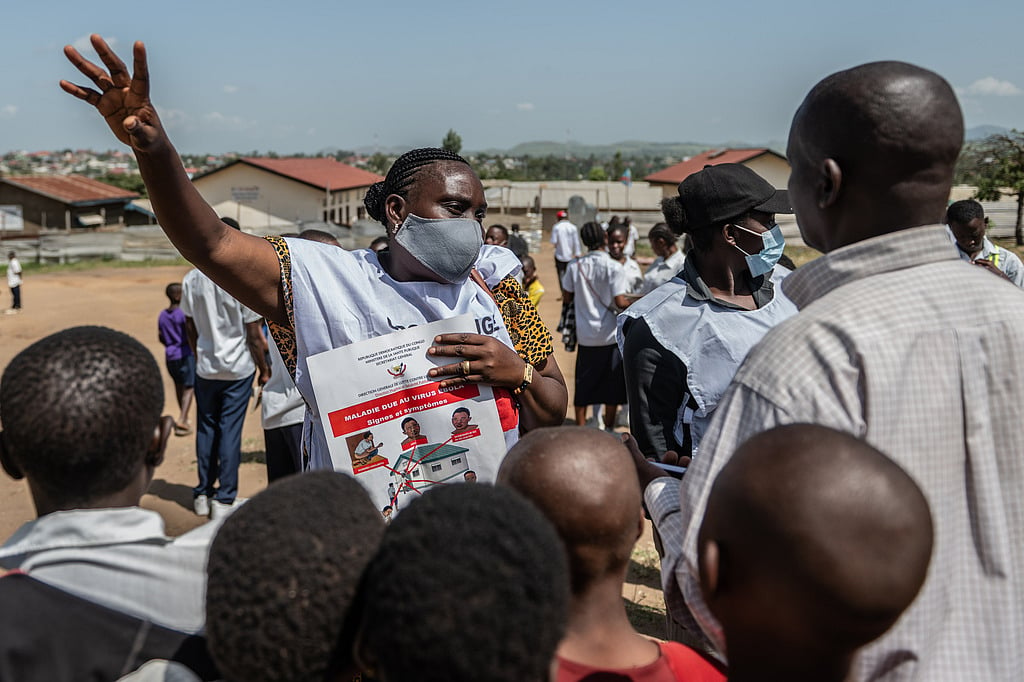
TORONTO: The Canadian government said travelers from Ebola-affected regions will be required to self-isolate for 21 days, while immigration authorities are temporarily suspending decisions on applications from Congo, South Sudan and Uganda.
Luc Brisebois, director-general for the Centre for Border and Travel Health at the Public Health Agency of Canada, said the measures are being implemented out of an “abundance of caution” and will stay in place until August 29.
Get updated faster and for FREE: Download the Gulf News app now - simply click here.
The stricter border measures are being implemented starting Saturday, and those who do not have somewhere to isolate will be provided with a place.
Canada is tightening its border health measures in response to a growing Ebola outbreak in Central and East Africa, requiring travelers arriving from affected regions to self-isolate for 21 days beginning Saturday.
Canadian health authorities said the measures are being introduced “out of an abundance of caution” and are expected to remain in force until at least August 29.
The Canadian policy applies to travelers coming from or recently present in the Democratic Republic of the Congo, Uganda, and South Sudan, where health officials are monitoring a rare and fast-spreading strain of Ebola known as the Bundibugyo virus.
Canada is tightening its border health measures in response to a growing Ebola outbreak in Central and East Africa, requiring travelers arriving from affected regions to self-isolate for 21 days beginning Saturday.
Canadian health authorities said the measures are being introduced “out of an abundance of caution” and are expected to remain in force until at least August 29.
Travelers who develop symptoms such as fever, vomiting, diarrhea, weakness, or unexplained bleeding will be transferred to hospitals for medical assessment.
Officials also said accommodations will be provided for people who do not have a suitable place to isolate.
At the same time, Canada is pausing final decisions on immigration and visa applications from Congo, Uganda, and South Sudan for 90 days, though officials said the suspension could be extended depending on how the outbreak evolves.
Outbreak
The move comes as the World Health Organisation (WHO) declared the Ebola outbreak a Public Health Emergency of International Concern.
Canadian public health assessments describe the overall risk to the Canadian population as “low,” but warn that the outbreak is occurring in densely populated and conflict-affected areas, complicating containment efforts.
The outbreak is centered in northeastern Congo’s Ituri and North Kivu provinces and has already spread into Uganda.
According to Canadian and international health officials, there have been more than 900 suspected cases and over 220 deaths, though numbers continue to change as investigations continue.
Bundibugyo strain
The Bundibugyo strain has no approved vaccine or specific antiviral treatment, unlike the more common Zaire strain involved in previous Ebola outbreaks.
Canada’s response mirrors actions taken recently by the United States, which imposed enhanced screening and entry restrictions on travelers from the same countries.
US authorities have required health screenings at designated airports and have also expanded restrictions to some green-card holders and foreign nationals who recently traveled through affected regions.
Sign up for the Daily Briefing
Get the latest news and updates straight to your inbox
Network Links
GN StoreDownload our app
© Al Nisr Publishing LLC 2026. All rights reserved.