Sudan army chemical weapons: Secret dossier reveals chlorine bomb programme
Secret files detail chlorine bomb tests, mass production and efforts to erase evidence
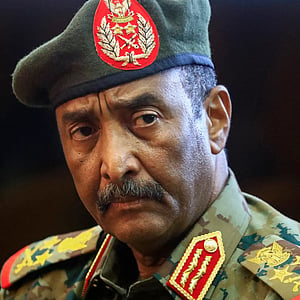
Dubai: Sudan’s army built hundreds of chlorine-filled bombs, tested them in the desert and may have used more than 100 of the weapons against its enemies before senior officials sought to erase evidence of the secret programme, according to two major investigations.
A trove of internal military documents, photographs, videos, voice notes and intercepted messages reviewed separately by The New York Times and The Washington Post offers the most detailed evidence yet behind US accusations that Sudanese forces used chemical weapons in the country’s devastating civil war.
The material points to a clandestine programme that began in 2024 as the Sudanese Armed Forces (SAF) struggled to dislodge fighters from the paramilitary Rapid Support Forces (RSF) from Khartoum and other positions.
Sudan’s military has denied developing or using chemical weapons. Experts who examined the material cautioned that definitive proof would require an independent investigation and access to suspected sites inside Sudan.
But the evidence reviewed by the two newspapers paints an extraordinary picture of how the alleged programme operated.
According to the Times, Brig Gen Tariq Hussain, identified in the records as heading the project, proposed weaponising chlorine in July 2024. Designs described a munition combining about 15kg of chlorine gas with explosives, allowing it to kill through both shrapnel and toxic gas.
The Washington Post reported that some designs were intended specifically to destroy evidence that chemicals had been used.
Secret desert tests
One of the first weapons was tested in the desert after being flown from Merowe airport in July 2024, according to the Times.
“The test went 100 percent,” Hussain reported afterward, according to an intercepted message cited by the newspaper.
Videos examined by the Post appear to show bombs striking desert terrain and producing plumes of yellowish gas associated with chlorine. Digital-forensics specialists commissioned by the newspaper found no indication that key images or videos they examined had been manipulated.
Inside the alleged chlorine bomb programme
July 2024: Brig Gen Tariq Hussain allegedly proposes weaponising chlorine as the army struggles to retake Khartoum.
The weapon: Designs combine an explosive warhead with about 15kg (33lb) of chlorine gas.
Desert test: A prototype is flown from Merowe airport and tested. “The test went 100 percent,” Hussain allegedly reports.
Production: By October 2024, nearly 300 chemical munitions had allegedly been manufactured, most stored at Merowe.
Chlorine source: Some was allegedly obtained from a civilian water-treatment plant; other supplies were imported from Egypt.
Cover-up allegation: After US sanctions, intercepted messages show an instruction attributed to army chief Gen Abdel Fattah Al Burhan to “remove all traces” of the programme.
Army response: Sudan’s military says the allegations are baseless; independent experts say definitive confirmation requires an impartial investigation on the ground.
Production then appears to have accelerated.
By October 2024, nearly 300 chemical munitions had been manufactured, according to the Times. The Post reported that another message indicated as many as 290 weapons had been stockpiled at Merowe Air Base and that 106 had been used.
The precise number deployed cannot be independently confirmed.
Chlorine meant for drinking water
Perhaps the most disturbing allegation concerns where some of the chlorine came from.
Messages reviewed by the newspapers indicate that supplies may have been taken from water-treatment facilities, where chlorine is essential for making drinking water safe.
The Times reported that the International Committee of the Red Cross, CARE and UNICEF had supplied chlorine for civilian water treatment during the war.
UNICEF told the Post it had no record of any chlorine it supplied being diverted or misused and stressed that its chlorine was provided solely to make water safe to drink.
Other supplies apparently came from abroad. One message cited by the Times referred to 20 chlorine cylinders imported from Egypt — enough, the officer claimed, to produce 1,100 bombs.
Did army chief know?
The documents also raise questions about how far knowledge of the alleged programme extended through Sudan’s military leadership.
Messages involving army chief Gen Abdul Fattah Al Burhan suggest he had direct knowledge of the effort, the Times reported.
After the United States imposed sanctions over Sudan’s alleged chemical-weapons use, intercepted communications indicate efforts were made to remove traces of the programme.
The Post reported that a message in September 2025 sought to assure Al Burhan that a military base where weapons had been stored had been cleared of “traces and residue”.
Sudan subsequently established a committee to investigate the chemical-weapons allegations. But documents indicate that a man identified by the reports as an architect of the alleged programme was himself included as an adviser to the investigation.
The committee said it had found no evidence of chemical contamination.
The Organisation for the Prohibition of Chemical Weapons has said several countries have asked it to seek clarification from Sudan and that the process remains under way.
The United States has already concluded that Sudan used chemical weapons and imposed sanctions, although Washington has publicly released little of the intelligence underpinning its finding.
Experts consulted by the Post said the newly disclosed material was strongly consistent with a chemical-weapons programme but stopped short of declaring it conclusive without physical inspections.
Sudan has been engulfed in war since 2023, when fighting erupted between the army and the RSF. Both sides have been accused of atrocities as the conflict has killed tens of thousands, displaced millions and produced one of the world’s gravest humanitarian crises.
The army has rejected the latest allegations. A military spokesman quoted by the Times called the dossier “baseless and without material foundation” and pointed to Sudan’s membership of the Chemical Weapons Convention.
But the scale of the newly disclosed evidence means allegations once largely hidden behind US sanctions have now emerged in unprecedented detail.

Sign up for the Daily Briefing
Get the latest news and updates straight to your inbox
Network Links
GN StoreDownload our app
© Al Nisr Publishing LLC 2026. All rights reserved.