UNHCR launches $10 million Ramadan charity campaign for refugees
‘Every Second Counts’ will channel donations to support of refugees, displaced families
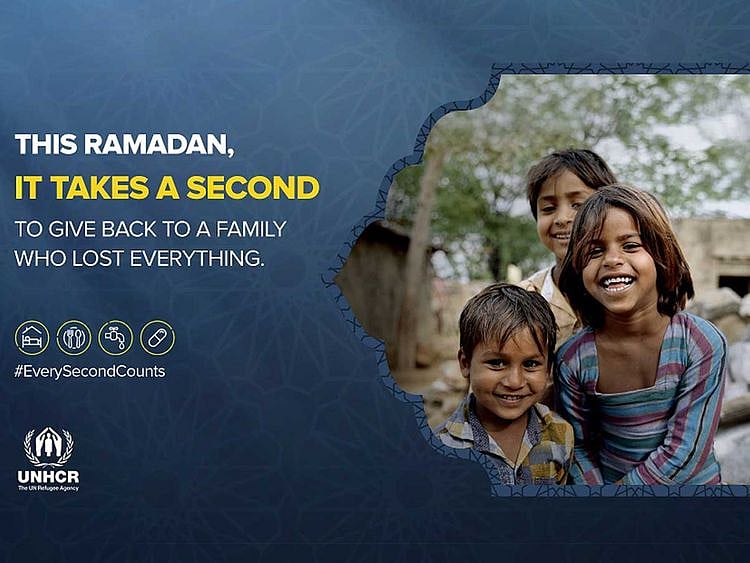
Dubai: UNHCR, the UN Refugee Agency, on Monday launched its ‘Every Second Counts’ Ramadan global fundraising campaign in support for refugees and internally displaced people hit hardest by the COVID-19 pandemic.
‘Every Second Counts’ is UNHCR’s third global Ramadan campaign, and focuses on the impact individuals can create within seconds, in the lives of refugee and displaced families.
Also Read
UAE launches the region’s largest food campaignUAE minister says ‘100 Million Meals’ to reach those most in needWhat is the campaign?
The campaign aims to raise $10 million (around Dh36.7 million) globally through donations including zakat and sadaqah (charity) to help provide “lifesaving support” such as shelter, food, clean water and monthly cash assistance, to the most vulnerable refugee and internally displaced families from Syria, Iraq, Yemen, Afghanistan, Nigeria, countries in the Sahel region, and Rohingya refugees in Bangladesh.
The campaign will also provide funds for UNHCR’s regular programming and help meet the mounting needs caused by the pandemic.
Appeal for support
Filippo Grandi, the UN High Commissioner for Refugees, said: “At this time of deep reflection and generosity, our solidarity with the world’s forcibly displaced is needed more than ever. In the spirit of solidarity during the holy month [of Ramadan], I’m appealing for greater support for vulnerable people… Together we can help refugees and the internally displaced have a roof over their heads, a warm meal for iftar, clean water, and hope for a better and safer future.”
Worsening crisis
Around 85 per cent of the world’s refugees are hosted in low- and middle-income countries that are facing financial challenges and often have fragile health systems. As a result of the pandemic, refugees and the displaced have lost livelihoods and been thrust into extreme poverty, with disastrous and far-reaching consequences.
UNHCR estimates that three in four refugees worldwide can only meet half or less of their basic needs. Families have cut spending on food, are no longer able to pay rent, have fallen deeper into debt, or have been forced to stop children from attending lessons, even where schools have remained open.
Sign up for the Daily Briefing
Get the latest news and updates straight to your inbox
Network Links
GN StoreDownload our app
© Al Nisr Publishing LLC 2026. All rights reserved.