UAE to offer face, hand and uterus transplants in next phase of Hayat organ donation programme
New hospital donor units planned to boost donations after 1,500 lives saved so far
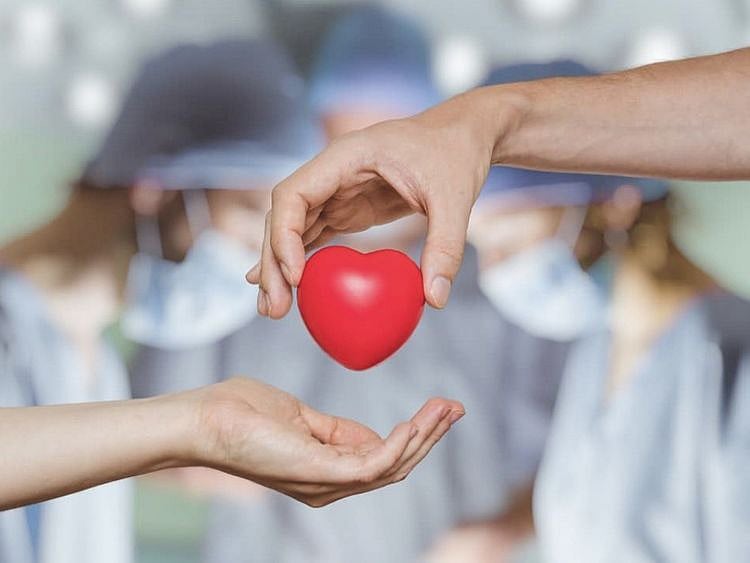
Dubai: The UAE is preparing to widen its organ and tissue transplant services to include the intestine, uterus and vascularised composite tissues such as the face, hand and arm, the Ministry of Health and Prevention (MoHAP) has announced, as part of the next phase of its donation and transplantation programme.
The ministry also plans to set up dedicated organ donation units within hospitals, staffed by trained doctors and nurses whose job will be to identify potential donors, support donors' families and coordinate every step of the donation process under the National Programme for Donation and Transplantation of Human Organs and Tissues, “Hayat.”
Officials say these units will help hospitals spot donation opportunities earlier and manage procedures in a more organised way, ultimately increasing the number of organs available and cutting waiting times for patients who need life-saving transplants.
Get updated faster and for FREE: Download the Gulf News app now - simply click here.
Wider donation pathways
Alongside the new units, the programme's strategic priorities include expanding donation after circulatory death (DCD), a pathway that broadens the pool of potential donors beyond those who are brain-dead.
Tissue donation will also grow to cover corneas, bones, skin and heart valves, in addition to the planned move into intestine, uterus and composite tissue transplants such as face, hand and arm procedures.
Major milestone reached
The announcement on the World Organ Donation Day on August 13 comes as MoHAP reveals that the Hayat programme has already helped save more than 1,500 patients since it launched in 2017 through to June 2026, with 549 deceased donors enabling 1,780 organ transplants across the country.
The number of deceased donors rose by 35.5 per cent in 2025 compared with 2024, while transplant procedures increased by 31 per cent over the same period. A single donor can save up to eight lives, officials note, with the impact of that decision rippling out to entire families and communities.
The UAE now records 13.95 deceased donors per million people, the highest rate among GCC countries. By organ type, the 1,780 transplants carried out so far break down into 924 kidneys, 502 livers, 181 lungs, 151 hearts and 22 pancreases.
Where it happens
Nine accredited centres across the UAE currently carry out transplant procedures. In Abu Dhabi, Cleveland Clinic Abu Dhabi performs heart, lung, liver, kidney and pancreas transplants, Sheikh Khalifa Medical City handles liver and kidney transplants for adults and children, and Burjeel Medical City carries out kidney and liver transplants.
In Dubai, Dubai Hospital offers kidney transplants for adults, Al Jalila Children's Hospital specialises in paediatric kidney transplants, Mediclinic performs adult kidney transplants, and King's College Hospital London – Dubai provides liver transplants for adults and children as well as living-donor kidney transplants. In Sharjah, Al Qassimi Hospital handles adult kidney transplants, while Medcare Hospital performs living-donor kidney transplants.
Waiting with hope
More than 4,000 people in the UAE are living with chronic kidney failure and waiting for a transplant, underlining why officials are pushing to expand donor pathways, cut waiting times and grow living-donor and paired-donation schemes.
Regional cooperation also plays a part. More than 550 organs have been exchanged between the UAE, Saudi Arabia and Kuwait, backed by bilateral agreements that support training, expertise-sharing and urgent organ transfers.
Strong outcomes
Clinical results are said to match those of the world's leading transplant centres. Kidney transplants recorded a 96.5 per cent survival rate after one year, with transplanted kidneys retaining 99 per cent functional efficiency. Lung transplants achieved a 91.4 per cent survival rate, with all transplanted lungs maintaining full function.
Heart transplant patients recorded a 95 per cent survival rate in the first 30 days, with transplanted hearts retaining 89.5 per cent functional efficiency, while liver transplants achieved a 93 per cent survival rate, with transplanted livers retaining 92.3 per cent function.
The UAE also carried out its first robotic lung transplant, placing it among a small group of countries capable of the complex procedure.
Legal backing
Federal Decree-Law No. 25 of 2023 and its executive regulations underpin the system, setting out rules for fair organ allocation based on medical need, protecting the rights of donors and recipients, and allowing donation between relatives up to the fourth degree, spouses and their relatives.
The law also permits paired donation between different families when a patient and their intended donor are not biologically compatible, and is being updated to cover non-human organs and tissues, including those made using 3D bioprinting and tissue engineering.
Recognising donors
Ministerial Decision No. 91 of 2026 introduces a package of recognition and support for donors and their families, including medical insurance coverage for living donors, help with accommodation and travel costs near treating hospitals, support during recovery and time off work, home-care services, and certificates and letters of appreciation.
Psychosocial support is also offered to the families of deceased donors.
Trained workforce
More than 10,000 healthcare professionals have been trained in organ donation, and a dedicated national network of over 150 specialists provides round-the-clock support, from identifying potential donors and supporting families through to retrieval, transplantation and post-operative care. The process draws on more than 20 medical and allied healthcare specialties.
Dr Amin Al Amiri, assistant undersecretary of the health regulation sector at MoHAP, said the achievements reflect the integration of advanced legislation, national expertise, healthcare infrastructure and modern technology. "We are continuing our efforts to develop the Hayat programme... giving more patients a new opportunity for life and a more stable future," he said.
Network Links
GN StoreDownload our app
© Al Nisr Publishing LLC 2026. All rights reserved.