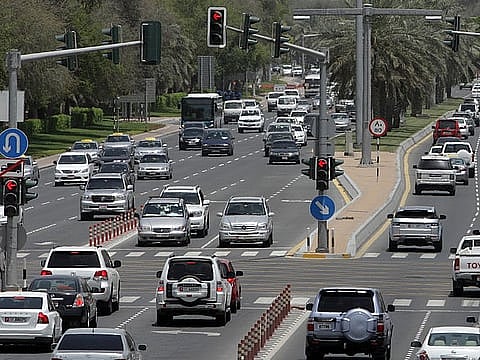
Abu Dhabi: Abu Dhabi is moving at an accelerated pace toward developing one of the region’s most intelligent and integrated transport systems, with the implementation of a real-time smart traffic safety management system that represents a qualitative leap in monitoring, analysis, and decision-making mechanisms.
The system is gaining increasing importance as it relies on advanced artificial intelligence and predictive analytics technologies, enabling a shift from traditional post-incident responses to proactive, data-driven interventions based on real-time information.
This development forms part of a comprehensive strategy aimed at enhancing road safety levels, improving the efficiency of traffic infrastructure, and supporting the Emirate’s vision of building a safe and sustainable transport network.
In this context, Sumaya Al Niyadi, Head of the Traffic Safety Section at the Integrated Transport Centre, affirmed that the real-time system represents a fundamental transformation in the concept of traffic safety management, noting that it seeks to elevate performance through the adoption of a proactive approach based on predictive analytics.
Al Niyadi stated in a media statement: “Through this system, the Centre aims to move away from the traditional reactive model that addresses incidents after they occur, toward a proactive approach that monitors risky behaviors and predicts potential accident hotspots, relying on artificial intelligence and big data.”
Zero traffic fatalities by 2040
She added that this approach supports the achievement of the “Vision Zero” goal of reaching zero traffic fatalities by 2040, by increasing safety levels on roads and intersections and continuously and accurately analyzing the impact of engineering and regulatory interventions.
Al Niyadi explained that the system is built on a broad suite of advanced technologies, including computer vision and language models to analyze traffic behaviors via surveillance cameras, heat maps that display high-risk areas in real time, and predictive artificial intelligence capable of detecting imminent accidents and assessing their severity levels.
She noted that the interactive reporting dashboard integrated into the system enables stakeholders to continuously monitor safety indicators and issue detailed daily reports, thereby enhancing the accuracy of evaluations and supporting prompt and effective decision-making.
According to Al Niyadi, these advanced technologies empower field teams to more precisely deploy enforcement patrols and engineering teams to identified hotspots, assess the effectiveness of implemented improvements, and instantly identify recurring accident patterns and their root causes. She emphasized that this advancement enhances on-ground response levels and strengthens the ability of relevant entities to intervene early and mitigate risks threatening road users.
An integrated smart traffic control system
In the same context, Al Niyadi highlighted that the system is fully integrated with other systems in place across the Emirate, including traffic monitoring and signal control systems, incident management platforms, and Department of Health data related to accident outcomes. This integration contributes to improving traffic flow and reducing congestion—one of the key factors contributing to accidents—while also enhancing emergency response times by linking data across relevant entities and providing a unified, comprehensive operational view.
Future plans
Regarding the Centre’s future plans, Al Niyadi explained that the next phase will witness an expansion in coverage to include additional roads and intersections, an increase in the number of smart cameras, and the development of more advanced accident prediction algorithms based on the analysis of human behavior patterns.
She added: “We are working on developing new applications, such as enhanced predictive modeling and a smart traffic safety guide that will offer evidence-based recommendations supported by economic analysis. In addition, we are moving toward integrating the system with connected vehicles to provide real-time data that will further enhance the efficiency of the transport ecosystem.”
Al Niyadi concluded by stressing that the real-time system represents “a strategic leap that strengthens the Emirate’s ability to develop a safe and advanced transport system grounded in data and artificial intelligence, supporting Abu Dhabi’s efforts to build a sophisticated traffic environment that protects lives and aligns with global best practices.”
AI in traffic management
Explore how AI in traffic management is transforming urban mobility. Learn how intelligent traffic management systems use artificial intelligence to optimize traffic flow, reduce congestion, and enhance commute efficiency.
Artificial Intelligence (AI) offers vast potential in revolutionizing traffic management systems, helping to significantly reduce congestion.
we explore the many ways in which AI aids traffic management, its overall impact, benefits and challenges, and what to look forward to in the future.
Traffic Management has undergone rapid evolution since the introduction of smart tech such as AI-based video analytics, and given way to Active Traffic Management (ATM). ATM allows traffic to be managed in a dynamic way, i.e, according to current or expected traffic conditions.
The importance of this lies in enhanced safety and efficiency of traffic systems - a lowered rate of emissions, conservation of resources, quick identification of safety-critical events to minimize injuries and accidents, and reinforcement of traffic rules.
Role of AI in improving Traffic Efficiency
The use of AI in traffic management is relatively recent, and is based on a focus on the collection and consequent analysis of real-time data. AI technologies like machine learning, computer vision and data analytics offer traffic planners access to valuable data that can be used to analyze, detect, and predict patterns in traffic. The goal is to establish a traffic network where signals, public transport and traffic flow functions like clockwork.
AI also forms the backbone of modern Intelligent Transport Systems (ITS), where vehicles, infrastructure, and control centers share information in real time. Through Vehicle-to-Everything (V2X) communication including V2V, V2I, and V2P, traffic systems can exchange safety-critical data to improve awareness, optimize signal timing, and reduce congestion. Connected vehicles further enhance this ecosystem by transmitting speed, position, and braking data that help predict potential conflicts and support smoother, safer traffic flow.
Sign up for the Daily Briefing
Get the latest news and updates straight to your inbox
Network Links
GN StoreDownload our app
© Al Nisr Publishing LLC 2026. All rights reserved.