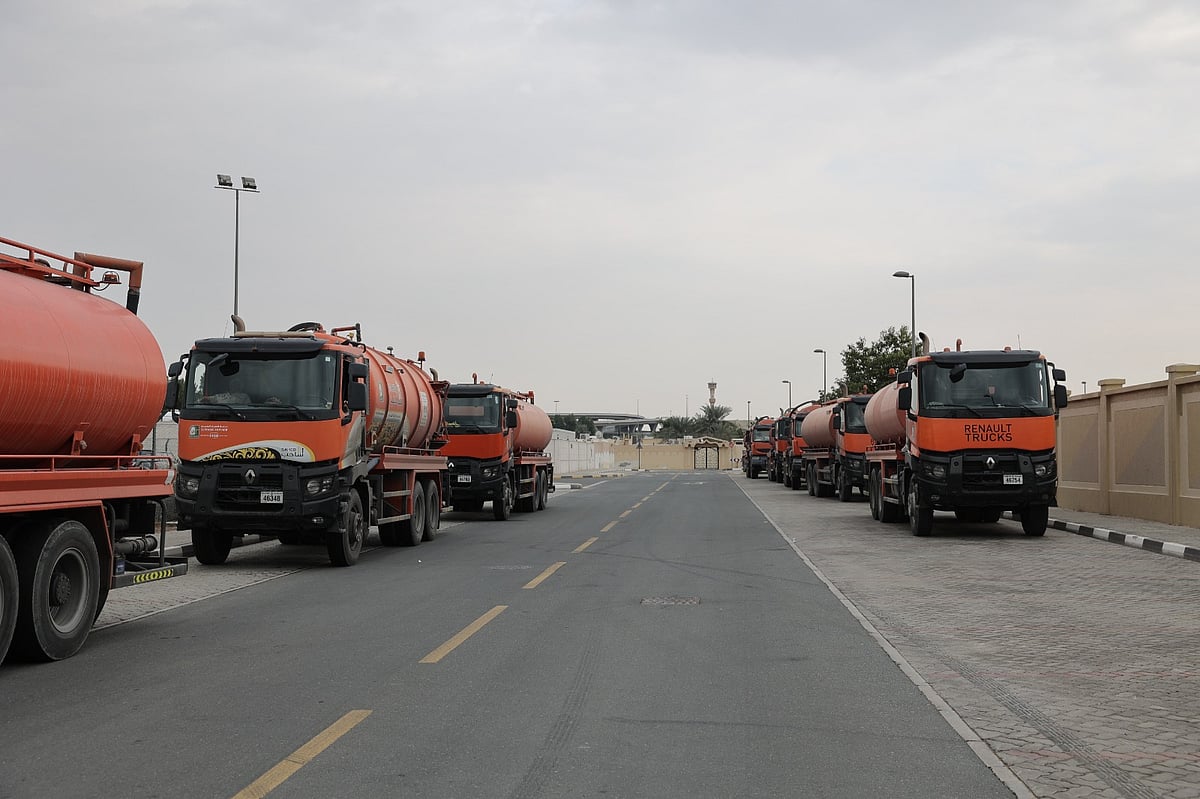
Sharjah deploys 1,100 staff, 580 tankers ahead of rainy season.
Sharjah: Sharjah City Municipality has mobilised 1,100 municipal workers, 580 water tankers and 180 mobile pumps as part of an extensive plan to tackle rainwater accumulation and respond swiftly to changing weather conditions across the emirate.
The preparations include 70 rainwater collection basins, the cleaning of 40,000 drainage openings and nine additional pumping stations, with a drainage capacity of up to 1,200 cubic metres per hour.
The measures are designed to speed up water removal, prevent flooding on roads and in residential areas, maintain smooth traffic flow and protect lives, property and infrastructure during periods of heavy rainfall.
Get updated faster and for FREE: Download the Gulf News app now - simply click here.
Obaid Saeed Al Tunaiji, Director-General of Sharjah City Municipality and Chairman of the Supreme Committee for Rain Emergencies, said the municipality had completed its preparations and strengthened the readiness of field teams through comprehensive operational and emergency response plans.
Sharjah has been divided into five sectors, with a dedicated team assigned to each to ensure coverage of all areas and enable emergency crews to reach affected locations quickly. Teams will coordinate and provide mutual support according to weather conditions and operational requirements.
Preparations have also included maintaining and cleaning rainwater drainage networks, servicing pumping stations, expanding existing water collection basins and constructing additional ones in several areas.
The municipality has further strengthened drainage facilities and deployed additional equipment along roads, in residential neighbourhoods and at key locations to improve the drainage network's efficiency and minimise water accumulation.
580 tankers and 180 mobile pumps
Dr Khalifa bin Hadda Al Suwaidi, Director of Technical Services and Vice-Chairman of the Supreme Committee for Rain Emergencies, said the municipality had allocated 1,100 specialised personnel to manage rain-related emergencies.
The workforce includes committee heads, engineers, technicians, supervisors and support staff, ensuring sufficient field resources to respond to different situations.
The fleet comprises 180 water tankers owned by the municipality and another 400 supplied by the private sector, bringing the total to 580.
The municipality has also provided 180 mobile pumps of different sizes, with diameters ranging from six to 12 inches, alongside five innovative dam pumps that have been granted intellectual property rights.
These specialised pumps are designed to improve emergency response times through their high capacity and efficiency in removing accumulated rainwater.
As part of its preventive measures, the municipality has established 70 rainwater collection basins and cleaned 40,000 drainage openings to improve the efficiency of the drainage network and strengthen the emirate's readiness for rainfall.
Nine pumping stations added across Sharjah
The municipality has expanded its rainwater drainage infrastructure by adding nine pumping stations along Sheikh Khalifa bin Zayed Street, Sheikh Mohammed bin Zayed Street, Al Wahda Street, Jamal Abdul Nasser Street and Al Dhaid Road.
The stations have a combined drainage capacity of up to 1,200 cubic metres per hour.
Additional drainage solutions have been introduced in residential neighbourhoods, including new pumping stations and expanded water collection lakes.
Other improvements include installing additional pumps, increasing drainage capacity at key locations and laying drainage pipelines inside tunnels.
The municipality has also connected Al Suyoh suburb to the existing drainage network through a 300mm-diameter pipeline and installed a 200mm-diameter pumping line in Al Bulaida.
Water tankers and pumps have been distributed across residential areas and roads according to local requirements and the locations most likely to experience water accumulation.
Freeing stranded vehicles and 24-hour emergency hotline
Khalid bin Falah Al Suwaidi, Director of Customer Service and Vice-Chairman of the Supreme Committee for Rain Emergencies, said the municipality had allocated recovery vehicles to tow cars that break down on roads or become stranded in areas affected by rainwater accumulation.
The service will help motorists, ease traffic congestion and allow emergency teams to carry out their work more efficiently.
Heavy machinery and equipment have also been made available to remove obstacles and fallen trees and deal with any damage to infrastructure caused by adverse weather conditions.
Residents can report rain-related incidents and request assistance through the municipality's call centre on 993, which operates around the clock.
Al Suwaidi said the centre would increase its readiness during periods of unstable weather to ensure reports are handled promptly and field incidents are monitored.
The municipality is also continuing its public awareness campaigns to educate residents about weather-related emergencies and the safety precautions they should follow during rainfall and changing weather conditions.
The campaigns aim to strengthen community awareness and help protect lives and public and private property.
Network Links
GN StoreAbout Gulf NewsTerms & ConditionsReach by GNSitemapContact usPrivacy PolicyGN FocusHave your sayWork with usAdvertise with usGulf News epaperPrinting Services
Download our app
© Al Nisr Publishing LLC 2026. All rights reserved.