Stock solution preparation
Dubai: Chicken feathers are usually something most people throw away without a second thought. But for three UAE high school students, they became the starting point for an experiment in turning waste into a potential agricultural resource.
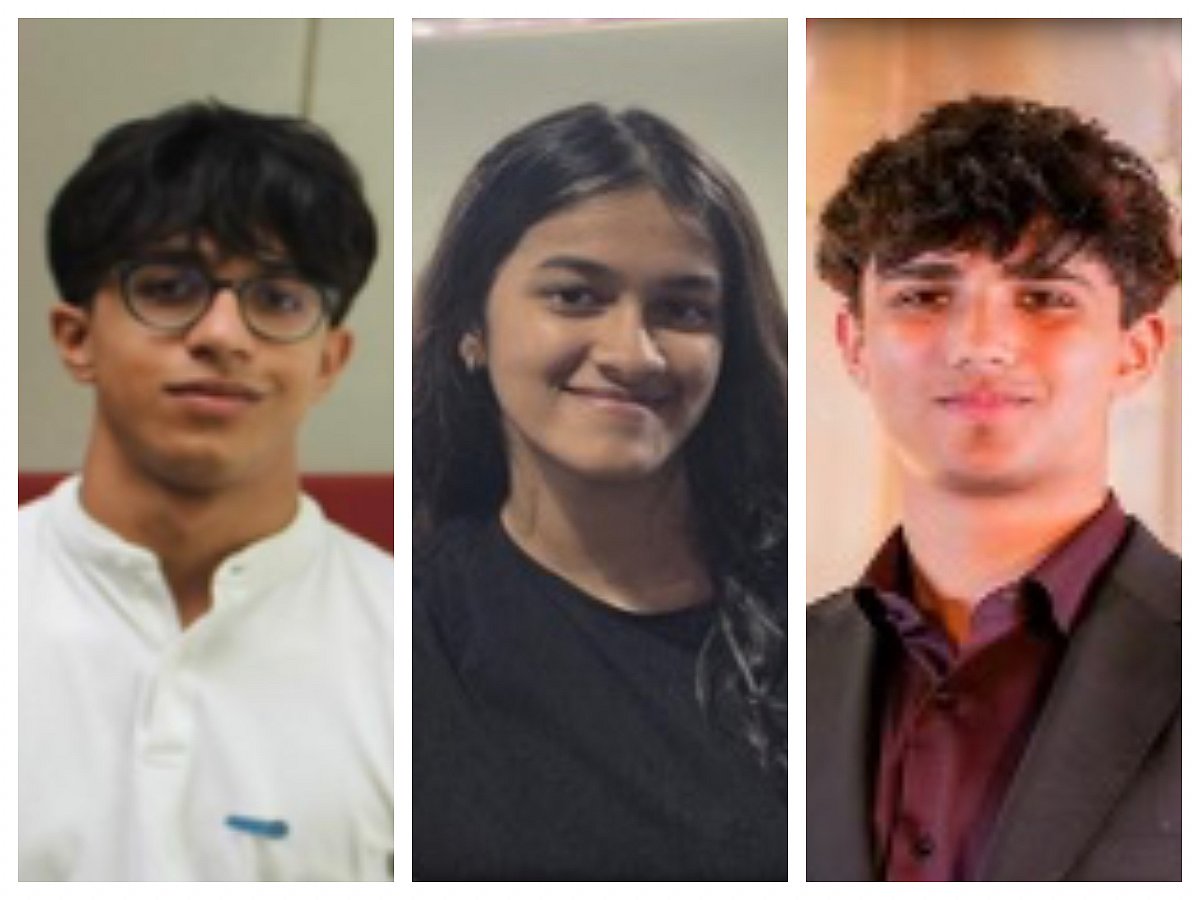
Adit Mital, Anushka Harlalka, and Maanit Misra, Year 13 students behind BioFeathers, have developed a fermentation-based process that uses bacteria to break down the tough keratin found in feathers and convert it into nutrient-rich formulations for plants.
The project has started with discarded feathers collected from local poultry farms and processing facilities in the UAE.
Today, the students say their work has progressed from a school-level experiment to trials across 16 farms and nursery sites in the UAE, Oman, and India, involving more than 1,200 farmers across different sites and growing seasons.
Get updated faster and for FREE: Download the Gulf News app now - simply click here.
From waste to a science project
More than 40 million tonnes of feathers are generated globally every year. Because feathers are rich in keratin, a tough protein that is resistant to natural breakdown, much of this material is discarded or sent to landfill.
“We kept asking ourselves why something so abundant was being wasted rather than used, and that question is really where BioFeathers began,” Harlalka told Gulf News.
The students have begun collecting feathers locally and looking for a way to break down the material. Their work has received crucial support from the University of Sharjah’s Research Institute of Medical and Health Sciences, where they worked with Dr. Lucy Semerjian, Dr. Ghalia Khoder, and Merylin Sebastian.
“The UAE has honestly been the foundation for everything we've built,” shared Mital.
Access to laboratory facilities and scientific mentorship has allowed the students to move beyond the idea and begin experimenting with fermentation.
How the process works
In simple terms, the BioFeathers process uses selected bacteria to break down keratin in the feathers through fermentation.
“That breakdown produces nutrient-rich liquid formulations. We've developed nine different versions so far, which we then test as plant-growth boosters and bio-fertilisers,” explained Misra.
Early laboratory and controlled growing trials have produced encouraging results. In some experiments, they have recorded nearly 45 percent greater feather breakdown than selected benchmarks from existing research.
Tests involving bok choy and radish have also produced plant-growth measurements around 20 to 30 percent higher than commercial comparison treatments with some formulations.
The students developed a fermentation-based process using bacteria to break down the tough keratin in feathers and convert it into nine different nutrient-rich formulations
The findings are still being analysed and the students have been preparing their experimental work for submission to peer-reviewed scientific journals.
The team has also filed a joint patent covering its process and methodology, which is currently under review by the Indian Patent and Trademark Office.
“We're also putting together our first manuscript for F1000Research, a review article documenting the BioFeathers protocol, so the science is properly out there and open access for others to actually use and follow,” added Misra.
Learning from failure
Getting to this stage has not been straightforward. The students have bared that some of their biggest challenges involved time, failed experiments, and the UAE's demanding environmental conditions.
“It took a long time to get the formulations right in the lab, and then just as long again to actually see whether they worked, because you can't rush plant growth,” exclaimed Misra.
Field testing has brought another layer of difficulty, with high temperatures and different soil conditions forcing the team to repeatedly adjust its approach.
There have also been batches in which the bacteria did not perform as expected, along with early prototypes that had to be abandoned and redesigned.
“It was frustrating at times, but those failures ultimately taught us more than the successes did,” added Misra.
Testing on plants
Farmers change the way they think
Laboratory results have only been part of the project. As BioFeathers moved into farm trials, the students have found that working directly with farmers changed their understanding of what makes an agricultural product useful.
Many of the farmers that have been involved were part-time or contract workers. Their practical knowledge of soil, crops, irrigation, and daily farming routines has helped the students refine their formulations and consider how they would work outside controlled laboratory conditions.
“Working directly with farmers really changed our outlook. What started as a pure science project slowly turned into something we saw as genuinely usable by real people, and that shift mattered a lot to us,” stated Harlalka.
Their feedback has helped the team focus not only on scientific performance, but also on how easily a formulation could be applied in real farming environments.
“It also changed how we personally think about sustainable agriculture and what it actually means to feed a community, not just through a scientific lens, but through a more human one,” added Harlalka.
Local farm trial
Support from the UAE
The students have highlighted that their development was shaped by support from organisations and institutions in the UAE.
One of the earliest organisations they have approached was the Emirates Drug Establishment, which prompted the team to consider regulatory and safety issues from the beginning.
Moreover, UAE-based businesses helped fund independent laboratory testing of the formulations. The project has been presented to representatives from the Food and Agriculture Organisation’s Subregional Office for the GCC and Yemen and the International Centre for Biosaline Agriculture, where the students received feedback as they developed the project.
The team has also been in communication with the Dubai Municipality as it explores potential opportunities through the Dubai Farms programme.
“What's stood out to us most is how genuinely open the UAE is to youth innovation. Instead of dismissing ideas from students, people have consistently taken the time to listen, and that willingness to engage with the creativity young people bring has made all the difference to us,” remarked Mital.
Affordable agricultural input
The students have estimated that their current formulation costs less than Dh1 per 100ml to produce, before packaging and distribution.
If the technology can be scaled and the results are validated through further independent testing, the team believes the formulation could eventually provide farmers with a relatively low-cost agricultural input while creating a productive use for poultry waste.
There is still work to be done before that possibility becomes a commercial reality. The students need to complete further analysis, publish their findings, continue field testing, and navigate regulatory and practical requirements associated with agricultural products.
The next chapter
The three students are now entering their final year of high school, but they are continuing to develop BioFeathers alongside their studies.
What began with discarded chicken feathers has therefore grown into a wider experiment in circular agriculture, finding ways to take something regarded as waste and put it back into a productive system.
For them, the project is more than feathers. It is about whether biotechnology can help convert an overlooked waste stream into something useful for farmers, while contributing to more resource-efficient agriculture. And it simply started by asking why something so abundant was being thrown away.
Network Links
GN StoreAbout Gulf NewsTerms & ConditionsReach by GNSitemapContact usPrivacy PolicyGN FocusHave your sayWork with usAdvertise with usGulf News epaperPrinting Services
Download our app
© Al Nisr Publishing LLC 2026. All rights reserved.