Make the most of Ramadan
Many of us focus too much on the social dimensions of the month, neglecting the spiritual ones
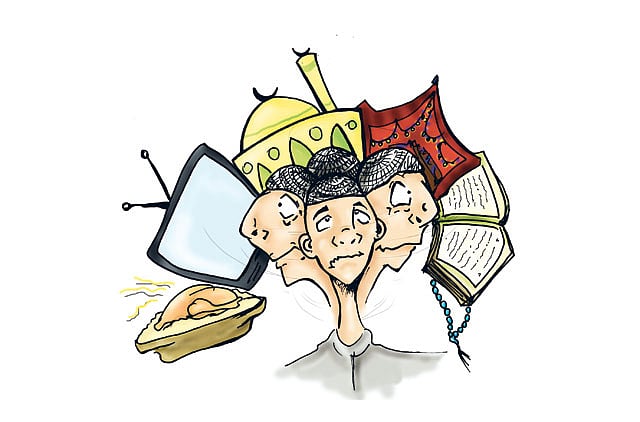
There are two main dimensions to Ramadan; the social and the spiritual. The social dimension includes the family gatherings as we end the fast at iftar, the shorter working hours that give much more free time to the individual, the Ramadan tents where hours are spent with friends, often over shisha and the rapidly increasing number of TV shows vying for our attention.
The spiritual dimension primarily involves abstaining from food, drink, sexual activities and any negative behaviour, sharing food with neighbours and giving alms/zakat to the poor, quality time spent with family, and the time spent in prayer and reflection.
I personally believe that the social dimension of Ramadan is dominating over the spiritual one, and that we need to strive for balance.
The majority of people actually gain weight during this month, because of unhealthy eating habits. People work fewer hours, and often see Ramadan as a time where productivity should naturally be reduced. This leads many to spend most of the day sleeping and waking up shortly before iftar. This is an erroneous view of the month. Ramadan should not be a month of slowing down, but a month of normal, if not added productivity, because it is a month that challenges us to emerge as better people.
I am not suggesting that we abstain from the joys of the social dimensions of Ramadan, but we should strive for a greater balance between the social and the spiritual.
There are a couple of things you can do towards achieving this balance:
Use your free time before iftar productively. Minimise the time you spend watching TV — be very selective and watch only shows that add value. Make an effort to pick up a book, even if you read just three pages every day, you will learn something new.
Exercise! Yes you can exercise while you're fasting. Ramadan is the best time to shed fat, and you can achieve this by going for a brisk 40-minute walk every day. Start your walk an hour and a half before iftar. I recommend you go to the nearest park, and walk around or inside the park. Make sure you stretch after your walk.
Use the discipline of fasting to teach yourself new eating habits. The self-discipline you are applying all day to ensure that you don't eat or drink should also be used when you sit down at iftar to ensure that you wisely choose what foods to eat.
Eat well
Say ‘no' to fried and sugary foods. They are empty calories that not only add to the layers of fat on your body, but also leave you feeling hungry soon afterwards. Choose from fish, chicken, meat, salads, rice and yoghurt. Eat what you want, but keep the portion sizes moderate.
There is no such thing as drinking too much water. So make sure you drink plenty, and carry a bottle of water with you after iftar. That way you won't forget to stay hydrated.
Make sure you are spending quality time with your family, especially around the iftar table. Make the effort to talk, share your thoughts and laugh together.
Attitude is everything. When we are fasting, hungry and thirsty, it is easy to become irritable, I see people driving aggressively like missiles on Shaikh Zayed Road, but we need to have the resolve to show self-discipline. We must work on our attitudes, just as we control our urge to eat and drink, we must control our urge to indulge in negative behaviour.
Remember the last 10 days of Ramadan, because within these last days falls the most holy night of the year — Lailat Al Qadr, or the Night of Power.
In Islam we believe that the Quran was revealed by the Angel Gabriel to the Prophet Mohammad (PBUH) on Lailat Al Qadr. The Quran describes Lailat Al Qadr as being "better than a thousand months", and says that on this night the gates of heaven are open and the angels and spirits descend.
So, let us make a special effort in the last 10 days of Ramadan to reach down into our hearts and do away with all the negativity. Pray and reflect on where we are in our lives, how we have treated others and what kind of human beings we are. Surely we can become stronger, wiser, more compassionate people, and it is in this month that we can resolve to do so, and map out the steps we will take to become the people we know we can be.
Najla Al Awadhi is a member of the Federal National Council.
Sign up for the Daily Briefing
Get the latest news and updates straight to your inbox
Network Links
GN StoreDownload our app
© Al Nisr Publishing LLC 2026. All rights reserved.