It will be the largest museum in the Guggenheim network
Guggenheim Abu Dhabi: Opening date, ticket prices, artists and all you need to know
Tickets are on sale now at Dh70, with free entry for under-18s, students and over-60s
Last updated:
4 MIN READ
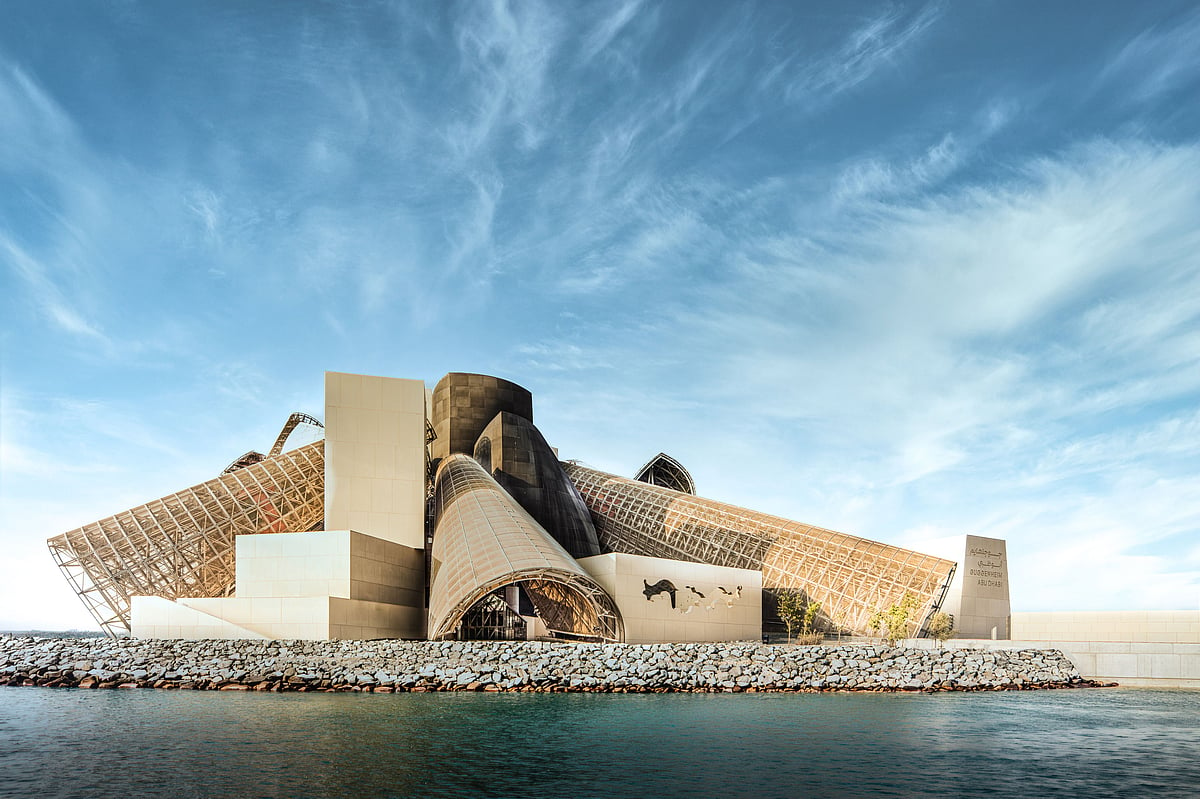
Twenty years after it was first announced, Guggenheim Abu Dhabi opens to the public on Friday 11 December 2026.
Visit Abu Dhabi
Dubai: Twenty years after it was first announced, Guggenheim Abu Dhabi finally has a date, a price and a booking page. The museum opens to the public on Friday 11 December 2026, and tickets went on sale this month through its official website.
It will be the largest museum in the Guggenheim network, bigger than New York, Venice and Bilbao, and the fourth institution to open in Saadiyat Cultural District. Here is what is confirmed so far.
The essentials
When: Friday 11 December 2026
Where: Saadiyat Cultural District, Saadiyat Island, Abu Dhabi
Price: Dh70 general admission
Booking: guggenheimabudhabi.ae
Free entry
Entry is free for anyone under 18, for students at UAE universities, and for UAE citizens and residents aged 60 and above. People of determination also enter free, with a complimentary companion ticket available at checkout.
Students need to bring proof of identification, and those tickets have to be collected from the ticketing desk on the day rather than downloaded in advance. Children aged 12 and under must be accompanied by an adult at all times.
Reduced rates are available for other eligible groups.
The building
Frank Gehry designed it, and the late Pritzker laureate's fingerprints are all over the plan.
The museum spans roughly 80,000 square metres in total, with about 11,600 square metres of indoor gallery space. That makes it the biggest in the Guggenheim network by a considerable margin.
Inside are 28 galleries, connected through a central atrium rather than stacked in a fixed route. The Department of Culture and Tourism has described the architecture as part of the artistic experience rather than a container for it, with visitors expected to build their own path through the building.
The most recognisable feature will be the cones. Ten sculptural cones rise from the structure, reaching up to 88 metres, and they are not decorative. They are designed to shade the building and move air through it, which matters a great deal in a climate where summer highs routinely sit in the mid-40s Celsius.
There are also extensive outdoor exhibition spaces, and the site itself sits where the island meets the water.
Frank Gehry designed it, and the late Pritzker laureate's fingerprints are all over the plan.
What is in the collection
Curators have been building the collection since 2009, and it is owned by the Abu Dhabi government rather than the Guggenheim Foundation.
It covers art from around 1960 to the present, across painting, sculpture, photography, installation, moving image and new media. Reported figures vary, with earlier official statements citing over 600 works and more recent accounts putting it above 970 works by more than 400 artists from over 70 countries.
The stated focus is the Gulf and the wider West Asia, North Africa and South Asia region, known internally as WANASA, shown alongside international names rather than in a separate wing.
Which artists
Several names have been confirmed publicly over the years.
From the international canon: Jackson Pollock, Mark Rothko, Andy Warhol and Jean-Michel Basquiat. Yayoi Kusama is in the collection, as is El Anatsui, and Anish Kapoor's 12-metre-diameter My Red Homeland has featured in earlier previews of the holdings.
From the region, the collection includes work by the late Hassan Sharif, the Emirati artist widely regarded as the father of conceptual art in the Gulf, along with Mohammed Kazem and Ebtisam Abdulaziz. Monir Shahroudy Farmanfarmaian, Samia Halaby, Rachid Koraïchi, Susan Hefuna and Rasheed Araeen have also been named.
Earlier Guggenheim Abu Dhabi collection exhibitions, including Seeing Through Light in 2014, drew on light and perception artists such as Larry Bell, Dan Flavin, Robert Irwin, Douglas Wheeler, Keith Sonnier and Otto Piene.
Mohamed Khalifa Al Mubarak, chairman of DCT Abu Dhabi, has said the better-known Western names will hang alongside artists from the Arab world, Africa and Asia who have had less international attention.
A full list of works on display at opening has not been released.
How the galleries are organised
Rather than walking visitors through art history in date order, the museum is grouping its galleries around themes.
The five named so far are Abstractions, Popular Culture, Land, Language and Storytelling. The stated approach is to let connections emerge across geographies and generations rather than presenting a single timeline.
Who runs it
Guggenheim Abu Dhabi is a partnership between the Department of Culture and Tourism in Abu Dhabi and the Solomon R Guggenheim Foundation in New York, which also runs the Guggenheim in New York, the Peggy Guggenheim Collection in Venice and the Guggenheim in Bilbao.
Dr Valerie Hillings is the inaugural director. She has worked on the Abu Dhabi project for years, including on its curatorial affairs. Mariët Westermann is director and chief executive of the Guggenheim Foundation, and has described the collection as both local and global.
The 20-year backstory
The agreement with the Guggenheim Foundation was signed in July 2006. Construction began in 2011, then stopped.
Work did not restart in earnest until 2019, with an initial hope of opening by 2023. A completion target of 2026 was set in 2021, and the December date was confirmed by DCT Abu Dhabi in July this year. Reported cost figures put the project at around $1 billion, roughly Dh3.67 billion, though no official total has been published.
Where it sits on Saadiyat
The museum joins a cluster that has been filling in steadily. Louvre Abu Dhabi opened in 2017. Zayed National Museum, Natural History Museum Abu Dhabi and teamLab Phenomena Abu Dhabi are all in the same district.
The opening lands shortly after the first edition of Frieze Abu Dhabi, which runs from 19 to 22 November, so the emirate has a busy end to the art calendar either way.
For anyone travelling from Dubai, Saadiyat is roughly 90 minutes by road, and the district is walkable once you are there.
Network Links
GN StoreAbout Gulf NewsTerms & ConditionsReach by GNSitemapContact usPrivacy PolicyGN FocusHave your sayWork with usAdvertise with usGulf News epaperPrinting Services
Download our app
© Al Nisr Publishing LLC 2026. All rights reserved.