Shaikha Jawaher visits Syrian refugees in Lebanon
The humanitarian trip comes against the backdrop of a continued influx of refugees
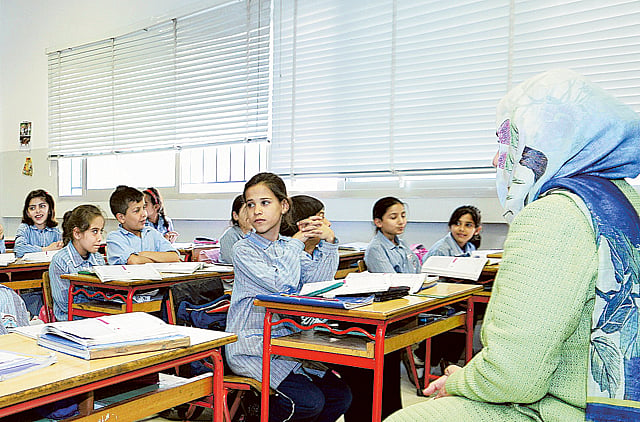
Sharjah: Shaikha Jawaher Bint Mohammad Al Qasimi, Wife of the Ruler of Sharjah and Chairperson of the Supreme Council for Family Affairs, recently visited Syrian refugees in Lebanon on her first humanitarian visit following her designation as Eminent Advocate for refugee children by the United Nations High Commission for Refugees (UNHCR).
The humanitarian trip comes against the backdrop of a continued influx of refugees fleeing the two-year conflict in Syria, with the UNHCR projecting that one million refugees will have crossed into Lebanon by December 13.
Currently, 463,000 refugees have been assisted by the UNHCR and its partners, although 102,000 of these are awaiting registration to become documented refugees in Lebanon.
Shaikha Jawaher’s humanitarian efforts throughout the Arab world and beyond have earned her the affectionate title ‘The Big Heart’ by her beneficiaries. This is not the first time Shaikha Jawaher has undertaken humanitarian initiatives in Lebanon, having previously spearheaded initiatives such as ‘B’hibak ya Libnan (‘I Love Lebanon’), which raised over Dh23 million and ‘Ta’yirja’ Bahrak Azraq’ (‘Bring back our blue sea’), in which more than Dh1 million was raised.
Lebanon has also provided sanctuary to a significant population of Palestinian refugees, and Shaikha Jawaher helped raise Dh83 million in the ‘Salam Ya Seghar’ (‘Peace for Children’) to aid children in the war-torn Gaza Strip.
The UNHCR and its partners — namely Unicef, DRC, CLMC, Makhzoumi Foundation, SHIELD and World Vision — are collectively assisting 50,000 Syrian refugees with blankets, clothing vouchers, quilts, kitchen sets, mattresses, recreation kits for younger refugees.
Furthermore, the World Food Programme and DRC distributed 9,300 food vouchers that will alleviate the nutritional deficiencies of approximately 10,000 refugees in the short-term.
Speaking with refugee women at a community centre just outside Beirut, Shaikha Jawaher expressed her appreciation for the various partners who are collaborating with the UNHCR, and emphasised that there is still a critical need for further action.
“The fact that some refugees are willing to navigate their way through deadly areas of landmines and mortar shelling to reach Lebanon illustrates just how determined they are to create better lives for their children,” she said.
Shaikha Jawaher further noted that another major challenge for refugee children is access to medical treatment. Some non governmental organisations do offer primary health care services to registered and unregistered refugees — who constitute 88 per cent and 12 per cent of the refugee population respectively. However these services are only accessible to some refugees and secondary health care access for refugees is a real challenge.
Underlining the need for urgent funding, the UNHCR estimates that with only 75 per cent funding, the number of refugees who benefit from community empowerment interventions will be drastically reduced from 750,000 to 200,000 refugees.
Shaikha Jawaher added that this is not a Syrian problem or an Arab problem — as it can only be resolved through the collective efforts of the entire international community. “It is time to show that we are one world and our heart is big enough to comfort every refugee child. These innocent children might be homeless or motherless, but with our combined contributions they will not be hopeless,” she said.
Sign up for the Daily Briefing
Get the latest news and updates straight to your inbox
Network Links
GN StoreDownload our app
© Al Nisr Publishing LLC 2026. All rights reserved.