Nearly total ‘Blood Moon’ eclipse to light up skies on August 27-28
About 96% of the Moon will enter Earth’s darkest shadow at maximum eclipse
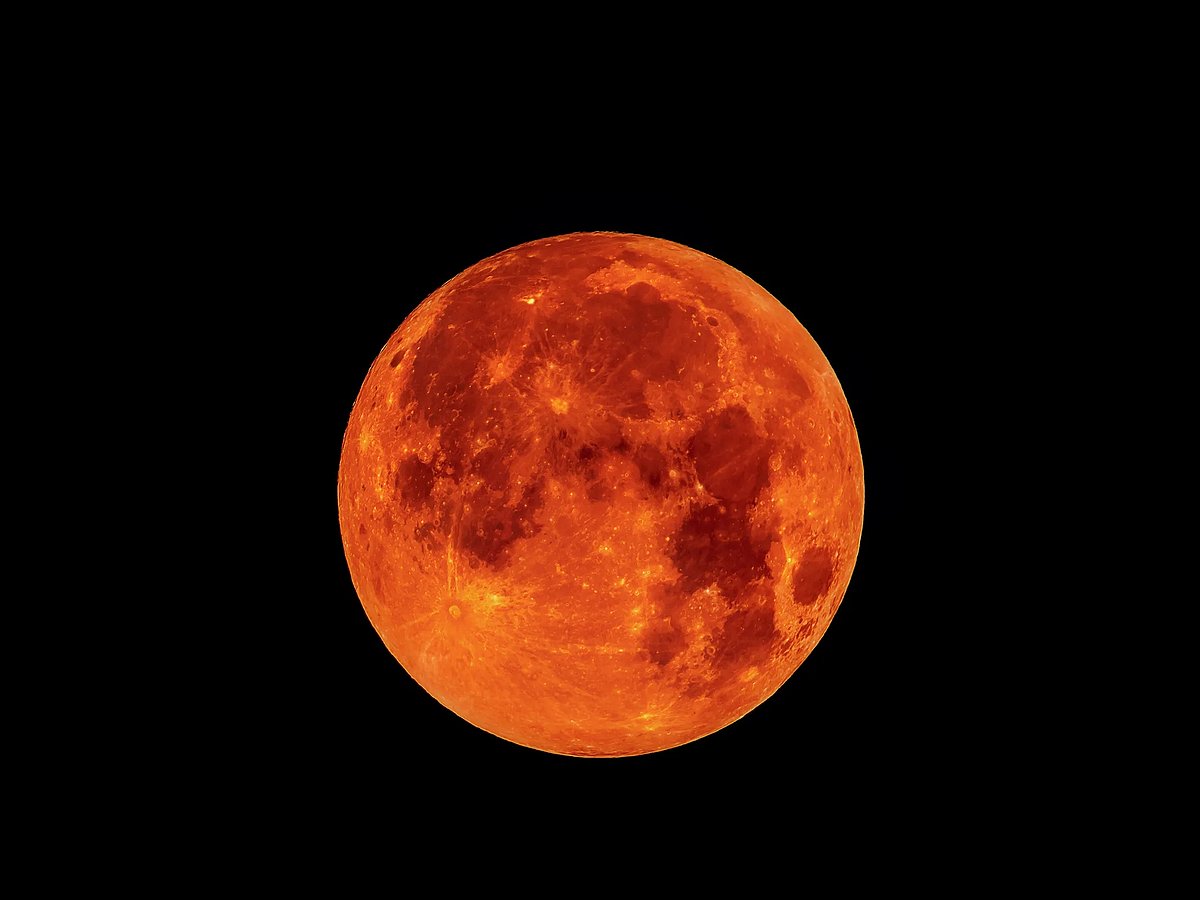
Dubai: Nearly all of the full Moon will disappear into Earth’s shadow on August 27-28, producing a deep partial lunar eclipse that could give it the striking red appearance of a “Blood Moon”.
The lunar eclipse will unfold overnight on August 27 and 28, 2026, coinciding with August’s full Sturgeon Moon. At its peak, about 96 per cent of the lunar surface is expected to be immersed in Earth’s darkest shadow, leaving only a narrow sliver brightly illuminated.
Get updated faster and for FREE: Download the Gulf News app now - simply click here.
Despite its dramatic appearance, the event is not technically a total lunar eclipse. Astronomers classify it as a deep partial lunar eclipse because a small portion of the Moon will remain outside Earth’s umbra.
But with roughly 96 per cent covered at maximum eclipse, much of the lunar disc could develop the reddish-orange appearance commonly associated with a “Blood Moon”.
When will the August lunar eclipse happen?
The eclipse begins on the night of Thursday, August 27, continuing into the early hours of Friday, August 28.
The precise time will depend on the observer’s location. In the United States, for example, the penumbral phase begins at 9.23pm Eastern Daylight Time, followed by the partial eclipse at 10.33pm. Maximum eclipse occurs at about 12.12am on August 28, when approximately 96.2 per cent of the Moon will be within Earth’s umbra.
The partial phase ends at about 1.51am EDT, while the final penumbral phase concludes at around 3.01am, making the entire event about five hours and 38 minutes long.
Where will it be visible?
Visibility will vary considerably around the world because the eclipse must occur while the Moon is above the horizon at a particular location.
North America is expected to have favourable views of the event, including much of the United States, weather permitting. Other regions may see only part of the eclipse depending on local moonrise and moonset times.
Cloud cover will also play a decisive role, meaning even areas geographically well placed for the eclipse could miss the spectacle if skies are overcast.
Why will the Moon turn red?
A lunar eclipse occurs when the Earth moves between the Sun and Moon, preventing direct sunlight from fully illuminating the lunar surface.
But the Moon does not simply disappear into darkness. Some sunlight passes through Earth’s atmosphere before reaching it.
The atmosphere scatters shorter wavelengths of light, including blue, more effectively, while longer red and orange wavelengths continue through and illuminate the Moon. The effect is similar to the process that produces vivid red and orange colours at sunrise and sunset.
Depending on atmospheric conditions, the eclipsed portion of the Moon can consequently appear anything from rusty orange and copper to deep red.
Is it safe to watch?
Unlike a solar eclipse, no special glasses or eye protection are required to watch a lunar eclipse. It can be viewed safely with the naked eye.
Binoculars or a telescope can provide a more detailed look at the changing colours and the boundary of Earth’s shadow as it moves across the lunar surface, but no specialist equipment is necessary.
August’s full Moon reaches peak illumination on August 28, adding to the spectacle. Known traditionally as the Sturgeon Moon, its name is associated with the large sturgeon fish historically abundant in the Great Lakes and Lake Champlain during late summer.
Network Links
GN StoreDownload our app
© Al Nisr Publishing LLC 2026. All rights reserved.