How Abu Dhabi plans to revive its deserts with 10 million seeds
AI-guided aerial seeding aims to restore native desert ecosystems at scale
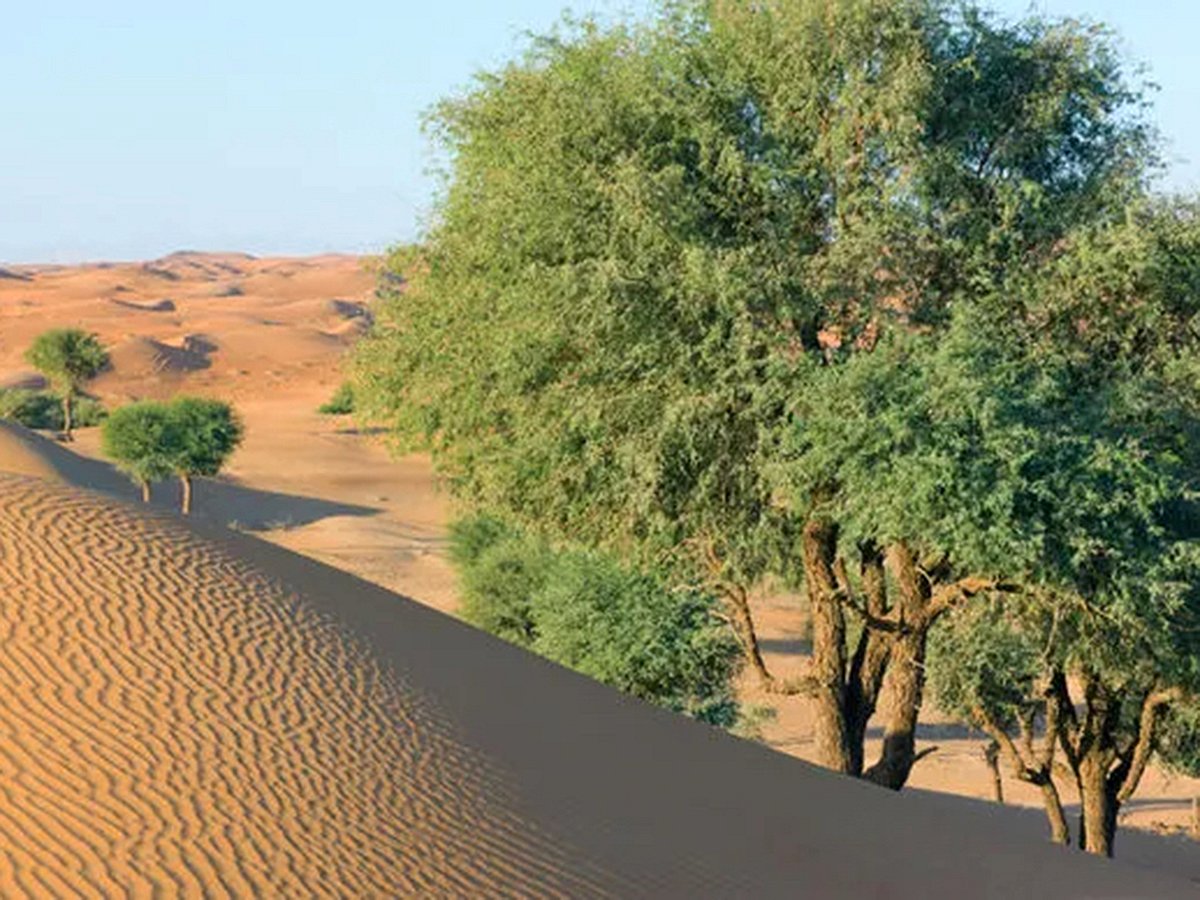
Abu Dhabi: In one of the region's largest environmental restoration initiatives, the Environment Agency – Abu Dhabi (EAD) is set to disperse 10 million native seeds by air in a landmark project aimed at rehabilitating natural habitats, restoring native vegetation, enhancing biodiversity, and strengthening the resilience of terrestrial ecosystems against climate change and desertification.
The significance of the initiative extends far beyond the sheer scale of the seed dispersal. Equally important are the carefully selected native plant species, the advanced technologies used to identify the most suitable seeding locations, and the long-term monitoring systems designed to evaluate germination success. Together, these elements position the programme as a leading example of how modern technology can help restore fragile desert ecosystems.
Get updated faster and for FREE: Download the Gulf News app now - simply click here.
According to Hassan Ali Al Ahbabi, Plant Genetic Resources Centre Specialist at the Environment Agency – Abu Dhabi, the programme is a pioneering effort to rehabilitate natural habitats and restore vegetation cover across desert landscapes as part of the Agency's wider strategy to protect terrestrial ecosystems and enhance biodiversity.
He said the programme uses advanced aerial seeding technologies capable of covering vast areas efficiently while minimising human disturbance to natural habitats, accelerating ecosystem recovery and supporting the long-term sustainability of Abu Dhabi's desert environment.
Al Ahbabi said the programme relies exclusively on native plant species naturally adapted to the UAE's harsh desert conditions, including Ghaf, Samar, Arta, Shoua, Raghal and Thamam. Each species is selected according to soil characteristics, salinity levels and existing ground cover to maximise germination and vegetation recovery.
He added that selecting dispersal sites begins with a comprehensive scientific and environmental assessment, including detailed analyses of soil properties, salinity, land cover and historical vegetation data, to ensure the programme is implemented in locations capable of delivering lasting ecological benefits.
Target areas include Al Shuwayb, Sweihan, Nahil, Al Hayer and Al Rawdah, alongside expanded restoration efforts within Al Ghada Nature Reserve and the Houbara Protected Area in Al Dhafra.
Artificial intelligence at the heart of the project
The initiative incorporates the latest advances in artificial intelligence, remote sensing and aerial seeding technologies to improve ecosystem restoration while strengthening resilience against climate change and desertification. It also supports Abu Dhabi's wider biodiversity conservation strategy through nature-based solutions.
Al Ahbabi said the Agency uses AI, satellite imagery, remote sensing technologies and geospatial data throughout every stage of the programme, from identifying suitable sites to evaluating post-seeding performance.
Among the technologies used are the Normalized Difference Vegetation Index (NDVI) and the Soil-Adjusted Vegetation Index (SAVI), which assess vegetation health and density while generating highly accurate environmental maps to optimise seed dispersal.
The Agency will continue monitoring restored sites for up to two years after aerial seeding by combining remote sensing data with extensive field surveys to evaluate germination rates, vegetation growth and habitat recovery, allowing continuous improvements based on scientific evidence.
Why is Abu Dhabi turning to aerial seeding?
Desert ecosystems face numerous environmental challenges, including:
Scarce rainfall
Extremely high temperatures
Sand encroachment
Overgrazing
Human pressures
Declining native vegetation in some areas
Environmental studies consistently show that native plants are the foundation of healthy desert ecosystems. They provide food and shelter for wildlife, stabilise soils and reduce wind erosion.
However, manually planting vegetation across thousands of square kilometres of desert is labour-intensive and expensive. Aerial seeding using aircraft and drones offers a faster, more efficient and cost-effective alternative.
A comprehensive environmental performance framework
Al Ahbabi said the programme's success will be measured using an integrated set of environmental and technical indicators, including germination rates, increases in vegetation cover and density, improvements in plant health, and the suitability of planted species to local conditions.
The programme will also assess how effectively restored habitats regain their ecological functions.
He said the initiative will help stabilise soils, reduce desertification and sandstorms, improve air quality, provide food and shelter for native wildlife, increase carbon sequestration and strengthen ecosystem resilience to climate change, further supporting Abu Dhabi's sustainability and biodiversity conservation goals.
The reason for using only native species
The decision to plant indigenous species is based on well-established ecological principles. Native plants:
Are naturally drought tolerant.
Require significantly less water.
Are fully adapted to local soils.
Support native wildlife.
Do not compete with indigenous flora in the way invasive species do.
Can survive for decades under natural conditions.
How does aerial seeding work?
The programme follows a carefully planned scientific process.
Stage one
Collect native seeds from verified sources.
Stage two
Clean and prepare the seeds.
Stage three
Test seed viability and germination rates under laboratory conditions.
Stage four
Some seeds are encapsulated in protective seed pellets made from natural materials that:
Retain moisture.
Protect seeds from birds.
Improve germination rates.
Supply essential nutrients during early growth.
Stage five
Load the seeds into aircraft or drones.
Stage six
Disperse them precisely using digital mapping systems.
Site selection
Selecting seeding sites is one of the programme's most critical stages and is based on multiple scientific criteria, including:
Satellite imagery
To assess existing vegetation cover.
Artificial intelligence
To predict germination success.
Geographic Information Systems (GIS)
To produce highly accurate spatial maps.
Rainfall analysis
To identify locations most likely to receive enough rainfall for germination.
Soil assessment, including:
Salinity
Texture
Depth
Moisture-retention capacity
Terrain slope
To avoid areas where floodwaters could wash away seeds.
Grazing pressure
Priority is given to areas less exposed to intensive grazing.
Protected areas
Preference is given to:
Nature reserves.
Areas that can be effectively monitored.
What happens after the seeds are dispersed?
The project does not end with aerial dispersal.
A long-term monitoring programme includes:
Tracking germination.
Measuring establishment rates.
Monitoring seedling development.
Conducting regular drone surveys.
Comparing updated vegetation maps with baseline data.
Repeating seeding in areas where establishment rates are lower than expected.
Expected environmental benefits
Experts expect the programme to:
Restore extensive areas of native vegetation.
Enhance biodiversity.
Improve soil quality.
Increase native plant populations.
Support sustainable wildlife habitats.
Reduce desertification.
Minimise sandstorms.
Improve ecosystem resilience to climate change.
Increase natural carbon storage.
Strengthen ecosystem services that support wildlife.
Supporting the UAE's nature-based solutions strategy
The initiative closely aligns with the UAE's commitment to nature-based solutions, recognising ecosystem restoration as one of the most effective ways to tackle climate change, conserve biodiversity and protect natural resources.
It also reflects the country's growing use of advanced environmental technologies, including drones, remote sensing and artificial intelligence, to improve natural resource management.
A scientific blueprint for rebuilding desert ecosystems
The aerial dispersal of 10 million native seeds represents far more than a tree-planting campaign.
It is a comprehensive, science-based ecosystem restoration programme built on careful species selection, sophisticated digital site analysis and long-term scientific monitoring to maximise ecological outcomes.
If the initiative achieves its objectives, it will significantly strengthen Abu Dhabi's ability to restore ecological balance, enhance wildlife habitats and establish a regional benchmark for using innovation and technology to restore fragile ecosystems and support sustainable development.
Sign up for the Daily Briefing
Get the latest news and updates straight to your inbox
Network Links
GN StoreDownload our app
© Al Nisr Publishing LLC 2026. All rights reserved.