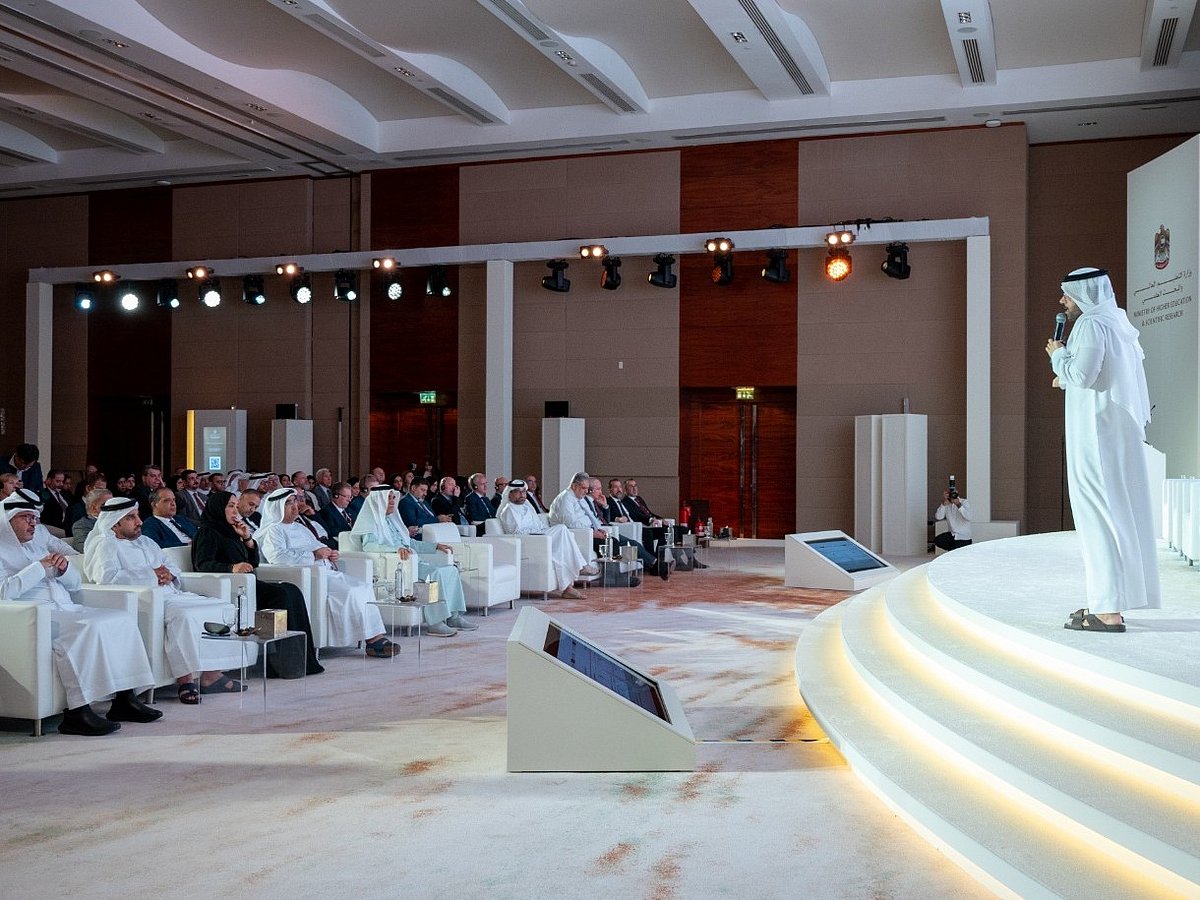
Abu Dhabi, UAE: The Ministry of Higher Education and Scientific Research today held the first forum in its Future of Higher Education Dialogues series in Abu Dhabi, bringing together more than 200 officials and representatives of higher education institutions, technical and vocational education and training institutions, and training centres and institutes. The forum was attended by a number of Ministry leaders, as well as experts and specialists in higher education.
The forum formed part of the Ministry’s efforts to strengthen dialogue and partnership with higher education institutions, technical and vocational education and training institutions, and training centres and institutes. It served as a unified platform to explain the new Cabinet resolutions regulating the higher education sector, issued in implementation of the provisions of the Federal Decree-Law on Higher Education and Scientific Research. The forum aimed to simplify the resolutions’ provisions, clarify institutions’ responsibilities in implementing them, and ensure their proper understanding and application. The resolutions seek to develop and strengthen governance of the higher education system, enhance confidence in its effectiveness, and improve the quality of its outcomes.
Get updated faster and for FREE: Download the Gulf News app now - simply click here.
In this regard, Dr. Abdulrahman Al Awar, Minister of Human Resources and Emiratisation and Minister of Higher Education and Scientific Research, emphasized that the new resolutions represent a significant step forward in higher education governance.
He said: “These resolutions enhance the quality of the higher education system and support the alignment of its outcomes with the needs of the labour market and priority sectors. They also reflect the UAE’s commitment to building an education system that is flexible, innovative and capable of keeping pace with global developments.”
He added: “The successful implementation of the Cabinet resolutions is a shared responsibility between the Ministry and the educational institutions concerned. Joint efforts are the way forward to strengthening confidence in the system locally, regionally and globally.”
Dr. Abdulrahman Al Awar also expressed the Ministry’s appreciation for the pivotal role educational institutions play in developing the system, reaffirming the Ministry’s readiness to provide the necessary support and guidance to ensure a clear understanding and proper implementation of the new frameworks.
Dr. Ahmed Sultan Al Shoaibi, Undersecretary of the Ministry of Higher Education and Scientific Research, outlined the key features of the new Cabinet resolutions and their significant contribution to the UAE’s vision for advancing the higher education system. He reaffirmed the Ministry’s commitment to strengthening partnership and direct communication with the relevant local authorities, higher education institutions, technical and vocational education and training institutions, and training institutes and centres, supporting the development of the education system and enhancing coordination among all stakeholders.
He explained that the new resolutions were developed through a collaborative approach involving the relevant entities. Together, they form an integrated national framework that enhances the quality of higher education, clarifies the licensing journey and links regulatory oversight to risk and performance. The framework is built on clear standards and sustainable quality, ensuring the protection of students’ rights and the advancement of higher education outcomes.
As part of the dialogue series, the forum featured three sessions introducing the new Cabinet resolutions.
The first session reviewed the details of Cabinet Resolution No. (104) of 2026 on the National Framework for Licensing Higher Education Institutions.
The second session highlighted the key provisions of Cabinet Resolution No. (92) of 2026 on Review Fees for Higher Education Institutions and Technical and Vocational Education and Training Institutions, and Cabinet Resolution No. (103) of 2026 on Fees and Financial Guarantees Associated with Ministry Services.
The third session discussed Cabinet Resolution No. (143) of 2026 on the Regulation of Violations, Penalties and Administrative Measures Associated with the Mandates and Services of the Ministry of Higher Education and Scientific Research.
The three sessions were followed by discussion panels featuring a number of Ministry leaders and specialists, who answered questions from representatives of higher education institutions, technical and vocational education and training institutions and training centres and institutes. The discussions also clarified key aspects of the new resolutions and their implementation mechanisms.
The Ministry invited participants to review the resolutions on its website, www.mohesr.gov.ae, and circulate them among all relevant stakeholders within their institutions to ensure their proper implementation. The Ministry also reaffirmed its commitment to organizing similar forums in Dubai and Sharjah to address institutions’ questions and provide the necessary support to ensure a clear understanding and proper implementation of the resolutions.
Sign up for the Daily Briefing
Get the latest news and updates straight to your inbox
Network Links
GN StoreDownload our app
© Al Nisr Publishing LLC 2026. All rights reserved.