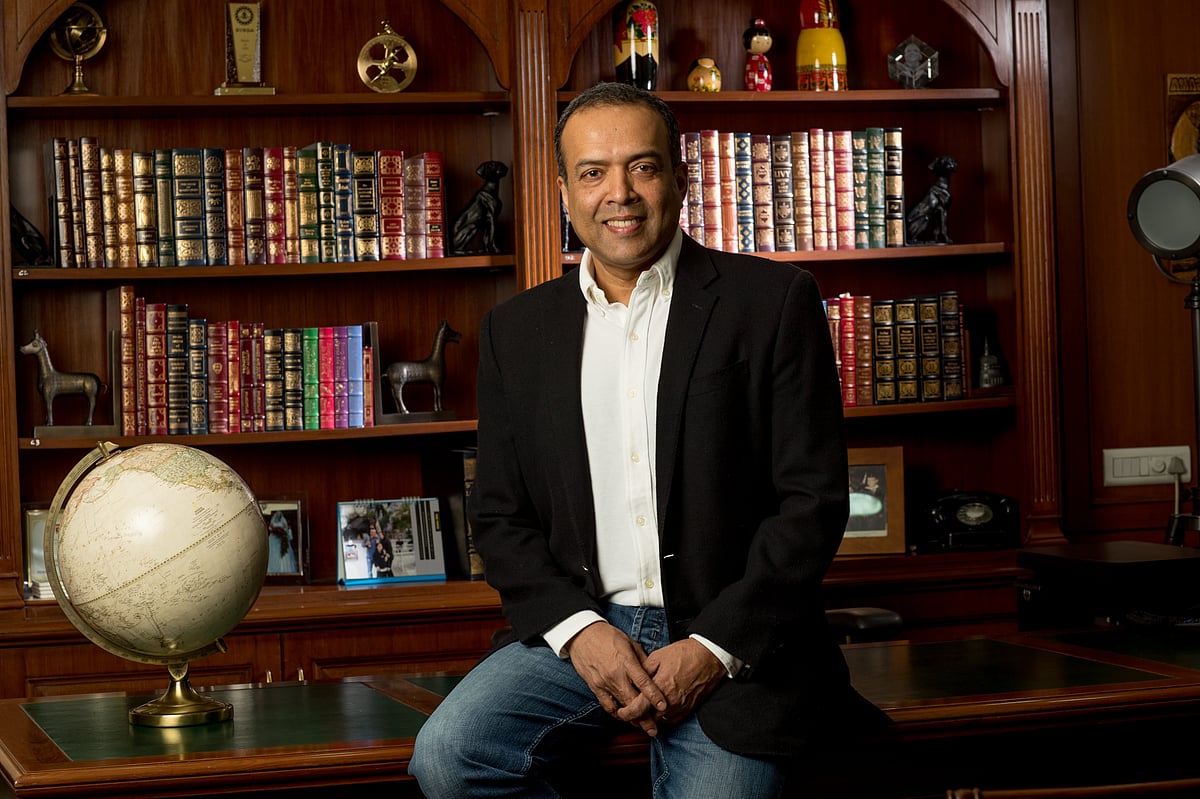
Students planning to study abroad need to consider what happens after graduation before choosing a country or course, said Xavier Augustin, CEO, Y-Axis, Platinum Sponsor of Gulf News Edufair.
With immigration policies, work rights and skilled migration rules changing across major study destinations, Augustin said families should treat post-study pathways as a central part of the decision, rather than an issue to address after admission.
“Understanding these options is the foundation of the decision, not an afterthought,” he said. “A degree abroad is a major investment, and its return depends on whether a student can work, build experience, and eventually settle after graduating.”
He said students who focus mainly on university rankings and tuition fees can find their options limited once they are already enrolled.
“Looking at the pathway first reverses that order. It lets students choose a destination, course, and intake that support a longer career plan, with a credible Plan B if rules or circumstances change along the way,” he said.
Look beyond the destination
Canada, Australia, Germany and the UK continue to attract strong interest from students, but Augustin said their post-study and immigration pathways differ significantly.
“Canada pairs post-graduation work routes with structured permanent residency programmes. Australia links graduate work rights to skilled migration and its occupation shortage lists,” he said.
Germany offers another combination, with affordable public university education, a period to look for employment after graduation and the Opportunity Card for skilled talent.
“The UK continues to attract students with its academic reputation and graduate work route,” Augustin said.
However, he cautioned against treating any destination as a universally stronger option.
“Because each country updates its policies regularly, the strongest pathway for one student may not suit another, so current rules should always be verified.”
Augustin said immigration policy can also influence the choice of degree itself, as governments may change intake caps, work-hour limits, financial requirements and the occupations eligible for skilled migration.
“A course that once led smoothly to a work visa may become less valuable if the related occupation drops off a shortage list,” he said.
Students should therefore assess longer-term demand rather than relying solely on current rules.
“Students need to look beyond today’s rules and consider where policy is heading. Choosing fields with sustained labour demand, keeping more than one destination in view, and building flexibility into the plan helps students stay resilient when the system shifts, rather than being caught out mid-degree,” he advised.
Start with the end goal
For families considering international education, Augustin said the process should begin with the student’s career ambitions, profile and budget, rather than a preferred country.
“Y-Axis begins with the end goal and works backwards,” he said.
“Counsellors assess a student’s profile, budget, and career ambitions, then match them with courses and countries where work rights and settlement routes align.”
He said Y-Axis supports students throughout the process, including free evaluation, IELTS coaching, applications and visa support, with guidance on destinations including Canada, Australia, Germany and the UK.
Sign up for the Daily Briefing
Get the latest news and updates straight to your inbox
Network Links
GN StoreDownload our app
© Al Nisr Publishing LLC 2026. All rights reserved.