Mohamed Khalifa Al Mubarak, Chairman of the Department of Culture and Tourism - Abu Dhabi with Mark Thompson, Editor-in-Chief of Gulf News
Sitting inside Zayed National Museum, with Guggenheim Abu Dhabi rising nearby and a 4,000-year-old Magan boat recreation on display just metres away, it becomes hard to separate Abu Dhabi’s past from its future. It also becomes clear that this is a place built for meeting: a crossroads where cultures, generations and ideas are meant to encounter one another. That, it turns out, is precisely the point.
Mohamed Khalifa Al Mubarak, Chairman of the Department of Culture and Tourism – Abu Dhabi, has spent the past decade shaping how the emirate defines culture itself, starting with its museums, its heritage sites, its libraries and its artists, and extending outward into everything from Formula One to an incoming Disney resort. To him, these are not two different worlds. They are one long conversation about what Abu Dhabi is. But when I asked him the question most people skip - why? - his answer went far beyond ticket sales and tourist numbers.
Nowhere is that clearer than at Guggenheim Abu Dhabi. As the next major institution to open here, it is rooted in Abu Dhabi and built for the world, reflecting the emirate’s long-held conviction that culture connects communities, that art can open a conversation across cultures and generations, and that voices from this region belong at the centre of the global conversation.
“Everything we do here has a long-term effect,” he told me during our exclusive interview to mark Gulf News’ expansion in Abu Dhabi. “We are safeguarding culture for future generations, and at the same time we are learning and teaching about other cultures. We believe culture is a superpower. We look at the socio-economic component – everything is done with the long-term in mind: 10, 15, 20 years into the story.”
For Al Mubarak, museums, heritage, sport, entertainment and the creative industries are parts of a single long-term vision for Abu Dhabi, grounded in culture, connection and human development. What may look like distinct sectors are, in Abu Dhabi’s view, a single ecosystem. It is designed to enhance quality of life, foster opportunity and strengthen social cohesion. Creativity, he told me, is the thread: “these dotted lines connect,” and everything creative eventually “will all meet somewhere.”
That belief in culture as one continuous idea runs through everything Al Mubarak described. Museums, he said, are “civic spaces” – places for human connection in an era starved of it. The same logic extends to theme parks, which he calls vessels for imagination, designed for “complete immersion” so that a child lost today in the world of Ferrari might become tomorrow’s ride designer or master planner.
Get updated faster and for FREE: Download the Gulf News app now - simply click here.
Whether it is a gallery or a grandstand, he sees each as part of the same cultural and creative industries ecosystem, one that supports more than 48,200 jobs across the emirate, draws the world to Abu Dhabi and, in turn, brings Abu Dhabi closer to the world. They are all forward-thinking opportunities for our future generations, he notes.
Sport – from Formula One to jiu-jitsu – carries the same intent as everything Al Mubarak describes here: shaping people. “Sport is a way of life. The values that come from sport are so important for every individual,” he said. “Camaraderie, teamwork, sportsmanship, humility, competitiveness – these forge good leaders.” It is why, he says, investment in sport reaches beyond the stadium, into schools and communities across all three regions of the emirate.
Mohamed Khalifa Al Mubarak, Chairman of the Department of Culture and Tourism - Abu Dhabi in the Zayed National Museum
Al Mubarak was refreshingly candid about the scepticism that has followed Abu Dhabi's rise. When Guggenheim Abu Dhabi opens as the first Guggenheim to open in Asia, it becomes the latest proof of a commitment followed through: state the ambition, open the institution, let the results speak. The same pattern held years earlier with Formula One. When it first arrived, critics filled the silence with their own theories about vanity spending. Today, Emirati drivers compete in Formula Two and Formula E. “We actually have proof of concept,” the Chairman said.
Abu Dhabi’s wider resilience follows the same shape: despite regional turbulence this year, the emirate posted 75 per cent hotel occupancy in August, with an average daily rate of DH400. “The critics and the pessimists around the world would love to hear me say our market has crashed,” he said.
“Unfortunately for them, that’s not the truth.” The forthcoming Disney resort, he argues, is an act of representation as much as a commercial one, the region’s own place in a story that until now has always been told by others. Underpinning all of it is a metric that sounds almost unbusinesslike: happiness.
What brings him real pride, he says, is watching residents from entirely different backgrounds learn from each other at Abu Dhabi’s events and institutions, “places where people can communicate and network.” He describes the effect, simply, as “a play on humanity.” The ambition is not simply to build institutions. It is to create places where people meet different perspectives, deepen their understanding and connect through a shared human story.
“It's hard not to be a better person,” he said, “if you let Abu Dhabi's experience come to you.”
Mohamed Khalifa Al Mubarak, Chairman of the Department of Culture and Tourism - Abu Dhabi (DCT Abu Dhabi) with Mark Thompson, Editor-in-Chief at Gulf News, Manjusha Radhakrishnan, Entertainment, Lifestyle and Sport Editor, and Ashfaq Ahmed, Managing Editor.
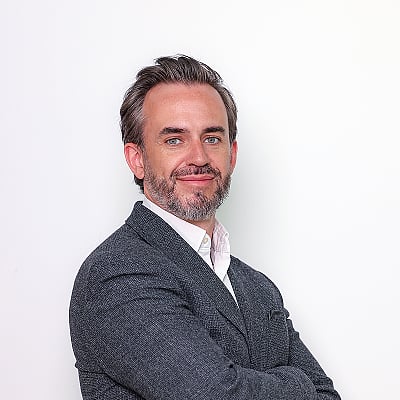
Mark is a seasoned media executive specialising in digital publishing and audience growth, now proudly serving as Editor-in-Chief of Gulf News in Dubai. He brings a blend of editorial leadership, digital strategy and international media experience. Previously, Mark has edited several local and regional media brands in the UK and worked as a director across major national publishers. A very proud dad-of-two boys, Middlesbrough FC fan and a lover of most things with engines, especially motorbikes.
Sign up for the Daily Briefing
Get the latest news and updates straight to your inbox
Network Links
GN StoreAbout Gulf NewsTerms & ConditionsReach by GNSitemapContact usPrivacy PolicyGN FocusHave your sayWork with usAdvertise with usGulf News epaperPrinting Services
Download our app
© Al Nisr Publishing LLC 2026. All rights reserved.