Heralding france’s heroine
The nation celebrates the 600th birthday of one of its most popular cultural icons, Joan of Arc
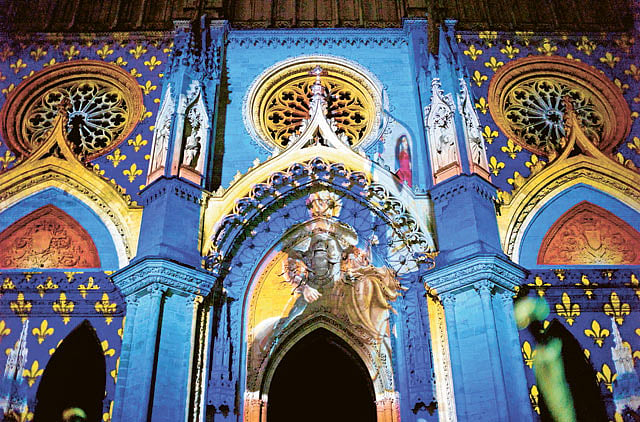
The normally tranquil city of Orleans is buzzing with festivities over the next two weeks to mark the 600th birthday of one of France's best cultural exports: Joan of Arc.
Recently, like in a Hollywood epic, the Loire River swarmed with wooden boats filled with locals dressed in medieval garb — re-enacting Joan of Arc's legendary entry into the city in 1429. It's an event that liberated Orleans from English invaders and sealed her place in the history books. It has inspired, over the centuries, myriad novels, poems, rock songs, operas, plays — and even a blockbuster film with Milla Jovovich. "It's marvellous to see the children dressing up and learning about this great French heroine," said Jacques Dubarre, dressed in a velvet mantel.
In a testament to her international appeal, some 600 contemporary artists — from the US, Japan and Russia — have made portraits of Joan of Arc through the ages, projected on the City Hall. A medieval market is the scene of period cuisine and music, while a sound-and-light show is being projected on the Gothic cathedral to celebrate her life.
Despite the fame, it's been a rocky ride for the teenage legend. When she was just 17, Joan led the French army to victory, only to be burnt at the stake as a heretic two years later. She was heralded as a political symbol of the French far left during the Second World War, only to be snatched up as the mascot of the far right 30 years later. It seems the only thing anyone can agree on is that she is the ultimate French icon.
"The two most famous figures from France are Napoleon and Joan of Arc, no one else comes close," said Russian journalist Vladimir Dobrovolsky, one of the estimated 40,000 festivalgoers.
Though in France she is seen as a symbol of the nation ("nation" being a feminine word in French), the myths around her began relatively late.
It was in the First World War that an effigy of Joan of Arc in armour, which appeared on pictures and postcards, first came to symbolise war and nationhood — in this case, the French fight against Germany. "Yes, she is the symbol of the nation at war, but the biggest myth is that she actually led the French in battle. She was a prophet who morally guided the army to victory. She was no commander or fighter," said historian Olivier Bouzy, historian and adviser on Luc Besson's 1999 film The Messenger: The Story of Joan of Arc. "Since the 1980s, Joan of Arc has been an extreme right political figure, but after the Luc Besson film, she's back in the realm of culture, softer."
Indeed, she is now the subject of a play by the well-known Japanese drama company Theatre No, which will play in Orleans from today.
Sign up for the Daily Briefing
Get the latest news and updates straight to your inbox
Network Links
GN StoreDownload our app
© Al Nisr Publishing LLC 2026. All rights reserved.