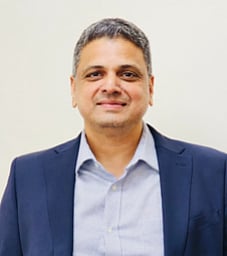
Rohit Garg, Group CFO at Al Habtoor Group
Techie Tonic: Why responsible AI is becoming a boardroom priority
Two CFOs say AI governance is now a strategic necessity, not just a compliance exercise
Last updated:
4 MIN READ

Chief CFOs say trust, governance and accountability will determine who wins the AI race.
Shutterstock
An insightful exchange between two distinguished Chief CFOs from our MANY CXO community, Rohit Garg, Group CFO at Al Habtoor Group and Anis Dadani, Group CFO, Al Batha Healthcare Group on to the growing importance of “Responsible AI Accreditation”. As artificial intelligence continues to reshape industries, both finance leaders emphasized that AI governance should be viewed not merely as a compliance requirement, but as a strategic enabler of sustainable growth. Their perspectives highlighted how organisations can harness the benefits of AI while strengthening governance, managing risk, ensuring accountability, and building long-term trust among investors, regulators, employees, and customers.
Both CFOs agree that the future competitive advantage will not belong to organisations that adopt AI the fastest, but to those that deploy it responsibly, transparently, and with strong accountability.
AI Investment Must Balance Opportunity and Responsibility
For Rohit Garg, AI represents both a tremendous opportunity and a significant responsibility. He believes the business case for Responsible AI Accreditation lies in improving efficiency, enhancing decision-making, increasing employee productivity, and creating sustainable business value.
“AI should not be adopted for the sake of technology,” Rohit explained. “It must be implemented responsibly, with appropriate governance, transparency, data security, and accountability.”
Rohit emphasized that many organisations can reduce risks by leveraging AI solutions embedded within established enterprise platforms such as ERP systems and productivity suites from trusted technology providers. These solutions often incorporate mature security, compliance, and governance controls, allowing companies to benefit from automation and analytics while limiting operational and regulatory exposures.
Get updated faster and for FREE: Download the Gulf News app now - simply click here.
Anis views the issue through a healthcare lens, where the consequences of AI errors extend beyond financial losses. “The downside is not only financial,” he noted. “When a model is wrong about a patient, the cost is human.”
Anis Dadani, Group CFO, Al Batha Healthcare Group
According to Anis, Responsible AI Accreditation forces organisations to address critical questions upfront “Who owns AI-driven decisions? How are outcomes audited? and What happens when systems fail?” He believes recognised frameworks such as ISO/IEC 42001 provide the discipline required to ensure accountability and prevent costly mistakes.
“Governance is not the slower path,” he said. “It is the more efficient one. Organisations that ignore governance often end up paying far more through remediation, regulatory action, or reputational damage.”
Finance Leaders Must Drive AI Governance
Both executives argue that CFOs have a central role in shaping AI governance frameworks.
Rohit believes finance leaders are uniquely positioned to extend traditional responsibilities such as risk management, internal controls, and financial stewardship into the AI era. While technology teams may lead implementation, he says “CFOs should ensure that AI initiatives align with corporate strategy, regulatory requirements, and ethical standards”.
He advocates for clear ownership structures, approval processes, performance monitoring, and risk assessments for every AI system. Particular attention should be given to data quality, cybersecurity, privacy, and transparency, especially when AI influences financial reporting, customer interactions, or critical operational decisions.
Anis shares a similar view, arguing that finance should not merely participate in AI governance but actively shape it.
“Stewardship of risk, controls, and accountability has always been the CFO’s mandate,” he said. “AI extends that responsibility rather than changing it.”
Rather than placing AI oversight in isolated innovation teams, Anis believes AI risks should be integrated into existing governance structures, including audit, performance reporting, and capital allocation processes. He points to the rapidly evolving regulatory environment in the UAE healthcare sector as evidence that organisations must proactively establish robust controls before incidents occur.
“The companies that lead will be those that build oversight early, not those trying to retrofit controls after problems arise,” he said.
Trust Becomes a Strategic Asset
Perhaps the strongest area of alignment between the two CFOs is the growing importance of stakeholder trust.
Rohit argues that investors, employees, regulators, customers, and business partners increasingly expect organisations to demonstrate ethical and transparent AI practices. Responsible AI Accreditation can provide independent assurance that appropriate governance, oversight, and accountability mechanisms are in place.
He believes this contributes directly to long-term value creation by strengthening brand reputation, improving customer confidence, increasing access to capital, and supporting broader environmental, social, and governance (ESG) objectives.
Rohit added further that “AI should not only make businesses more efficient, but It should also make them more trusted.”
Anis agrees, particularly in highly sensitive sectors such as healthcare, where trust is fundamental to success. He warns that failures in AI governance can trigger reputational harm, regulatory penalties, litigation, and talent loss, as such costs that can take years to recover from.
In his view, accreditation serves as a powerful signal to investors, regulators, and employees that an organisation is serious about responsible AI practices. As healthcare expansion accelerates across the Gulf region and investment continues to flow into the sector, demonstrable AI governance will become a key differentiator.
Anis concluded “Trust has a balance-sheet impact and Responsible AI governance will soon be a prerequisite for attracting both capital and talent.”
Together, the two finance leaders present a clear message “responsible AI is no longer simply a technology issue. It is a business leadership issue, where governance, accountability, and trust will determine which organisations successfully translate AI innovation into sustainable growth”.
Please stay tuned for more CFO perspectives…
Anoop Paudval leads Information Security Governance, Risk, and Compliance (GRC) at Gulf News, Al Nisr Publishing, and serves as a Digital Resilience Ambassador. With 25+ years in IT, he builds cybersecurity frameworks and risk programs that strengthen business resilience, cut costs, and ensure compliance. His expertise covers security design, administration, and integration across manufacturing, media, and publishing.
Sign up for the Daily Briefing
Get the latest news and updates straight to your inbox
Network Links
GN StoreAbout Gulf NewsTerms & ConditionsReach by GNSitemapContact usPrivacy PolicyGN FocusHave your sayWork with usAdvertise with usGulf News epaperPrinting Services
Download our app
© Al Nisr Publishing LLC 2026. All rights reserved.