Fostering Google's start-up spirit
Co-founder Larry Page takes the helm and plans to take the company back to its roots
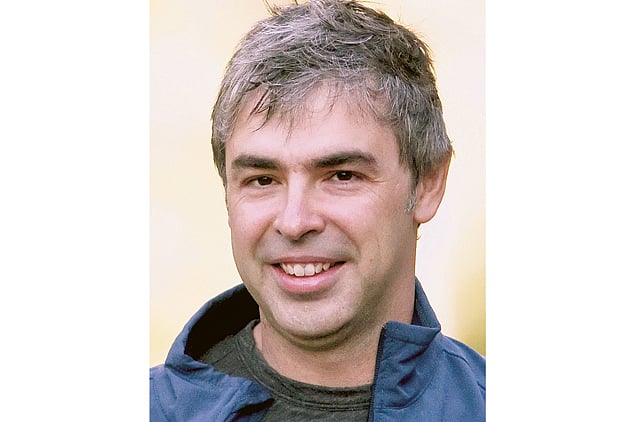
San Francisco: Larry Page wants to run Google Inc. like it's 1999. The co-founder of the internet search giant has begun an unusual afternoon ritual of sitting and working with his top executives on small couches in an open area of the company's Mountain View, California, headquarters.
Employees, who used to have to stalk Page around campus, can drop by and grab a few minutes of his time. "Now there are no layers to go through," said Michael Cassidy, director of search product management at Google.
"The pace has really picked up. It's a whole new speed of decision making." The 38-year-old Page, who officially retakes the helm tomorrow, wants to goose Google into acting more like a start-up again, restoring the rush of innovation that was its hallmark 12 years and about 24,000 employees ago.
Injection of urgency
"Larry is injecting a level of urgency and a fresh level of energy back into the company," said Colin Gillis, an analyst with BGC Partners Inc. "But this is not an easy journey that he is embarking on. It remains to be seen what will be different under Larry Page."
In a highly unusual power-sharing agreement, Page, his fellow co-founder Sergey Brin and departing Chief Executive Eric Schmidt helped transform Google from a barely profitable start-up with 200 employees into the world's most influential internet company.
Google still makes gobs of money — nearly $30 billion (Dh110.17 billion) a year — from its search advertising business and has some of the best minds in the industry working on game-changing technologies. But never before has Google faced so many direct challenges on many fronts.
Its nimble rivals such as Facebook Inc are stepping up competition for advertising dollars, and some key executives and engineers have defected to Facebook and other technology start-ups.
Google has produced a string of flops and it has yet to make significant progress in its quest to expand beyond search advertising, which has caused its stock to underperform.
In recent months it has also come under increasing antitrust scrutiny. "Page had a vision for an astonishingly powerful technology that could be used effectively for search, and that was brilliant," Gartner Inc analyst Whit Andrews said. "Now he is going to have to show the world what he has learned in the past 14 years that he can apply now." Page, who has never been a chief executive of a public company, has not talked publicly about his strategy.
Page declined requests for interviews. But people familiar with his plans say he has an ambitious agenda to narrow Google's focus to key priorities while continuing to roll the dice on risky projects such as Google's investments in cars that drive themselves and in digitising the world's books. Google made the surprise announcement in January that Page would take over for Schmidt, a decade after reluctantly handing off that job to him.
Some wonder whether Page, an entrepreneur almost two decades Schmidt's junior, will get to run the company more autonomously than Schmidt.
"Eric did not have the ability to make decisions with the clarity and autonomy of a traditional CEO, like a Jeff Bezos or a Steve Jobs," said Steven Levy, author of the upcoming book In The Plex: How Google Thinks, Works, and Shapes Our Lives.
"The question is: Will Larry be free to make those big decisions or will the decisions still go through a committee? Google has been vague about that."
Influence
Yet Google has benefited from the influence of its co-founders.
It was Page who uncovered a small start-up working on Android and offered to buy the company from its founder, Andy Rubin. Rubin is now vice-president of engineering at Google running the mobile software business, a key asset that has given Apple Inc a run for its money.
Paul Saffo, a managing director at investment research firm Discern Analytics, says Page may have an edge in keeping engineers and their entrepreneurial drive from leaving Google because he is a founder, which carries clout with employees in Silicon Valley.
"All things being equal, they are going to be a lot more likely to follow a founder than they are to follow a professional executive," said Saffo, who owns Google stock. In his book, Levy calls Page "perhaps the quirkiest person to ever run a $30-billion company." "Google has had a wild ride over its first 12 years," he wrote. "It's about to get even wilder."
Sign up for the Daily Briefing
Get the latest news and updates straight to your inbox
Network Links
GN StoreDownload our app
© Al Nisr Publishing LLC 2026. All rights reserved.