Why SQD-Mini LED represents a new phase in display technology
Tech helps TVs handle brightness, colour precision, and contrast control simultaneously
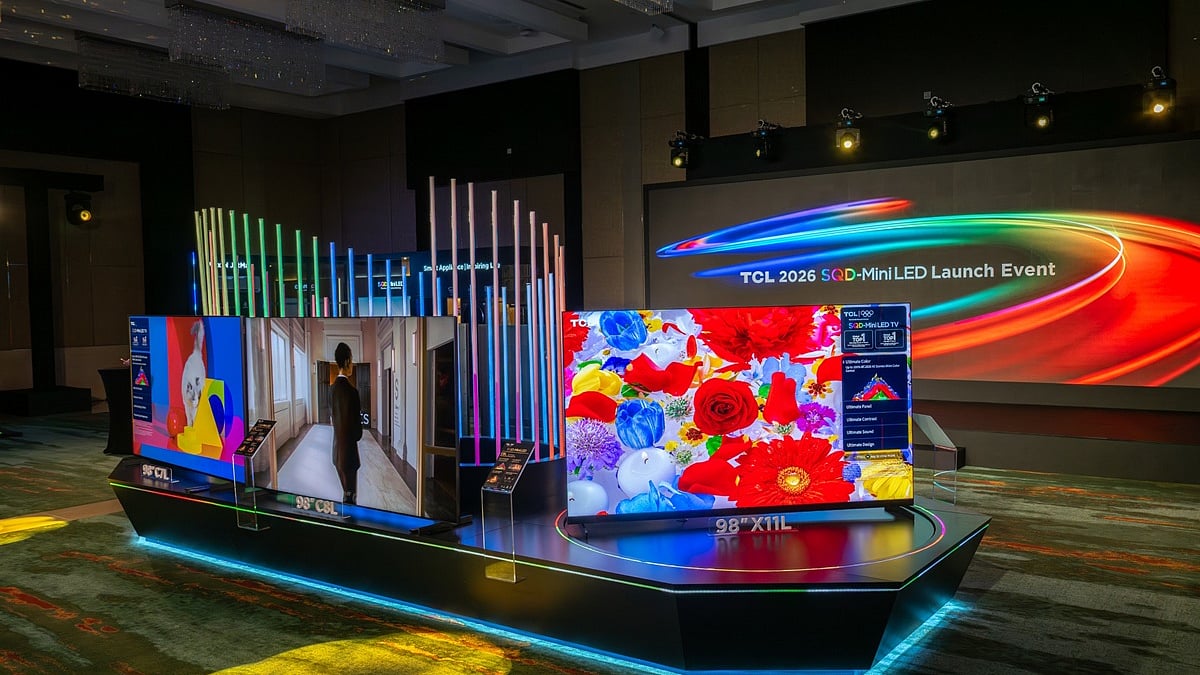
TCL’s recent launch of its 2026 SQD-Mini LED TV line-up in the UAE, including the C7L, C8L, and flagship X11L models, highlights how rapidly the premium display market is evolving. More than just a new range of televisions, the launch introduces TCL’s latest SQD-Mini LED technology, a display architecture designed to improve how televisions handle brightness, colour precision, contrast control, and immersive large-screen viewing simultaneously.
The introduction of SQD-Mini LED reflects a much broader transition taking place across the television industry itself. For years, display innovation has largely progressed through isolated advancements, one generation improved brightness, another focused on contrast, while others prioritised colour vibrancy or motion performance. Yet the industry has continued chasing the same ultimate goal: creating a display capable of delivering lifelike colour, ultra-high brightness, precise contrast, smooth motion, and seamless large-screen immersion without compromise.
Every major display technology has moved the industry closer to that vision. LED displays improved accessibility and brightness. QLED enhanced colour vibrancy and brightness efficiency. OLED introduced exceptional black levels and contrast precision. Mini LED dramatically improved local dimming and HDR performance, particularly on larger screens.
Yet despite these advances, modern displays have continued to face one recurring challenge: balancing brightness, colour accuracy, contrast control, and consistency without introducing compromises elsewhere in the viewing experience.
The challenge SQD-Mini LED technology is designed to address
SQD-Mini LED combines advanced Mini LED backlighting with Super Quantum Dot technology engineered to refine how light is converted into colour. Unlike traditional approaches that focus primarily on increasing luminance or adding more dimming zones, SQD-Mini LED aims to optimise the entire relationship between light precision, colour purity, and contrast performance across the display system itself.
That evolution comes at a critical moment for the display industry. Consumer viewing habits have changed dramatically over the past several years. Streaming platforms now deliver increasingly sophisticated HDR content. Gaming environments demand ultra-high refresh rates alongside cinematic image quality. Live sports broadcasts require smooth motion handling and stable contrast under rapidly changing lighting conditions.
At the same time, ultra-large televisions are becoming mainstream, with the rise of 75-inch, 85-inch, and 98-inch displays, which have fundamentally increased the technical demands placed on modern televisions. Larger panels magnify imperfections in local dimming, expose inconsistencies in colour reproduction, and make halo effects around bright objects more noticeable during high-contrast scenes.
As a result, premium display performance is no longer defined by brightness alone, but by how intelligently brightness, contrast, and colour are managed together.
How does SQD-Mini LED address these problems?
The system integrates highly granular local dimming, upgraded super quantum crystal materials, advanced optical structures designed to focus light more precisely, and halo-control processing intended to reduce blooming around bright objects.
In flagship implementations, the technology is capable of supporting more than 20,000 local dimming zones and peak brightness levels reaching up to 10,000 nits while maintaining stronger colour consistency across different brightness levels.
The significance of this development lies not simply in specification gains, but in what it signals about the future direction of premium displays.
SQD-Mini LED reflects a broader shift toward convergence.
Rather than advancing a single category in isolation, the technology attempts to combine multiple performance priorities into a more balanced and immersive viewing experience. This includes brightness, colour fidelity, contrast precision, motion handling, and large-screen consistency working together simultaneously.
That shift is becoming increasingly important in markets such as the UAE, where consumers are rapidly adopting larger home entertainment systems, connected living environments, and premium streaming ecosystems.
Modern televisions are no longer viewed as standalone devices. They are becoming the centrepiece of smart entertainment environments expected to handle gaming, cinema, live sports, AI-enhanced processing, and immersive audio within a single platform.
This broader transformation was reflected recently in TCL’s launch of its 2026 SQD-Mini LED TV line-up in the UAE, where the company introduced the C7L, C8L, and flagship X11L models.
The launch illustrates how manufacturers are increasingly positioning display innovation around immersive realism and precision performance rather than specification-driven competition alone.
And that may ultimately define the next phase of the television industry itself. The future of premium displays will not simply be brighter or larger. They will need to feel more natural, more intelligent, and more immersive than ever before.
For more information about TCL’s latest SQD-Mini LED technology and premium TV line-up and purchase the latest models including C7L, C8L, and flagship X11L, visit TCL.com/gulf
Sign up for the Daily Briefing
Get the latest news and updates straight to your inbox
Network Links
GN StoreDownload our app
© Al Nisr Publishing LLC 2026. All rights reserved.