No more DRS, but more overtakes to mark 2026 F1 season
Revised aerodynamic regulations could lead to a major shake-up of the grid
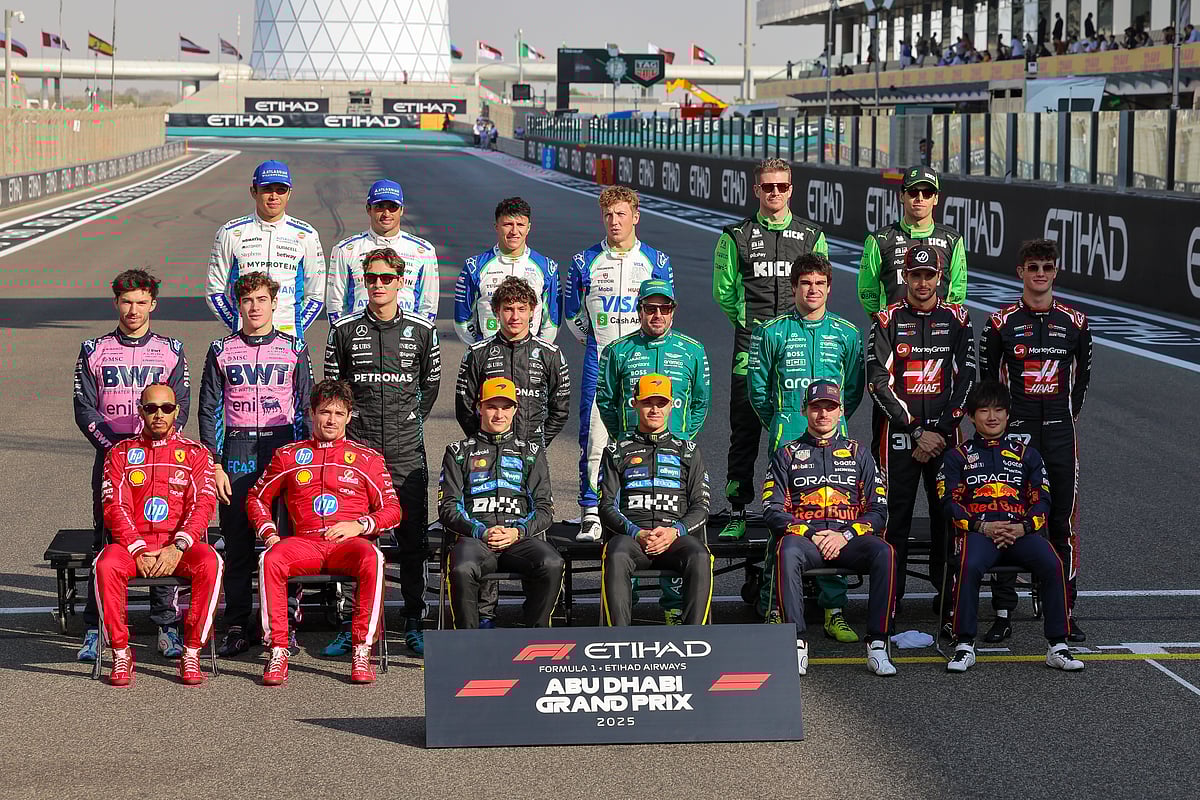
Dubai: When Mercedes’ impressive rookie driver Kimi Antonelli pressed the DRS button during his unsuccessful attempt to overtake Red Bull’s Yuki Tsunoda for 14th place at the Abu Dhabi Grand Prix on Sunday, little did he know that he would be going into the record books as the last driver — at least in the foreseeable future — to use the Drag Reduction System in what was also the last ground-effect-era race of Formula 1.
The DRS had been a potent tool in the hands of the drivers from 2011-2025, enabling those in the slipstream to gain up to 10-12km/h simply by opening the movable rear wing, a procedure first executed by McLaren’s Jenson Button at the Spanish Grand Prix in 2011.
But come the 2026 season, Formula 1 will see a host of changes which could lead to a major shake-up of the grid. Its governing body, the FIA, unveiled the ‘agile, competitive, safer and more sustainable’ set of regulations that will define the sport from 2026 and beyond. Revised aerodynamic regulations will work in tandem with new power unit rules, which include increased battery power and the use of advanced sustainable fuels.
2026 changes at a glance
More agile cars, which are 30kg lighter and thus better able to battle on track.
A redesigned power unit featuring increased battery power and an even split between internal combustion engine and electric power plus the use of advanced sustainable fuels.
Active aerodynamics in the form of movable front and rear wings to allow for closer racing.
Increased overtaking opportunities through the introduction of a new system that gives drivers a short burst of additional battery power when within one second of the car in front.
Improved safety through stronger structures and even tougher tests.
Commitment from a record number of six power unit manufacturers.
To start off, there will be no more DRS! It will be replaced with two separate power-boost modes — a Z-mode and an X-mode. Z-mode utilises elements on the front and rear wings to increase downforce and speed through corners, while X-mode reduces drag to maximise straight-line speed. It is, however, expected that the new cars will be around two seconds slower than the 2025 cars, depending on track characteristics.
Nevertheless, next season’s cars will be lighter, smaller, and therefore more agile. The weight of cars will be reduced by 30kg to 768kg. They will also be shorter and narrower, with the length reduced by 200mm and the width by 100mm. Pirelli’s 18-inch wheel size, introduced in 2022, will remain. But the width of the front tyres will be reduced by 25mm and the rears by 30mm.
300% increase
The power units are also set to deliver an almost 300 per cent increase in electric power. There will be an even split between internal combustion engine and electric power, giving cars three times more electric braking power. These changes were brought in by the FIA with the vision of enabling better racing between drivers and creating more opportunities for overtakes.
Fuel in every car will be 100 per cent sustainable, meaning no new fossil carbon will be burnt. Instead, fuel will be derived from carbon that came from non-food sources, general waste or from carbon captured from the atmosphere.
For the 2026 Formula 1 season, there will be six confirmed power unit manufacturers: Mercedes, Ferrari, Renault (Alpine), Honda, Audi and Red Bull Powertrains (partnered with Ford).
With so much to adjust to in the new car, it’s no wonder that Red Bull’s Max Verstappen has chosen to devote his energy at the factory in Milton-Keynes rather than spend any more time testing the RB21 in Abu Dhabi.

Sign up for the Daily Briefing
Get the latest news and updates straight to your inbox
Network Links
GN StoreDownload our app
© Al Nisr Publishing LLC 2026. All rights reserved.