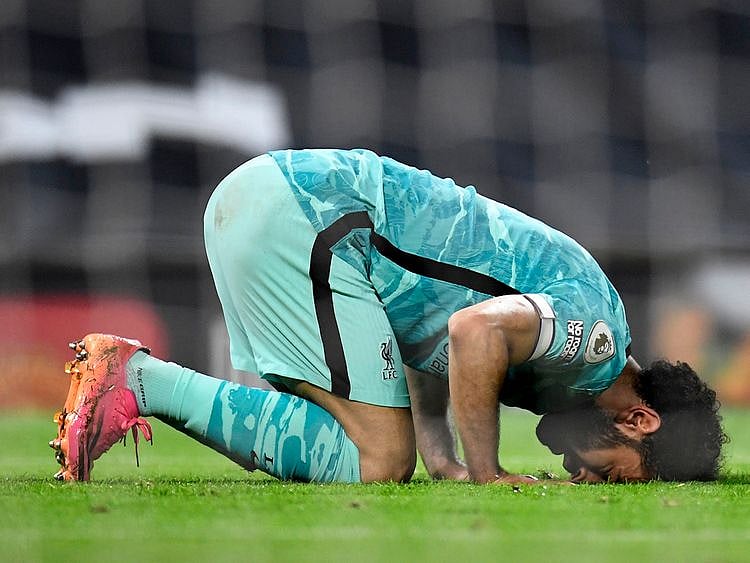
The holy month of Ramadan, observed by Muslims worldwide, presents unique challenges and adaptations for Premier League footballers who maintain rigorous training and match schedules while fasting from dawn to sunset.
This period of spiritual reflection and devotion requires abstention from food and drink during daylight hours, prompting both players and clubs to implement strategies that respect religious practices while ensuring athletic performance.
Muslim footballers in the Premier League often tailor their routines to accommodate fasting. Training sessions may be rescheduled to align with times when players can eat and hydrate, such as after sunset (Iftar) or before dawn (Suhur).
Nutritional plans are meticulously crafted to provide necessary energy and hydration during non-fasting hours.
For instance, Everton's Abdoulaye Doucoure, who observes fasting throughout Ramadan, has expressed that he has not encountered issues with his physical condition during this period.
"I always love Ramadan,” Doucoure told BBC Sport.
"Sometimes playing football has been hard because Ramadan has been in the summer and during pre-season. But I have always been lucky to practise Ramadan and there have never been problems with my physical condition - I am grateful for that.
"My religion is the most important thing in my life - I put my religion first, then comes my work. You can do both together and I am happy with that."
'We feel confident in England'
In recent years, the Premier League has demonstrated increased sensitivity to the needs of fasting players.
Match officials have been encouraged to identify natural pauses in play, such as stoppages for injuries or substitutions, to allow Muslim players to break their fast during evening matches.
This practice was notably implemented during a match between Leicester City and Crystal Palace in April 2021, where play was halted to enable players like Wesley Fofana and Cheikhou Kouyate to take on fluids and energy supplements after sunset.
Fofana was later substituted with then Leicester City manager, Brendan Rodgers, revealing he wanted to ‘protect’ the player.
"It was just one where I thought if I could get him off then he could get some food into him on the bench, and just protect him a little bit," Rodgers said after the West Brom clash. "I've worked with lots of players with devotion to their faiths and for a lot of the guys it gives them strength.
"He's finding an incredible strength to play continuously and train during Ramadan. He's a special talent and a big player for us."
Many Muslim footballers view Ramadan as an opportunity to strengthen their faith without compromising their professional responsibilities. A
Ex-Arsenal midfielder Mohamed Elneny has remarked that fasting during Ramadan brings a sense of peace and satisfaction, emphasising that the spiritual benefits outweigh any physical challenges.
“For us it's not a big difference,” he told the Arsenal website. “We're happy because Ramadan comes 30 days every year and you don't really think too much about how much you will be fasting. We do something for God and God is happy for us to do this.
“Every footballer when he trains, he needs to drink. After training we eat food. Ramadan doesn't give you this but it gives you another thing, it gives you peace that God will be happy with you and the respect you're going to get from the people.
“How many goals has Salah scored? Some players when they are fasting and they are scoring goals you can see them and they're doing great.
“This shows it's actually something really good because God is happy with you.”
Support systems
Beyond accommodating players, Premier League clubs have embraced Ramadan through community initiatives. Chelsea Football Club, for example, became the first Premier League team to host an Open Iftar at their stadium, inviting individuals of all faiths to join in breaking the fast.
West Ham followed suit with former captain Kurt Zouma joining members of the local community at a special Iftar event at the club's Chadwell Heath training ground as part of Ramadan.
"The club are helping me and all the others so much," Zouma told the official club website. "They are always here for us and willing to give us extra drinks, special food and anything else we need, and the Club are very supportive which I’m very proud of.
"Ramadan isn’t just about fasting, but it’s also about having more family time and getting away from bad habits - such as being on your phone, watching TV - and [instead] having big meals together. You see a lot of people you haven’t seen for a long time and that’s a massive part of it as well."
Manchester United and Arsenal have also opened their doors for Iftars in recent years.
The observance of Ramadan by Premier League footballers exemplifies the balance between religious devotion and professional commitment. Through thoughtful adjustments in training, nutrition, and match protocols, along with supportive club environments, Muslim players can honour their faith while contributing to their teams' success.
Sign up for the Daily Briefing
Get the latest news and updates straight to your inbox
Network Links
GN StoreDownload our app
© Al Nisr Publishing LLC 2026. All rights reserved.