Sheikh Mohamed’s Germany visit comes at a pivotal moment
Gaza, Iran and Gulf security give the UAE-Germany partnership new strategic weight
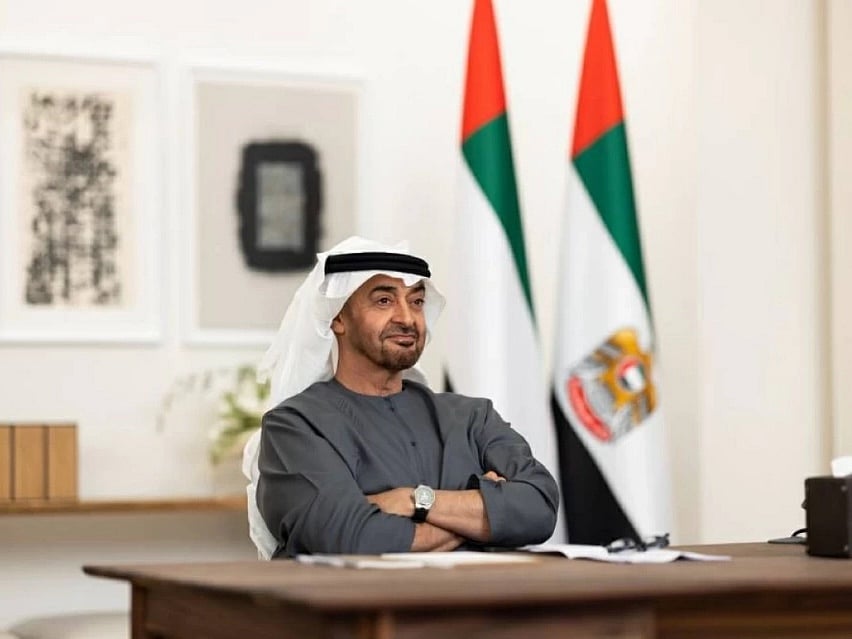
UAE President His Highness Sheikh Mohamed bin Zayed Al Nahyan began a state visit to Germany on Wednesday, meeting German President Frank-Walter Steinmeier and Chancellor Friedrich Merz in a trip whose economic headlines are likely to overshadow a heavier political agenda.
The visit is set to focus on deepening cooperation between the two countries, particularly in the economic and development sectors, within the framework of their strategic partnership. The two sides are also expected to discuss regional and international developments and issues of mutual concern.
That second item is where the visit’s real weight sits. Gaza, Iran and the future of Gulf security all fall within it, and on each of them the two governments arrive with positions that have moved considerably in the past year.
A different Berlin from 2019
The last time Sheikh Mohamed travelled to Germany was in June 2019, when he arrived as Crown Prince of Abu Dhabi for a two-day state visit at Chancellor Angela Merkel’s invitation. Steinmeier received him at Bellevue Palace then as well. He is one of the few things about the relationship that has not changed since.
The agenda that year belonged to a calmer region. Germany’s then ambassador to the UAE, Ernst Peter Fischer, said before the trip that the partnership would deepen across political, economic and cultural fields, including tolerance and the prevention of extremism. It was the UAE’s Year of Tolerance, and the framing fit. Yemen was the main regional file: both sides backed the UN’s role and the Gulf initiative, supported the Stockholm Agreement and the efforts of then special envoy Martin Griffiths, and said they encouraged a political solution.
Nothing on that programme anticipated a Gulf state defending its own territory, or a Chancellor telephoning Abu Dhabi to express solidarity after an attack.
February: The Chancellor comes to Abu Dhabi
The immediate backdrop is Merz’s own Gulf trip in early February, his first to the region as Chancellor, which took him to Riyadh, Doha and finally Abu Dhabi.
Berlin’s account of that journey was unusually direct. The Federal Government described it as an effort to build strategic partnerships and work jointly for peace and stability in the Gulf, with Merz arguing that such partnerships are needed more than ever at a time when major powers are increasingly dominating politics. In Abu Dhabi, the Chancellor spoke at length with Sheikh Mohamed about the Russia-Ukraine-US talks held in the UAE capital. Iran, Sudan and Yemen also came up, all three described by Berlin as files where the UAE plays an important role. Germany signalled readiness for closer trade cooperation, including a possible free trade agreement.
Deals followed: ADNOC and RWE on gas and LNG, Masdar and RWE on battery storage. Bilateral trade passed $15.5 billion in 2025, making the UAE Germany’s most important economic partner in the Gulf. But read the two readouts side by side and the politics comes first, the commerce second.
Gaza arrives before the President does
On Sunday, three days before his departure, the UAE signed a joint foreign ministers’ statement with Saudi Arabia, Qatar, Jordan, Egypt, Türkiye, Pakistan and Indonesia rejecting proposals to forcibly displace Palestinians from Gaza. The eight condemned remarks by Israeli ministers Itamar Ben-Gvir and Israel Katz, said such proposals violate international law including international humanitarian law, and warned that turning those calls into policy would undermine international efforts to achieve peace.
The timing is not accidental. A position agreed across eight capitals on Sunday and carried into a European capital on Wednesday is how diplomatic leverage gets built.
Germany is a difficult and important audience for it. Difficult, because Berlin’s room for manoeuvre on Israel is narrower than almost any other European government’s. Important, because what Germany says tends to set the ceiling for what the European Union can agree to say.
Iran, and a solidarity call
On Iran, the gap between the two capitals has narrowed. Events did that, not negotiation.
In February, Merz set out three demands: that the Iranian regime’s violence against its own population stop immediately, that Iran end its military nuclear programme and its destabilising regional activities, and that Germany work with partners to push de-escalation. Berlin reported hearing serious concern from its Gulf hosts about further escalation.
That concern proved well founded. The UAE came under direct attack from Iran during 2026. Ahmed Alattar, the UAE ambassador to Germany, said this week that Germany was among the first European countries to condemn the attacks, and that Merz telephoned Sheikh Mohamed to express solidarity, weeks after his Abu Dhabi visit. The visit and the partnership had clearly left an impression on the Chancellor, the ambassador said, which is why visits matter.
A wider European turn
Germany’s Gulf diplomacy is accelerating either way. The Emir of Qatar made a state visit in July. In Berlin on Sunday, Saudi Foreign Minister Prince Faisal bin Farhan and his German counterpart Johann Wadephul agreed a foreign-minister-level strategic dialogue, stressing the security of sea lanes and the restoration of normal operations in the Strait of Hormuz. On September 21 and 22, Berlin hosts the eighth German-Arab Gulf Dialogue, whose organisers describe the Gulf security order as standing at a historic breaking point.
Sheikh Mohamed gets there two weeks early, at the head of the relationship Berlin seems most eager to secure. In 2019 he wrote in the Bellevue visitors’ book that the UAE and Germany were two friendly nations sharing hopes for global peace and security. It read as a formality then. With Gaza, Iran, Sudan and Yemen all on the table this week, it reads more like a list of things to do.
Network Links
GN StoreDownload our app
© Al Nisr Publishing LLC 2026. All rights reserved.