Mind blowing Blower Bentley
The Blower Bentley was designed to keep the marque’s winning run at Le Mans going
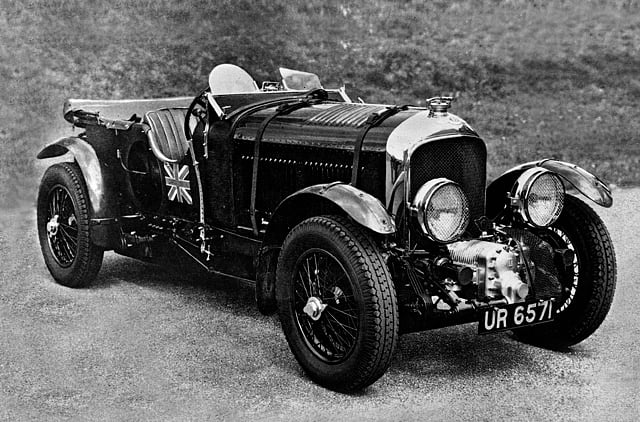
This blast from the past had a name that sounded more like a hairdryer than a racecar. And let’s be honest, that great big supercharger looked rather silly. Imagine something like that mounted to the front of the Aventador or GT-R? Go faster bolt-ons ought to be hidden under the bonnet, especially when they look like a large, ugly chunk of metal, but in the Thirties they were in your face.
Based on the 4.5-litre Bentley, the Blower featured a supercharger, which upped the power in the hope of it continuing its Le Mans success.
But the best it could muster was a second-place finish. To write the car off as a mere joke would be foolish for it performed heroics during one particularly memorable battle. Bentley had already left its mark on the Circuit de la Sarthe, winning the prestigious event for the first time in 1924.
It tasted further success between 1927 and 1930, making the French classic its spiritual home. But British racing driver, Sir Henry ‘Tim’ Birkin thought he could get more out of the car and began developing a supercharger for the 130bhp 4.5-litre engine. He was sure it would further enhance the car’s performance. Walter Owen Bentley, founder of the marque, was not convinced. “There’s no replacement for displacement,” he’d constantly beam.
He was of the opinion that supercharging his cars would be an act of ‘perversion’. But Birkin felt otherwise. He’d driven the massive 6.5-litre Speed Six, which weighed over two tonnes, to victory at Le Mans in 1928 but was adamant more power could be got out of the smaller 4.5-litre, which had been dropped in favour of the bigger engine. So, in 1929 and with the assistance of Armherst Villers, they added a Roots-type supercharger to the front of the radiator and the Bentley Blower was born.
For it to be allowed to enter the hallowed race, it had to be homologated and so 54 models were rushed into production. The touring models made 170bhp but the racing versions had 240bhp — 40 horses more than the Speed Six, despite having two cylinders less. Though the car was pretty quick, it had a rather weak chassis and not many thought it would last the distance in the 1930 contest.
It in fact worked more in a destructive capacity during that memorable episode. Pushing the supercharged 7.1-litre Merc SSK driven by Rudolf Caracciola to breaking point, it overtook the car, but Birkin’s Blower blew a tyre and eventually finished fifth. However, it had competed with the Merc so ferociously that it forced it to retire leaving Woolf Barnato in the Speed Six to claim a famous victory.
The Blower never left its mark at Le Mans, but it’s now one of the most iconic pre-war Bentleys and a collector’s dream.
Sign up for the Daily Briefing
Get the latest news and updates straight to your inbox
Network Links
GN StoreDownload our app
© Al Nisr Publishing LLC 2026. All rights reserved.