Anxiety often develops when sensitivity meets sustained stress without enough emotional support to buffer it.
Childhood anxiety starts early: Signs adults miss, UAE experts explain
Anxiety starts young, and it shows up in the form of headaches, crying and clinginess
Last updated:
7 MIN READ
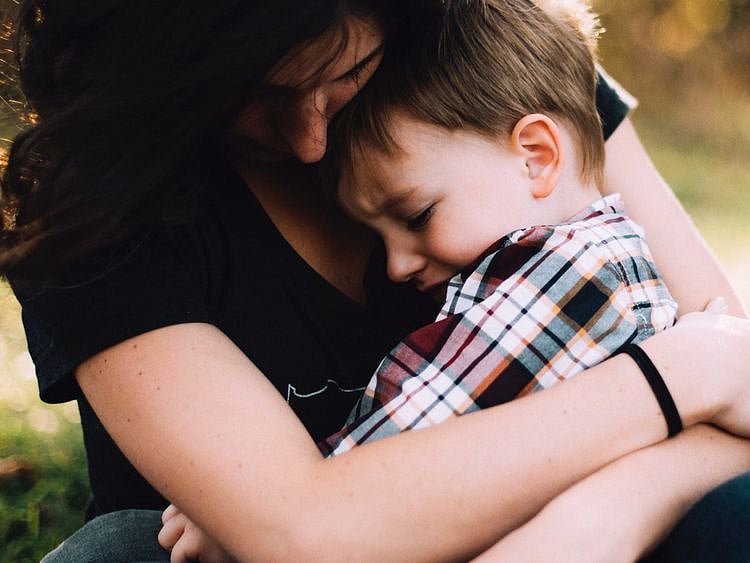
Anxiety has a way of seeping in and taking hold of you at a young age, and it grows difficult to wrestle with it later.
Unsplash
I had a neighbour whose child didn't smile. And at that age, if you don’t smile, you’re told that you’re sulking. And so, he was brought up in conversations among the adults, as ‘Oh that child, he is always so sulky, I don’t even say hello to him now’.
As a joke, he was called Sulky in private. Some adults chuckled about it, and their children joined in too. Some well-meaning adults thought they would ask him to smile.
Obviously, he ran away.
Later, we found out that he was unhappy as his father had married again. He just missed his mother, who had died a few years ago.
So, as everyone apologetically said later, he wasn't sulking.
It was just a little boy grieving and struggling to grow up in a new world without his mother.
Years have passed since then, and I do wonder where he now. Sometimes, I do wonder where he is now. I hope life still gave him a reason to smile again.
And maybe the other adults won't so quickly dismiss a child as sulking. Yet, it's a more common perception than we believe. A child is sulking, crying too much, or they’re just going through a phase. They're too young to be anxious about anything, many feel.
But that's painfully wrong.
Anxiety has a way of seeping in and taking hold of you at a young age, and it grows difficult to wrestle with it later.
The earliest signs are often behavioural or physical, because young children do not always have the language to say, “I feel anxious.” A child may complain of stomach aches or headaches before school, struggle to fall asleep, become tearful at separation, ask the same question repeatedly, avoid new activities, or become very upset when routines change....
Sarah Maamari Psychologist for Children and Families at Sage Clinics
When anxiety hides in plain sight
A child isn't just always being 'dramatic' or needy. There's a lot more to the tears, that pleas for you to stay, and the tantrums that we tend to dismiss.
Clinical psychologist Sarah Maamari at Sage Clinic Dubai, notes that what we are seeing today is not just more anxiety in children, but also better recognition of it. She explains that earlier generations often labelled anxious children as “shy, sensitive, clingy, or ‘just going through a phase.’” However, anxiety rarely announces its arrival. It often shows up in ways that are easier to dismiss than to decode, through behaviour, body, and silence.
So, if you're expecting a child to be honest and say, 'I'm anxious', you might need to wait. “The earliest signs are often behavioural or physical, because young children do not always have the language to say, ‘I feel anxious,’" Maamari explains.
Anxiety shows up in the form of stomach aches, headaches before school. They may struggle with sleep, or keep looking for assurance. And, one of the most overlooked signs, is irritability. “Adults may see the child as being rude, oppositional, stubborn, or attention-seeking, when underneath the behaviour there may be fear, overwhelm, or a strong need for predictability," adds Maamari.
Sometimes, that defiance, may actually be distress, with nowhere to go.
Mistaking fear for personality
Dubai-based Mukund Menon has a little story about his five-year-old grandson, who would keep throwing his homework out of the window. "Every time that he made a mistake, he would crumple up the worksheet, and run from the room. We were amused at first, but when it kept happening, we realised that he was actually distressed and upset." It took many soothing conversations, reassurances for him to understand that, a small mistake didn't mean that he was going to be kept behind in class.
Anxiety can devour a child whole, sometimes, without anyone knowing. There's a reason why a child not want to do their schoolwork, or play games.
Yet, the danger, Maamari explains, is in how quickly adults convert anxiety into identity. The child is quickly labelled.
A child who avoids new activities may be called 'lazy.' One who reacts strongly to small changes may be labelled 'dramatic.' A child who struggles with mistakes may be seen as “perfectionist” in a positive or dismissive way, rather than someone in distress.
Yet these patterns often point to something deeper: Anxiety colours the way a child experiences the world. Moreover, she adds that one of the most commonly missed signs is irritability. "Adults may see the child as being rude, oppositional, stubborn, or attention-seeking, when underneath the behaviour there may be fear, overwhelm, or a strong need for predictability," she explains.
Another warning sign is perfectionism. A child who refuses to start homework, tears up a drawing, or becomes distressed over small mistakes may be struggling with a fear of getting things wrong. Anxiety in young children can also look like clinginess, frequent reassurance-seeking, difficulty concentrating, sleep disruption, changes in appetite, and emotional outbursts.
Why some children are more vulnerable
Childhood anxiety is usually shaped by an interaction between temperament, biology, and the environment. Some children are naturally more cautious, sensitive, observant, or slow-to-warm-up. This does not mean they are destined to develop anxiety, but it may mean their nervous system reacts more quickly to uncertainty, change, or perceived threat. system reacts more quickly to uncertainty or perceived threat.
The environment can either soften or intensify that vulnerability. "For example, a child who is temperamentally cautious may cope well when they have predictable routines, emotionally available adults, opportunities to try things gradually, and reassurance that mistakes are part of learning," notes Maamari.
In other words, anxiety often develops when sensitivity meets sustained stress without enough emotional support to buffer it.
The emotional world children are growing up in
Modern childhood looks very different from previous generations, and that shift matters. Maamari highlights that children today are wading through faster routines, higher academic expectations, more screen exposure, and less unstructured play.
These changes matter because emotional regulation is learned through lived experience, not instruction. “Children learn regulation through movement, sensory play, boredom, problem-solving, waiting, negotiating with peers, losing games, making choices, and repairing conflict,” she explains.
When those experiences shrink, emotional flexibility can also reduce.
Moreover, there is the added complication of screens. While not inherently harmful, excessive use can displace sleep, outdoor play, and face-to-face interaction, all crucial for developing frustration tolerance and emotional balance.
The weight children carry from adults around them
Children do not just experience their own emotions; they absorb the emotional climate around them.
Dr Zoe Fortune, Assistant Professor of Psychology at Heriot-Watt University Dubai, explains that young children are highly attuned to adult emotional cues. “Children will observe actions and emotions of parents and are attuned to emotional cues, picking up on the moods and behaviour of those around them,” she says.
For example, if we respond to a stressful situation by raising our voice, children will learn that that behaviour is how we respond in that situation. "Parents’ behaviour can also impact children in other ways, for example, if a parent is stressed, they may snap or be less patient, which can be confusing or difficult, and children may internalise, thinking it's their fault, or act out in other ways," explains Dr Fortune.
Importantly, Dr Fortune notes that this requires awareness from parents. Even simple acknowledgement matters: naming emotion, explaining reactions, and showing how calm can be restored. This becomes emotional learning in real time.
Children will observe actions and emotions of parents and are attuned to emotional cues, picking up on the moods and behaviour of those around them. They then also mimic or mirror that behaviour. For example, if we respond to a stressful situation by raising our voice, children will learn that that behaviour is how we respond in that situation....
Dr Zoe Fortune Assistant Professor of Psychology at Heriot-Watt University Dubai
When 'normal worry' becomes something more
Every child has an anxiety, of some sort. Maybe it's fear of the dark, or separation anxiety. Maybe it's a new school, or a new class without their old friends.
However, anxiety becomes concerning when it stops being temporary and starts clouding a child's life, and becomes debilitating. Maamari describes the key difference clearly: “A normal worry usually comes and goes, responds to comfort, and does not significantly stop the child from participating in everyday life.”
Clinical anxiety, however, tends to persist, intensify, and restrict. When a child repeatedly avoids school, needs constant reassurance, or begins to withdraw from normal activities, the issue is no longer just worry, it is impact.
As Dr Fortune also notes, anxiety becomes particularly concerning when it interferes with sleep, socialisation, and daily functioning, or leads to sustained physical symptoms like stomach aches and headaches.
The most important warning sign is not intensity alone; it is shrinking of the child’s world.
The pressure to perform too early
Another layer is the increasing pressure placed on children in academic environments. Dr Fortune highlights that academic expectations are often being introduced earlier, sometimes before children have developed the emotional tools to cope with them. Worse, children put more pressure on themselves. "It is suggested that academic pressure is happening at increasingly younger ages, with the increased focus on academics related to poorer wellbeing and social skills, as well as reduced resilience in younger children" she says.
This can create a shift in mindset, from curiosity to fear of failure. “Academic pressure has also been linked with symptoms of depression, anxiety, self-injury and suicide,” she warns.
Maamari adds that when worth becomes tied to performance, children can become perfectionistic or avoidant, believing mistakes equal failure rather than learning. What should feel like exploration can start to feel like evaluation.
The small interventions that change everything
The most powerful interventions are consistent, and above all, psychologically safe. Maamari emphasises that resilience begins with adults helping children name and move through anxiety in manageable steps.
This might sound like: “I can see your tummy feels funny because school feels hard today. I’m here with you, and we’re going to take it one step at a time.” The goal is not to eliminate anxiety entirely, but to prevent avoidance from taking over. Gentle exposure, predictable routines, enough sleep, unstructured play, and emotional language all help build resilience over time.
Dr Fortune echoes this, noting that children benefit from environments where emotions can be expressed safely, routines are stable, and independence is gradually encouraged.
Sometimes, what looks like a sulk is grief without language. Sometimes, it is fear without a name, messy, quiet, and easily mistaken for defiance.
I still wonder about that boy.
Not because he never smiled, but because no one stopped long enough to ask why.
Network Links
GN StoreAbout Gulf NewsTerms & ConditionsReach by GNSitemapContact usPrivacy PolicyGN FocusHave your sayWork with usAdvertise with usGulf News epaperPrinting Services
Download our app
© Al Nisr Publishing LLC 2026. All rights reserved.