Keeping an eye on the food you eat
Healthy choices can pay dividends for both employees and employers
You've had three cups of coffee since the morning but with your headache getting worse you walk back to the vending machine for another round of your favourite beverage.
However, you're only making it worse. Coffee and tea increase dehydration, one of the most common causes of headaches.
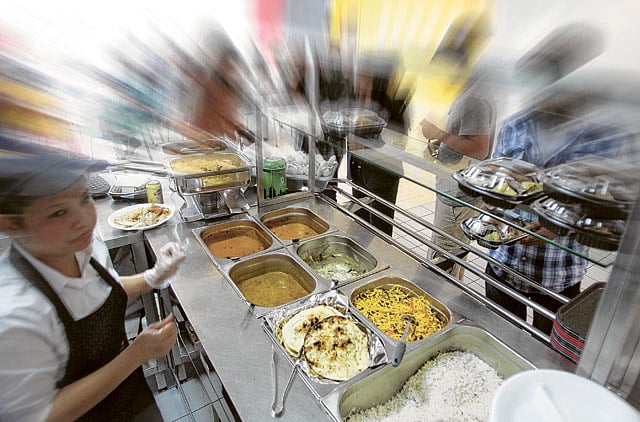
For many, falling prey to poor dietary habits in the office is easy. Caffeinated drinks, salty snacks, celebratory cakes and spicy, oily canteen lunches take a toll on employee health, with implications for productivity and performance.
Better eating habits in the office can pay dividends for both employers and employees, say doctors and dieticians.
Recruiting perk
"It is crucial that healthy food choices are available in every staff cafeteria so it will have the best impact on [their] eating habits and positively impact their output at work," says Dr Safeek Ali, dietician at Welcare Hospital, Dubai.
Office canteens don't always have good options, adds Dr Ali, and sometimes the food is selected on price, rather than nutritional value.
"Canteen menus should be looked into according to nutritional needs, preferences, tradition and the health of the staff," he said.
Offering a healthy menu is a proven way to attract and retain talent at companies such as Google.
"The Google food programme is a terrific recruiting perk," says Maha Abouelenein, head of communications, Mena Google. "We offer free and healthy food to promote health as well as environmental values [local, organic, sustainable]. For us, we have found that many employees are excited about the programme and they actually lose weight, find themselves with more energy and are more productive."
Google offers breakfast and lunch provided by an outside caterer which has to comply with the company's food policy.
"This policy includes using fresh ingredients, using local producers and building a menu that follows the Health Food Pyramid (see picture in box)," says Abouelenein. With the expansion of its office in 2012, they will have a full kitchen where meals will be prepared in-house.
Currently, the company has a "micro-kitchen" facility that is open all day with an unlimited supply of healthy snacks and hot and cold beverages. All food is free at Google.
While Googlers tend to choose healthy food over junk food on special occasions like birthday parties and team celebrations "we do enjoy delicious cakes and ice cream," says Abouelenein.
Michael Burchell, Partner and Director of the Great Place to Work Institute, which has been ranking companies in the UAE for the past two years based on employee perception, said: "Our feeling from the information we gather globally on workplace culture is that those companies that care about the well-being of their staff tend to offer healthy food options to employees."
"We are seeing more companies take this into consideration as they pay for employees' health insurance. In the UAE too, it would make a lot of sense for employers to consider these issues in order to bring down health care costs," he added. But, it is the final responsibility of employees to avoid unhealthy snacks and soft drinks — high in saturated fat, salt, sodium and sugar — in the office, said Dr Priyadarshan of the Aster Medical Centre, Dubai.
"It is the choice of the individual because sometimes people don't opt for healthy food even if it's available," says Dr Ali.
Bad food choices for years ultimately lead to many of today's chronic diseases, he explained.
But as Dr Ali points out, people often decide on what to eat based on behavioural or social reasons, rather than the nutritional value of their food.
"These behaviours [must first be changed] for anyone to stay healthy."
Wherever possible, Dr Priyadrashan says, employees should prepare healthy food at home and bring it to the office. This will go a long way towards avoiding bad eating habits at work.
It is "essential" for companies to transform their corporate culture into a health conscious, wellness-oriented environment, says Dr Ali. And this can be done, he says, by ushering in small changes, such as campaigns to encourage employees to eat healthy food and also to exercise.
At Google a lot of time is spent educating employees on healthy eating habits, the benefits of certain foods and helping them understand the nutritional value of some of the most popular foods. There is also a food blog for Googlers and lots of internal resources to help employees get the information they need to make healthy choices. The company also provides gym allowances and encourages team sports to get its workers to exercise. "It really stands true, the team that plays together stays together," says Abouelenein.
Sign up for the Daily Briefing
Get the latest news and updates straight to your inbox
Network Links
GN StoreDownload our app
© Al Nisr Publishing LLC 2026. All rights reserved.